

























































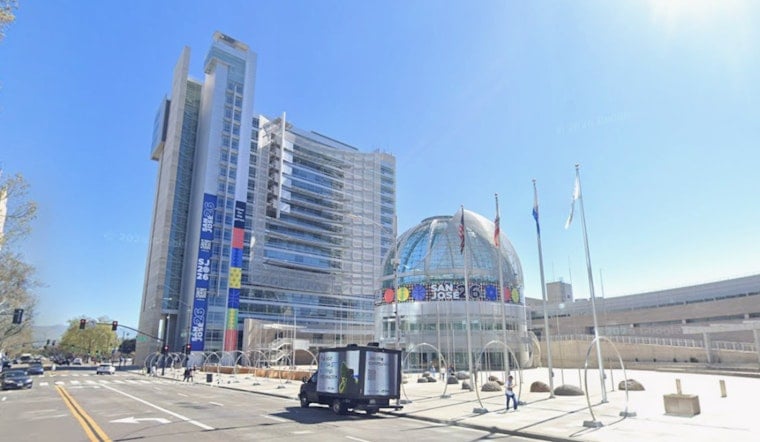
Thousands of San Jose city workers are casting ballots this week on whether to authorize a strike that union leaders say could shut down parts of city government for up to three days. The vote, running from today through Friday at San Jose City Hall Plaza and other municipal job sites, comes after roughly six months of stalled bargaining between the city and its two largest civilian employee unions.
IFPTE Local 21 and MEF-AFSCME Local 101 together represent about 3,500 San Jose city workers, and both unions are urging members to vote yes on strike authorization, according to ABC7 Bay Area. Union officials reported that nearly 1,000 votes had already been cast yesterday. If members approve the measure, union leadership would have the authority to call a strike lasting up to three days, according to a release from PR Newswire. Results of the vote are expected to be announced next Monday.
At the center of the dispute is a straightforward math problem. San Jose's Last, Best, and Final Offer, issued June 11, includes a 3% annual raise over three years, totaling 9%, per ABC7's reporting. The union coalition is instead demanding 4% in the first year, 4.5% in the second, and 5.5% in the third — a 14% total package they say is needed to match regional inflation, as detailed by KQED.
Workers Describe a Widening Gap Between Pay and Rent
Dylan Kuhlmann-Halui, a union steward for MEF-AFSCME Local 101 who works in San Jose's parks, recreation and neighborhood services department, said a 3% raise would leave him poorer in real terms. He told ABC7 that daycare costs for his daughter were rising 6% and that his rent jumped 8% in a single month. Kuhlmann-Halui said workers are simply seeking a contract that keeps pace with inflation and a city willing to support them.
Michael Jun, a senior development officer with San Jose's housing department and a member of the IFPTE Local 21 bargaining team, recommended that workers vote yes to authorize the strike. Jun said the two sides remain far apart in negotiations. Union leaders have also pushed for artificial intelligence guardrails to protect workers' jobs and have prioritized recruitment and retention as staffing shortages strain city departments, per the same ABC7 report.
Mayor Mahan Says the City Cannot Spend What It Doesn't Have
Mayor Matt Mahan has said San Jose cannot spend money it does not have and has urged the unions that have not accepted the city's offer to return to the negotiating table. Three other San Jose unions have already accepted the city's terms, according to ABC7. Mahan's administration maintains the city made room for raises within its final offer, even as it stops short of the union coalition's inflation-matching demand.
Bargaining unions have also pointed to the city's own spending choices as evidence it can afford more. They cite the San Jose City Council's August 2025 vote committing $325 million in public funds toward modernizing the city-owned SAP Center to help retain the San Jose Sharks through 2051, part of a $425 million total arena renovation effort, as reported by AP News.
Staffing Shortages Are Fueling Overtime Costs
The staffing pressures behind the union's recruitment and retention push are backed by budget numbers. Nearly 400 San Jose fire and police department employees earned more than $100,000 in overtime in 2025, including one firefighter who collected $437,337 in overtime pay, more than twice his base salary. Public safety overtime costs have exceeded budget allocations by tens of millions of dollars, the report found.
Ahead of this week's vote, IFPTE Local 21 and MEF-AFSCME Local 101 ran virtual and in-person “Strike School” sessions in July and early August to train hundreds of city workers on picket line protocols and their labor law protections, with organizers reporting max-capacity attendance. Under California's Meyers-Milias-Brown Act and state Supreme Court precedent, public employees hold a statutorily protected right to strike unless the employer can show a substantial and imminent threat to public health and safety, the California Public Employment Relations Board has affirmed.
A Walkout Would Be San Jose's First in Nearly 20 Years
If a strike is called, it would mark the first San Jose city-worker strike in nearly 20 years and would come almost 45 years after the city's landmark 1981 walkout, when AFSCME Local 101 workers struck for nine days over pay inequity for female employees, ultimately winning a $1.4 million wage adjustment. San Jose's most recent minor labor action came in 2007, when fewer than 100 building inspectors walked off the job for two weeks.
A potential strike could affect libraries, housing services, animal care, public works and some airport operations, according to ABC7. The current standoff closely mirrors 2023's brink-of-strike showdown, when the same two unions authorized a three-day walkout that was called off at the last minute after the city and unions reached a two-year contract running through June 30, 2026. Whether history repeats itself this time remains an open question as voting continues through Friday and the strike possibility stays unresolved.




