

























































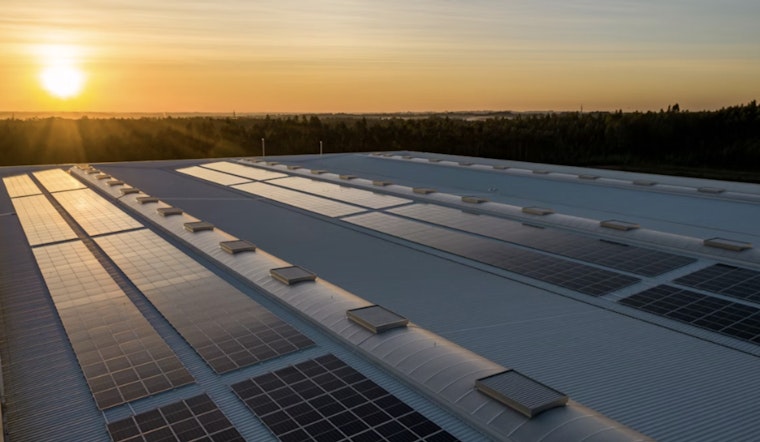
Portland General Electric is making its biggest clean‑energy bet yet: about 1,015 megawatts of new wind, solar and battery storage that the utility says will start serving customers in 2027 and 2028. PGE estimates the package will cover roughly one quarter of its peak summer demand and strengthen the grid for surging loads tied to heat waves, data centers and electrification.
What PGE is building
With contracts wrapped up in late February, PGE detailed two company‑owned expansions and two battery‑only capacity agreements that together reach 1,015 MW. The utility lists Biglow Optimization in Sherman County (125 MW of solar plus a 125 MW battery) and a Wheatridge Expansion in Morrow County (240 MW of solar plus a 125 MW battery), along with two 200 MW standalone batteries in Washington County called Meadowlark and Nottingham. All are targeted for commercial operation in late 2027 and 2028. According to Portland General Electric, roughly 42% of the portfolio will be utility‑owned and about 58% will come through power‑purchase agreements, a mix the company says is designed to capture federal tax incentives and cut costs for customers.
Company frames move as reliability and affordability
PGE’s senior director of commercial initiatives, Brett Greene, told reporters the 1,015 MW represents around one quarter of the utility’s summer peak and is meant to shore up reliability on the hottest days. Greene said locking in expiring federal tax credits is central to holding construction costs, and ultimately long‑term customer bills, in check. He noted that three of the four projects are expected to qualify for a 40% tax credit while one would receive 30%. As reported by OPB, PGE also stressed that the projects are designed to use existing transmission and interconnection so the utility can avoid building costly new power lines.
Advocates say it’s a start, not a finish
Clean‑energy advocates welcomed the scale of the procurement but were quick to say it will not be enough on its own to hit Oregon’s climate goals. Renewable Northwest’s Mike Goetz said the two Washington County battery projects “will add significant capacity and flexibility benefits to the PGE system,” while Climate Solutions’ Joshua Basofin called 1,000 MW “a good start” and argued the region will ultimately need many thousands more megawatts in the pipeline. Those reactions were recorded in reporting by OPB.
How this fits Oregon’s clean‑energy law
Oregon’s 2021 clean electricity law requires the state’s largest retail electricity providers to cut power‑sector greenhouse‑gas emissions at least 80% below baseline levels by 2030 and to reach 100% clean electricity by 2040. That mandate, along with rising demand from data centers and transportation and building electrification, provides the backdrop for PGE’s new purchases. The company has filed a final shortlist for its 2025 all‑source request for proposals that it says could lead to roughly 2,500 MW of additional resources if procured. The state’s targets and implementation details are laid out by the Oregon Department of Environmental Quality, and PGE says it is aiming for roughly 2,500 MW more by 2030 as part of the same procurement effort.
Local battery context
PGE has already brought several large battery systems online in recent years, including Seaside, Sundial and Constable. Those projects pushed the utility’s large‑scale storage capacity into the hundreds of megawatts and helped it better smooth out the ups and downs of wind and solar generation. The new deals are meant to extend that same kind of fast‑responding capacity across more of PGE’s system. Industry reporting has detailed how recent battery builds have changed PGE’s ability to manage peak demand and avoid expensive transmission upgrades, according to Utility Dive.
What to watch next
Regulatory approvals, interconnection timelines and whether developers can meet federal tax‑credit deadlines will determine how much of this new capacity actually arrives on schedule. PGE’s latest procurement covers a big chunk of its near‑term need, but advocates and regulators will be watching the 2025 RFP outcomes and subsequent Oregon Public Utility Commission filings to see whether the company’s pace is fast enough to meet the 2030 and 2040 requirements. For Portland customers, the real‑world test will be whether these projects can tamp down price spikes during peak summer demand and deliver sturdier local reliability.




