

























































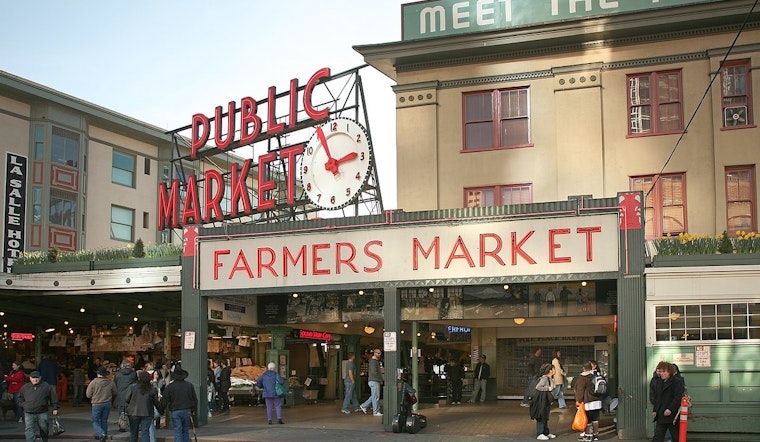
Seattle is getting ready to harden the edges of Pike Place Market, rolling out a set of temporary protective barriers before the 2026 FIFA World Cup brings a flood of visitors. The goal is straightforward: keep cars off the Market’s tight, cobbled roadway and lower the odds that a vehicle ends up where pedestrians are supposed to be on busy match days and during other big events. City officials say they plan to install, test and tweak the setup through the summer before deciding whether any of it sticks around for good.
In a briefing to the Pike Place Market Historical Commission, the Seattle Department of Transportation laid out a menu of hardware that includes crash-rated movable barriers, fixed posts at strategic access points and hefty concrete planters that can be shifted with forklifts so emergency vehicles and delivery trucks can still get through. Staff told commissioners the extra protections could start appearing as early as April and would remain strictly temporary while the city gathers feedback during the peak season. Public comments were divided, with some voices urging a fully car-free Pike Place and others warning that bollards and chunky planters could clash with the Market’s historic character. Framing the effort as risk management ahead of the World Cup, SDOT engineering and design manager Matt Beaulieu told commissioners, “We want shared streets, not closed streets,” according to KING 5.
Pilot builds on last year's test
The new barrier plan expands on a pilot the Market and the city launched in April 2025 to cut down on pass-through traffic and carve out safer space for people walking. In a statement, the Pike Place Market PDA described that pilot as a way to protect crucial deliveries and vendor operations while trying out a more pedestrian-friendly street. The experiment was later extended into 2026 as officials weigh longer-term options, The Seattle Times reported.
What visitors and vendors should know
After early feedback, the Market’s managed-access hours were reset to roughly 10 a.m. to 4 p.m., according to KNKX. City officials say deliveries, vendor loading and people with accessibility needs will still be allowed in under controlled access, and the protective elements are being designed so they can be moved aside for emergency vehicles when necessary.
Timing, World Cup rules and deliveries
Seattle has tied the project schedule to a broader World Cup construction pause. The city is asking work in public spaces to be wrapped up or cleared out by June 7, with an official pause on such activity from June 8 through July 13, 2026, according to guidance from the Seattle Department of Transportation. SDOT says it is coordinating with freight partners and researchers on how to handle deliveries in busy corridors, and notes that it has already teamed with the University of Washington’s Urban Freight Lab on related pilots in the area. Any decision about a permanent treatment for the Pike Place roadway will come after this summer’s testing period and broader discussions next year, The Seattle Times reported.
What’s next
Installation crews could begin placing the temporary barriers and planters as soon as April, and the setup will stay in place through the summer while the city and the Pike Place Market PDA track what works and what falls flat. Vendors, drivers and visitors can expect more signage and on-site staff at Market entrances as Seattle fine-tunes the new configuration and braces for those World Cup crowds.



