

























































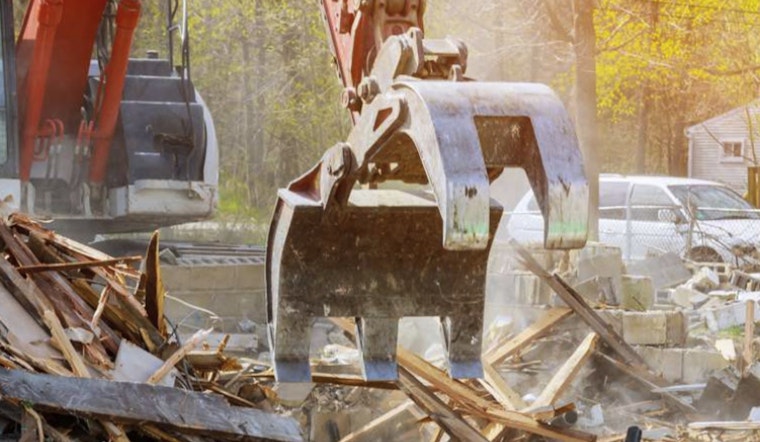
All across Raleigh, especially inside the Beltline and in close-in neighborhoods, older homes are disappearing at a clip that has longtime residents doing double takes. The city recorded 252 residential demolitions in 2025, up from 124 in 2024 and 105 in 2023. For many homeowners and developers, scraping an aging house and starting fresh with a duplex, townhome or higher-end single-family build is penciling out better than a major renovation.
As The News & Observer reported, that spike in teardowns tracks with shifting market forces and policy changes in Raleigh. Some neighbors see what feels less like "progress" and more like a slow erasing of the places they recognize. Forest Park resident Michael Lindsay called the trend a "shame" and a "waste" in comments to the paper, capturing a frustration shared on front porches and neighborhood listservs alike.
How Zoning Changes Opened the Door
City leaders have been trying to make room for more so-called "missing middle" housing - duplexes, townhouses and tiny homes that fall between single-family houses and big apartment buildings - in many traditional neighborhoods, according to the City of Raleigh.
Text changes such as TC-5-20 and TC-20-21 eased lot-size rules and tweaked dimensional standards. The practical effect: it is now easier for builders to place multiple homes on a lot where only one detached house once fit. In areas where land itself has become the real prize, that regulatory shift has made tear-down projects a lot more attractive.
Builders' Math: Why Demolition Often Wins
On the builder side, the spreadsheet usually tells the story. Renovating an older home and bringing it up to modern building codes can pile on costs fast, according to industry voices. Paul Kane, CEO of the Home Builders Association of Raleigh-Wake County, told The News & Observer that code upgrades alone can tilt a project toward a teardown.
Raleigh planning director Pat Young told the paper that new single-family homes inside the Beltline often hit the market near $1 million to $1.1 million. Two-unit townhomes, by contrast, can sell for roughly $550,000 to $700,000. When a single lot can be turned into two front doors at those prices, it is not hard to see why developers are eager to clear older houses and start over.
Permits, Preservation and What Neighbors Can Do
None of this happens completely unchecked. Demolitions still require permits, and in designated historic districts, owners must secure a Certificate of Appropriateness before knocking anything down. Those are tools the city uses to review or sometimes delay demolition, according to the City of Raleigh.
Raleigh also keeps infill standards on the books that are supposed to help new construction fit better into existing neighborhoods. Those design rules can influence height, massing and how replacements line up with older homes, even if they cannot save every bungalow or ranch from the wrecking ball.
Where Things May Head Next
Market reports and local coverage suggest that new construction is still running hot across the Triangle, adding to the region’s housing supply and reshaping what developers see as a "best use" for many lots, as WRAL recently noted.
At the same time, city officials, preservation advocates and neighborhood groups are locked in a growing debate over how far to let the teardown wave roll. They are weighing design rules and potential incentives that might slow the loss of older homes while still making space for more housing closer to transit and jobs. For now, though, in many Raleigh neighborhoods, the sound of progress arrives with the scrape of a bulldozer.



