

























































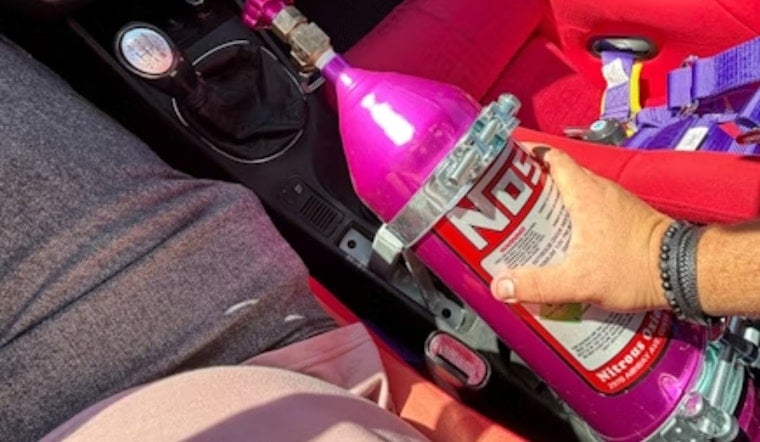
San Francisco Supervisor Danny Sauter is pushing to take nitrous oxide off city store shelves, arguing that the same brightly packaged canisters and large tanks used in kitchens are increasingly being sucked down as a fast, cheap high. Yesterday, he asked the city attorney to draft a citywide ban on retail sales, saying the goal is to head off what officials view as a growing public health and safety problem around music venues and smoke shops. Supporters say local rules are needed to actually get the products out of retail stores instead of relying only on existing state law.
Why the ban now
At a Board of Supervisors meeting, Sauter formally requested that the City Attorney write legislation to prohibit retail sales, calling nitrous oxide “a growing health risk that we should take care of early,” according to the San Francisco Chronicle. He criticized manufacturers and retailers for marketing the gas as a culinary product to dodge enforcement, and pointed to brightly flavored brands that have popped up in smoke shops across the city. Sauter cast the proposal as preventive, a local way to cut off easy access before more people end up hurt.
Health alarms and federal warning
The Food and Drug Administration has explicitly warned consumers not to inhale nitrous oxide products, saying misuse can lead to nerve damage, paralysis, blood clotting problems and even death. The agency has tracked rising reports of adverse events and urged people not to inhale nitrous oxide products in any size canister, tank or charger, according to the FDA. Medical experts say repeated use can cause long-term neurological harm and serious, sometimes permanent, injuries.
Local policy trend
If San Francisco moves ahead, it would join a growing list of Bay Area governments that have already tightened the rules. San José and San Mateo County have acted to curb retail sales, and Santa Cruz advanced a similar measure last year. Those local steps are part of a patchwork response to what officials describe as manufacturers exploiting a labeling loophole, as reported in Hoodline. Local leaders say city and county ordinances can add tools like permits, age verification requirements and licensing conditions that state statutes do not spell out.
On the ground: litter and enforcement
On city streets, the fallout is easy to spot. Discarded balloons and empty canisters have become a familiar form of litter, with large, flavored tanks turning up near schools and parks, The San Francisco Standard reported. Police have also been making high-volume seizures. Officers patrolling near a Dead & Co. concert in August confiscated roughly 100 tanks and arrested a man on suspicion of distributing nitrous oxide, according to SFist. Officials point to these street-level scenes as evidence that easy retail access is feeding broader public safety risks.
What the law says
State law already tries to draw some lines. California makes it a misdemeanor to possess nitrous oxide with the intent to inhale it (Penal Code §381b) and prohibits selling canisters to anyone under 18 (Penal Code §381c), while still allowing medical and legitimate culinary uses. The language is laid out in the official California Penal Code. Local ordinances like the one Sauter is seeking would focus on cutting off retail distribution channels that public health officials say have enabled recreational misuse to flourish.
Industry response and litigation
Manufacturers and some retailers counter that their products are meant for kitchens, not parties, and note that they already carry warnings against inhalation. On the other side, families and plaintiffs' lawyers have filed lawsuits accusing companies of deceptive marketing and of targeting young people. Litigation and consolidated claims have expanded in recent months, a trend detailed by reporting from WLRN and other outlets, and those legal and regulatory pressures have helped push elected officials toward taking local action.
What's next
If the City Attorney produces draft legislation, the Board of Supervisors would refer it to a committee for hearings and possible amendments before any final vote. That process typically opens the door to public comment and testimony from restaurants, retailers and health officials. Supporters argue a retail ban would be a practical way to limit youth access and cut down on the tanks and canisters showing up on streets. Opponents caution that regulators will need to carve out space for legitimate culinary and medical users so they are not swept into an overly broad prohibition. For now, Sauter’s request starts the clock on what is likely to be a lively local policy fight this spring.




