

























































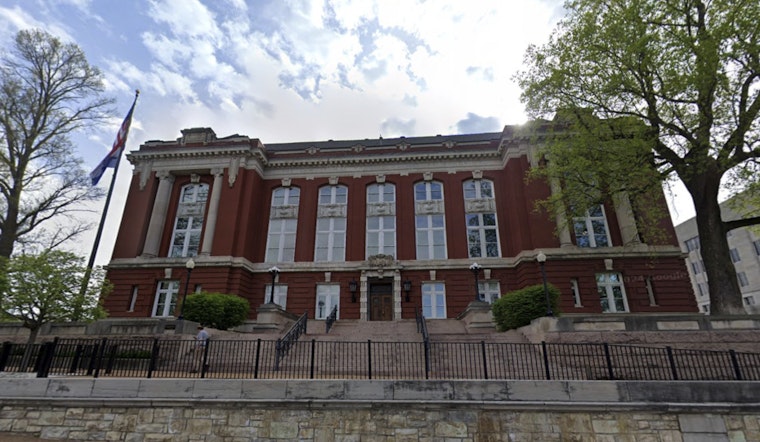
Missouri’s highest court has handed homeowners a big win in the long-running tug-of-war with homeowners associations over rooftop solar. In a unanimous ruling, the Missouri Supreme Court cleared the way for residents to install rooftop panels even when old subdivision covenants say they cannot, reversing a Greene County judge and entering judgment for homeowners Colleen Eikmeier and William Love. The case centered on a decades-old restriction in the Granite Springs subdivision and turned on how the state’s solar statute applies going forward. The court interpreted that law to mean that prohibitions recorded before the statute took effect are unenforceable from the day the law kicked in, giving homeowners and local installers a clearer runway just as many start planning spring solar projects.
The court’s opinion, issued Jan. 23, 2026, did more than merely side with Eikmeier and Love. It spelled out in numbers how the HOA’s restrictions would have hobbled their system. Forcing the couple to avoid street-facing panels would have cut expected annual production from about 11,492 kWh to 8,741 kWh, about a 24% drop, and would have required nearly $17,000 in additional upfront costs to get comparable output. That disparity helped the justices conclude the restriction was unlawful, according to the Supreme Court of Missouri.
At the center of the fight was Senate Bill 820, a 2022 measure that rewrote RSMo § 442.404. The statute now bars deed restrictions that “limit or prohibit” rooftop solar and permits only “reasonable” placement rules that do not “adversely affect the cost or efficiency” of a system. The bill was carried in the Senate by then Sen. Eric Burlison, and the law took effect Jan. 1, 2023. The legislative release outlining the bill’s intent is available from the Missouri Senate.
Local installer Sun Solar, which had worked with the homeowners, quickly celebrated the ruling and said it removes uncertainty that has dogged both families and contractors. The company said the decision “strengthens property rights and makes solar more accessible to Missouri families.” Founder and CEO Caleb Arthur added, “This is a win for homeowners who want to take control of their energy costs and invest in clean energy,” according to a statement the company released. The full release is available from Sun Solar.
What the ruling changes for HOAs and homeowners
The court did not strip homeowners associations of all power over rooftop panels, and the statute does not either. Associations can still adopt “reasonable” placement rules, but those standards cannot flatly prevent installation or materially hurt a system’s function, cost, or efficiency. Industry observers and advocates say the decision will likely send HOA boards back to their dusty binders of covenants and architectural rules, forcing a hard look at any solar-related language. It also gives homeowners a clearer legal path if their applications are denied, according to reporting from Solar Power World.
Legal takeaways
Legally, one of the key questions was whether applying the 2023 statute to older covenants violated Missouri’s constitutional ban on truly retrospective laws. The justices said it did not. They reasoned that the statute simply renders prior prohibitions unenforceable from here on out rather than punishing anyone for past conduct or creating new liabilities for what happened before the law took effect. The opinion is likely to surface in future fights across Missouri whenever HOA rules about aesthetics or placement create real cost or efficiency tradeoffs for homeowners, according to the court’s analysis. Readers can review the full reasoning in the opinion hosted on Justia.
For homeowners eyeing rooftop solar, the ruling underscores the value of keeping detailed paperwork: written proposals, production estimates, and records of every communication with the association. On the other side of the table, HOA boards are being warned to talk with their lawyers before trying to enforce or draft narrow placement rules that could be challenged under RSMo § 442.404. The statute text and the court’s opinion are publicly available from the Missouri Revisor of Statutes.



