

























































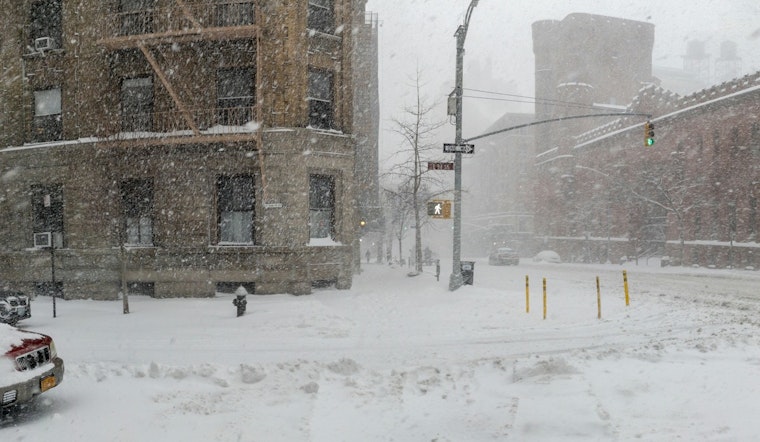
While riders were digging themselves out after New York’s late January blizzard, the MTA quietly dug something else out of sight: five full weekdays of bus performance data. Those storm-slammed days vanished from the agency’s January stats, letting the MTA tout a glossy 95.1 percent bus service delivery rate even as riders recall a week of missed trips and snow-choked stops.
During that excluded stretch, Monday, Jan. 26 through Friday, Jan. 30, buses still carried roughly 800,000 trips a day, far below the usual one-million-plus weekday ridership. Riders and advocates say cutting that week from the official scorecard glosses over how badly the system struggled and why it matters for the next big storm. The move has already sparked calls for clearer storm-specific reporting and a City Council oversight hearing this week.
As reported by Streetsblog New York City, NYC Transit President Demetrius Crichlow told MTA board members the authority carved Monday, Jan. 26 through Friday, Jan. 30 out of the agency’s January metrics because “the January storm caused widespread detours and weather related obstacles.” He said the agency runs service “based on what’s available to us” when road and crew conditions force changes to scheduled runs.
Riders say that logic might explain the chaos but should not erase it. “After the first storm it was just so apparent that the snow was put in bus stops as an available space of last resort,” Riders Alliance spokesman Danny Pearlstein told Streetsblog New York City, urging the MTA to publish more detailed, post-storm performance data so policymakers can see what failed and what actually worked. Advocates say the city’s habit of piling plowed snow along the curb often turns bus stops and shelters into frozen obstacle courses for people who depend on buses most.
On the bus now. On Hylan, the bus lane still isn’t fully cleared. Commuters were standing in the street waiting because there was nowhere else to safely stand. I’ve alerted DSNY & asked that Hylan’s bus lanes be prioritized. Not blaming anyone, just trying to keep SI moving. February 25, 2026
What the MTA Left Out
According to data on the MTA metrics dashboard, New Yorkers took more than 800,000 bus trips per day during Jan. 26–30, compared with over one million trips on a typical weekday. Those are hardly ghost-town numbers, yet none of those days count toward January’s official bus performance.
By dropping the five worst weekdays from the monthly roll-up, the MTA ended up with that headline 95.1 percent “service delivery” figure, even as riders reported detours, canceled runs and stops blocked by snowbanks. Advocates argue that if service is running in any form, its performance should be measured and disclosed, not quietly filed under “exception.”
Council Hearing and Oversight
The City Council’s Committee on Transportation and Infrastructure has scheduled an oversight hearing titled “Pedestrian and Transit Accessibility During Winter Weather Events” for Feb. 27, according to the New York City Council. The session is listed as a joint meeting with the Committees on Disabilities and on Sanitation and Solid Waste Management, signaling that lawmakers intend to press both the MTA and city agencies on how bus service and snow clearance are coordinated when the flakes start flying.
Why Riders Care
Advocates say stripping storm-hit days out of the monthly scoreboard turns a hard week for riders into a statistical mirage. They argue that those rough days are exactly when agencies should be most transparent so planners can see where things went wrong, from plows shoving snow into curbside bus lanes to sidewalks and shelters left buried.
Riders and disability advocates are expected to use the hearing to push for detailed, day-by-day reporting after major weather events. Their goal is straightforward: if the city and the MTA can pinpoint the choke points that left people struggling to reach buses in January, they can fix them before the next nor’easter blows through.



