

























































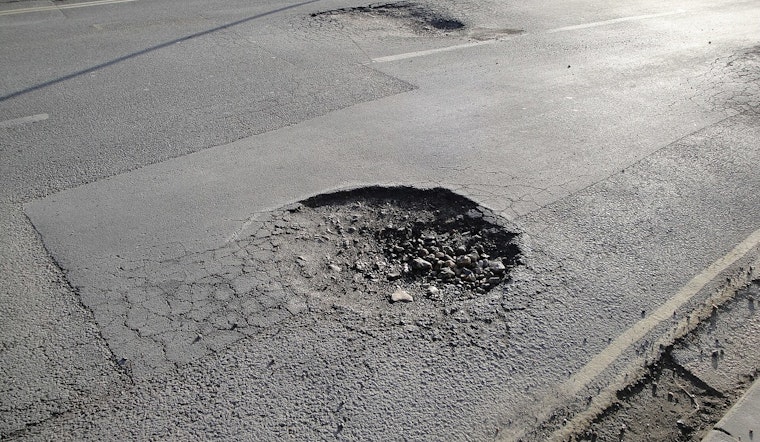
As winter hangs on by its icy fingernails, Boston drivers are getting hammered by a fresh crop of potholes popping up across the region. In Hyde Park, people who rely on American Legion Highway say the stretch is now riddled with deeper, wider holes that turn the daily commute into a white-knuckle weave. AAA is already warning that this stretch of the season could be a pricey one for anyone unlucky enough to slam into one of those craters.
According to Boston 25, crews out on American Legion Highway captured fresh images of torn-up pavement, while residents boiled it down to “more potholes, deeper potholes.” Mark Schieldrop, a spokesperson for AAA Northeast, told the station that heavy plow activity, long cold snaps and repeated freeze-and-thaw cycles are teaming up to crack open the asphalt and keep repair crews scrambling. In that same interview, he urged drivers to slow down, leave extra space from the car in front and keep tire pressures properly set to cut down on blowouts and wheel damage.
Why potholes are multiplying
Transportation experts say there is nothing mysterious about what is happening: water seeps into tiny cracks, freezes overnight, expands, then melts during the day and leaves the surface weakened. That process keeps repeating until a chunk of pavement finally pops out and becomes a pothole. AAA's national analysis found that those holes pack a financial punch, too, estimating in 2022 that the average pothole-related repair ran close to $600 and that drivers collectively paid billions of dollars in such repairs in 2021. City and state crews often rush out to patch problem spots, but quick cold-weather fixes can tear back open when the temperature swings, leaving workers constantly reacting instead of getting lasting repairs in place.
How drivers can limit the damage
Local officials and auto experts say drivers are not powerless, even if the roads look like the surface of the moon. They recommend slowing down on rough stretches, watching the road ahead for standing water that might be hiding a pothole and leaving enough room to maneuver safely if the car in front of you swerves. If you do hit one, taking photos of both the road and your vehicle and getting an inspection can help, since problems with tires, wheels or suspension often first show up as new vibrations or a pull in the steering. As Boston 25 reported, Schieldrop also cautioned that both overinflated and underinflated tires raise the odds of a blowout or bent rim, so keeping tire pressure at the manufacturer’s recommended level is one of the simplest ways to reduce the risk.
How to report potholes and file a claim
State guidance spells out where to send complaints and what you can realistically expect if your car takes a hit. Road hazards on state highways can be reported to MassDOT, and while the Commonwealth does allow certain claims for personal injury tied to road defects, it generally does not reimburse for vehicle damage. According to Mass.gov, claims related to state-managed roads should be filed within 30 days, and if the damage occurred in an active construction zone the claim will be forwarded to the contractor handling the work. For city streets, drivers are directed to file through their local public works department; the City of Boston details its own procedures and timelines for municipal claims on Boston.gov.
Crews will keep patching trouble spots as the weather cooperates, but regular commuters should expect some lag time before longer-lasting fixes show up. In the meantime, cautious driving and quick reporting are the best tools available, and hanging on to photos, repair estimates and receipts can make it easier to work with mechanics, insurance companies or, if needed, file a claim. Local reporters are still gathering reader photos and video of the worst stretches as the region rides out another bumpy transition from winter to spring.




