

























































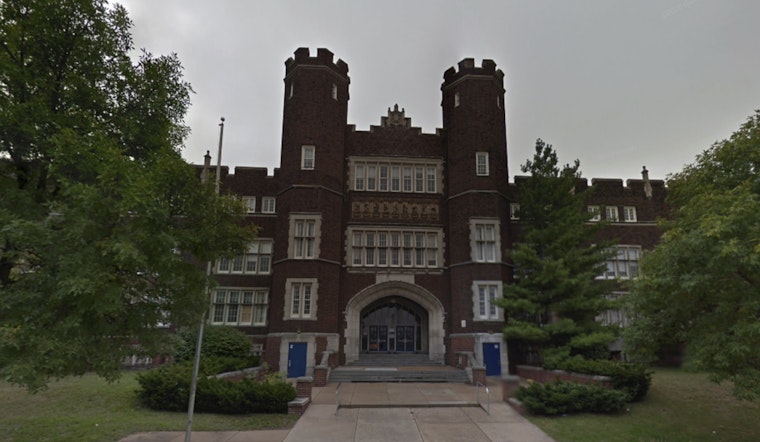
Two of St. Louis' most notorious empty school buildings, Grover Cleveland High School in Dutchtown and Marshall School in The Ville, are no longer the school district’s problem. The district has handed both properties to the city’s economic development agency, shifting control of the long-vacant, heavily damaged campuses to City Hall after decades of stalled plans, fires and vandalism. City officials say they intend to first stabilize the buildings, then recruit developers to turn them into housing or mixed-use projects.
According to the St. Louis Post-Dispatch, the district finalized the sale on Tuesday, transferring title so the city can move ahead with emergency weatherproofing and long-term redevelopment efforts. The Post-Dispatch reports that the deal includes both the sprawling Cleveland building and the nearby Marshall property, which the district had already labeled as surplus after years of deferred maintenance.
The district’s own surplus listings describe Cleveland as a roughly 235,000-square-foot building with an asking price of about $2.35 million and note that the high school closed in 2006, according to Saint Louis Public Schools. District documents also point out that the structure is a William B. Ittner design, a distinction that brings historic-preservation review into play and makes any overhaul more complicated.
Marshall School is another early 20th century William B. Ittner building, an elementary school that preservation inventories recognize as part of the historic fabric of The Ville, the Landmarks Association of St. Louis notes. That status can open the door to federal and state historic tax credits, while at the same time driving up the cost and complexity of reuse because of asbestos and lead abatement and the code upgrades that would be required.
How the city plans to proceed
City redevelopment staff started circling these properties last fall, floating low purchase offers so the Land Clearance for Redevelopment Authority and its staff could put federal American Rescue Plan Act dollars toward weatherproofing and stabilization before putting the sites in front of private developers, St. Louis Magazine reported. Officials have warned that the ARPA funding window sets a tight clock for lining up real projects before those stabilization dollars run out.
Neighborhood leaders have been pushing for action for years, branding the empty schools as nuisances and recounting a steady stream of break-ins and fires that have worn down community confidence in redevelopment promises, residents told St. Louis Public Radio. Many neighbors are relieved to finally see a move, but they also want clearer answers on timelines, how much say the community will have and what any new development will mean for the surrounding blocks.
What comes next
Now that the city holds the title, officials say the first order of business is to secure and weatherproof the buildings, then issue formal requests for proposals for adaptive reuse. Previous public briefings spelled out that the Land Clearance for Redevelopment Authority and the St. Louis Development Corporation had offered to buy the schools for relatively modest sums and then pour millions into stabilizing them, according to Spectrum News. If no viable developer shows up before the stabilization window closes, demolition, made costly by required environmental abatement, is still on the table as a last resort.
Why this matters
The transfers spotlight a familiar St. Louis dilemma: how to turn a large stockpile of vacant, historic schools into neighborhood assets without draining public coffers. Preservation advocates, city staff and neighborhood groups are now racing against funding deadlines, tax-credit schedules and market realities to see whether these century-old campuses can be brought back to life instead of ending up in the rubble pile, observers told the St. Louis Post-Dispatch.





