

























































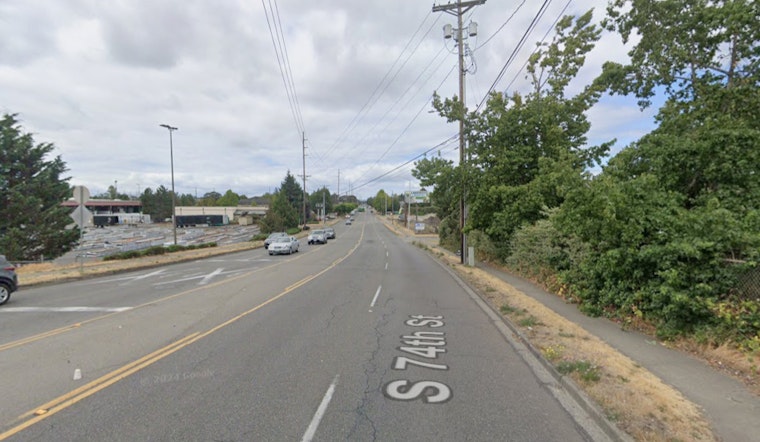
On a tiny triangular lot at 3802 S. 74th Street, a big Tacoma fight is unfolding over a stand of old oaks and a new self-storage project that would mostly wipe them out.
A developer wants to build a four-story self-storage building that would clear roughly 80% of the site's vegetation. Up to 37 Oregon white (Garry) oaks stand in the building footprint and, based on measurements and growth estimates, some could be between 450 and 600 years old. The proposal has triggered objections from neighbors and former city biologists as city staff review a critical-areas development permit that will ultimately decide the trees' fate.
According to reporting in The News Tribune, an arborist survey counted 91 trees on the roughly one-acre site and concluded 54 could be retained while 37 would be removed if the permit is approved. The arborist's report recommended that 20 of the 37 trees be excluded from mitigation requirements because they show decay, damage or decline. It also lists trunk diameters, including two-stem oaks measuring about 42 and 36 inches and a single-stem 32-inch tree.
The mitigation plan in that report calls for 34 new trees intended to replace 17 significant trees, but the arborist warned that the replacement plantings may not all fit on the parcel and could end up being planted off-site.
Permits, SEPA and public notice
The project was entered into the city's SEPA public record under file LU21-0269, with a public notice describing a roughly 93,307-square-foot self-storage building on the triangular lot, according to the Tacoma Daily Index. Because of the SEPA determination and required critical-areas review, the proposal must comply with Tacoma's tree and habitat protections before any building permits can be issued.
City records show an applicant has pursued SEPA review along with site development and building permits for the property, setting up a slow-moving but high-stakes paper trail that will determine whether the storage project moves ahead as planned.
Why the oaks matter
Oregon white, or Garry, oaks are the only oak species native to this part of the Pacific Northwest and can live for many centuries. The USDA Forest Service notes that individual trees may reach lifespans of 400 to 500 years or more. The species grows slowly, so large trunk diameters can reflect centuries of growth rather than any recent burst, and remnant oak stands provide key wildlife habitat and a distinctive cultural landscape in Puget Sound neighborhoods.
For broader context on the species and its ecology, the state provides an overview of the Garry oak on the Washington State Capitol site, which frames these trees as a scarce but defining feature in parts of western Washington.
Neighbors, experts and the owner
Neighbors, former city critical-areas biologist Allison Cook, who left the city's planning department in 2023, and more than 600 public commenters have pushed back on the proposal. In her written comment, Cook argued that the proposed two-year monitoring window for getting replacement seedlings established is not adequate, given how slowly Garry oaks grow and how easily young trees can fail.
Owner Ed Brooks told The News Tribune that his company has removed at least five homeless encampments from the property. He also questioned the claimed ages of some of the trees, saying residents once set some of them on fire. The paper reports that the city issued a stop-work order on the property in 2024 while permit reviews continued.
The dispute has turned neighbors, ecologists and city reviewers into wary collaborators as they sift through arborist reports, argue over replacement requirements and try to picture what meaningful “mitigation” would look like on a one-acre lot.
What happens next
Under Tacoma's land-use rules, decisions on critical-areas development permits are made administratively by the Director of Planning and Development Services, and appeals of those decisions go to the City's Hearing Examiner. That process is outlined in the city's planning guidance on the Tacoma Permits site.
If a decision is issued, affected parties can file appeals, and the Hearing Examiner's recommendation can then be taken to the City Council or to the courts. In practical terms, the outcome of this permit will hinge on technical findings in the arborist report, whether replacement plantings are considered feasible, and how the city chooses to balance habitat protections against infill development.
The broader storyline is a familiar one in changing neighborhoods: a tight urban parcel with high development value colliding with residents and ecologists intent on protecting rare, slow-growing trees. For now, the oaks and the permit remain in limbo while city staff, the arborist's mitigation plan and vocal public opposition all collide, setting up a small but highly visible test of how Tacoma will treat its remaining Garry oak stands.



