

























































Ryan Wesley Routh will spend the rest of his life in federal prison, with extra time tacked on for good measure, after a jury found he tried to assassinate Donald J. Trump during a September 2024 round at Trump International Golf Club in West Palm Beach. U.S. District Judge Aileen M. Cannon handed down a sentence of life plus seven years on Wednesday in Fort Pierce, telling the packed courtroom that prosecutors had shown Routh’s months of planning and stash of gear at the scene made him a continuing threat to public safety.
According to a Justice Department release, Routh, 59, was convicted on five federal counts, including attempted assassination of a major presidential candidate, assault of a federal officer, and several firearms offenses. Judge Cannon ordered life plus 84 months to run consecutively. The release credited FBI Miami, the U.S. Secret Service, and the Bureau of Alcohol, Tobacco, Firearms, and Explosives with work that linked Routh to a sniper-like perch along a fence line and to the vehicle he used to flee. Officials also highlighted a Secret Service agent who spotted a concealed rifle and stepped in before any shots were fired.
How Investigators Pieced The Case Together
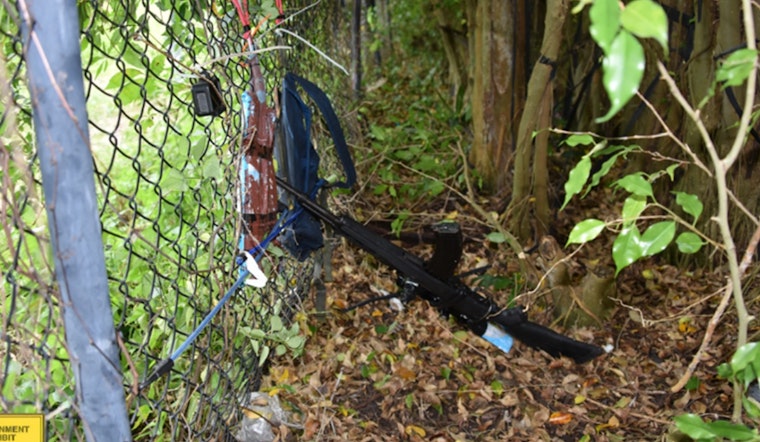
At trial, prosecutors rolled out a mix of physical and digital evidence that sketched out the plot, including a Norinco SKS-style rifle with a scope, a loaded magazine, steel armor plates and a camera mounted on the fence and pointed at the sixth green, according to The Associated Press. A 12-page handwritten letter recovered after Routh’s arrest included his statement that a box he left at a witness’s home was tied to an assassination attempt. Investigators used cell phone data and witness accounts to place him near the course repeatedly in the weeks leading up to the September incident, and a traffic stop on I-95 ultimately led to his detention.
ATF’s Role And Evidence Analysis
The Bureau of Alcohol, Tobacco, Firearms and Explosives said its West Palm Beach field division contributed crime-gun intelligence and that its specialists examined explosive-device components seized during a later search, per an ATF post that was reposted by its Seattle office. The Justice Department also credited ATF alongside the FBI and Secret Service for investigative help that supported the case. Law enforcement officials said the forensics work and gun tracing were key to showing intent and tracking Routh’s movements.
Ryan Wesley Routh was sentenced to life +7 years for the assassination attempt of President Trump in 2024. ATF West Palm Beach responded to the scene and provided Crime Gun Intelligence, while other ATF experts analyzed explosive devices discovered during a search warrant. pic.twitter.com/A0dAlq3aJP
— ATF HQ (@ATFHQ) February 6, 2026
Legal Aftermath And Next Steps
Routh’s defense team said it plans to appeal both the conviction and the sentence, and court coverage noted that he represented himself during the trial before bringing in counsel for sentencing, according to local reporting by WPBF. That coverage described moments in the Fort Pierce courtroom when Judge Cannon cut off Routh’s statement and warned that his effort to cast himself as a do-gooder did not match the record before the court. Prosecutors had argued for a life term as a message against political violence, and the judge said she would have imposed the same sentence even if the guidelines had pointed to something lower.
What This Means For Protection And Prosecution
Federal officials framed the outcome as both a clear rejection of political violence and a showcase of multi-agency coordination in a high-profile protection case, according to The Associated Press. The sentencing closes the federal criminal case, but officials and experts say it is likely to spur another round of reviews of perimeter security and information sharing at venues that host public figures.





