

























































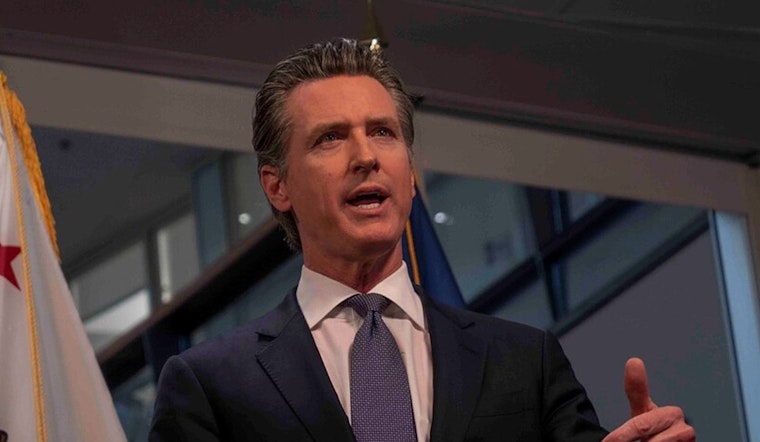
Union leaders from major national and California labor groups converged on Sacramento this week with a blunt message for Gov. Gavin Newsom: their support for any 2028 presidential run will depend on how he handles artificial intelligence. They told organizers and reporters that future endorsements will hinge on concrete, enforceable protections for workers, not soaring campaign speeches.
According to CalMatters, the gathering was organized by the California Federation of Labor, whose briefing paper brands AI as “the biggest existential threat facing working Americans today.” The document singles out Newsom’s veto of Senate Bill 7 and calls for a leader willing to work with organized labor to protect jobs and build real guardrails around how AI is deployed in the workplace.
What Newsom Blocked, And Why Unions Care
Last October, Newsom returned SB 7 without his signature, calling the proposal “overly broad” and warning that it could saddle employers with vague notification requirements. His veto message is posted on the state website. The bill would have required notice and recordkeeping around automated decision systems and barred employers from relying solely on AI tools when disciplining or firing workers. Union leaders had argued that such protections were needed to prevent opaque, algorithm-driven terminations.
Legal analysis of the post-session AI package notes that the governor approved several tightly focused AI measures while rejecting others, a split that has irritated labor leaders who wanted a stronger workplace line. That pattern is laid out by commentators at Perkins Coie, who describe a selective approach that pleased some tech interests and rankled unions.
Newsom’s Tightrope: Innovation vs. Worker Protections
In his Jan. 8 State of the State address, Newsom declared that no technology holds more promise and more peril, to jobs, to our economy, to our way of life than artificial intelligence. He cast the policy fight as a search for guardrails that still keep California at the front of the innovation pack.
Labor leaders and political observers say his long-standing relationships with Silicon Valley power players make him wary of sweeping limits on workplace tech. Coverage in the Los Angeles Times describes a governor trying to thread the needle, protecting jobs without spooking the tech sector that fuels the state’s economy. Union officials now want that tension resolved in favor of workers before they commit to backing any future presidential bid.
Unions Weigh Political Muscle
Organizers pitched the Sacramento meeting as both a policy intervention and a political stress test. Their message was simple: the endorsements, field operations, and turnout machinery that unions bring to campaigns are no longer guaranteed if AI protections stay vague or weak.
Recent history suggests that the threat is not idle. Unions have pushed back hard when they feel burned by labor-related vetoes, using endorsements, ballot measures, and get-out-the-vote operations as leverage in high-stakes fights. Reporting on earlier veto dustups shows that labor leaders are willing to escalate beyond stern letters when they feel disrespected, a pattern highlighted by coverage at Capital & Main.
Where The Fight Could Go Next
Policy options now on the table include more targeted workplace rules that require human review in certain discipline or termination decisions, stronger notice and information-access rights for employees, and regulatory efforts through state agencies that Newsom has pointed to as possible vehicles.
Analysts note that the governor’s track record on AI legislation, signing some bills while vetoing others, suggests Sacramento may keep leaning toward narrower, sector-specific rules rather than sweeping bans. That approach is described by legal advisors at Perkins Coie. Union leaders, for their part, say they plan to judge the governor on outcomes instead of speeches and will push for language that clearly protects members’ jobs.
The standoff sets up an unusually early test of whether California’s labor movement will rally behind a possible national contender or hold its fire until it sees hard-and-fast AI safeguards for workers. For Bay Area employees and the tech firms that hire them, the result will help determine how quickly algorithmic management becomes routine on the job and how much political muscle labor is willing to flex in the years ahead.



