

























































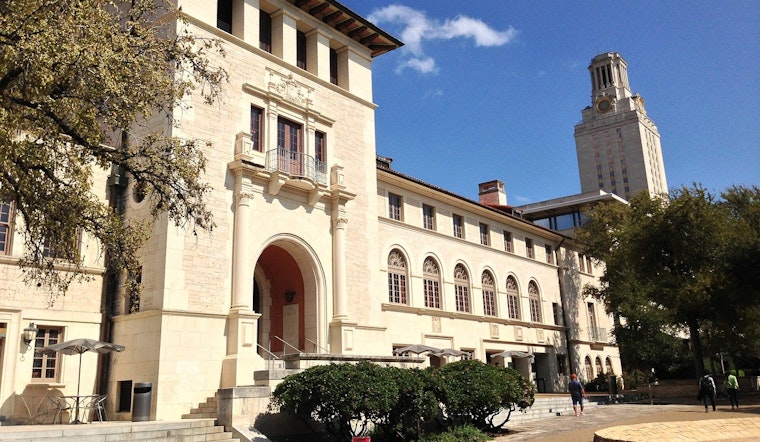
A University of Texas at Austin professor is asking the U.S. Supreme Court to decide whether behind-closed-doors threats from university leaders that silence criticism can count as a First Amendment violation. Finance professor Richard Lowery says UT Austin officials warned they would cut his pay, strip a research affiliation and curtail professional opportunities if he kept publicly criticizing campus leaders, and that he stopped posting and speaking to avoid those consequences. His petition pushes a larger legal fight over whether courts should treat credible threats that chill speech the same way they treat completed punishments.
The Institute for Free Speech filed a cert petition on Feb. 5, 2026, urging the justices to resolve a split among federal appeals courts over whether employer threats that chill speech are themselves actionable. According to the Institute for Free Speech, the Fifth Circuit is one of two outlier circuits that require a completed adverse employment action instead of asking whether a reasonable employee would have been deterred from speaking.
What Lowery's petition says
Lowery’s cert petition lays out emails, meeting notes and other internal records that he says show university officials threatened to reduce his Salem Center stipend, end his institute affiliation and limit research access if he did not “tone down” his criticism, according to an Institute for Free Speech filing. The petition also notes that Lowery and colleagues helped secure roughly $6 million in state funding for a planned Liberty Institute that they contend was later absorbed into a program called Civitas at UT Austin, as previously reported by The Texas Tribune. According to the filing, Lowery largely stopped posting on social media in August 2022 because of the alleged pressure.
How the appeals court ruled
The U.S. Court of Appeals for the Fifth Circuit affirmed dismissal of Lowery’s claim on Oct. 31, 2025, concluding that threats which never resulted in a formal demotion, pay cut or reprimand did not satisfy that circuit’s adverse-action requirement, as detailed in the Fifth Circuit’s opinion and summarized by Justia. That ruling left Lowery’s attorneys to ask the Supreme Court to clarify whether credible threats that chill speech are enough to support a First Amendment retaliation claim, or whether employees must wait for the hammer to actually fall before they can sue.
Reactions from advocates
Del Kolde, senior attorney at the Institute for Free Speech and lead counsel in the case, told The College Fix, “The Supreme Court must intervene and make the standard uniform throughout the country.” Zachary Greenberg, faculty legal defense counsel at the Foundation for Individual Rights and Expression, told the same outlet that “such threats deter expressive activity and should be enough to constitute retaliation under the First Amendment.”
University response and context
The University of Texas at Austin has denied that Lowery suffered any adverse employment action, saying he stayed in his position, received salary increases and faced no formal discipline, according to Law360. The dispute echoes other campus free speech battles and raises familiar questions about tenure, academic freedom and how universities police faculty conduct, as reported when the suit was first filed in 2023 by Inside Higher Ed.
Legal implications
The petition argues that if the Supreme Court adopts the majority rule, public employees would be able to sue when employer conduct, including threats, intimidation or other coercive measures, would dissuade a reasonable worker from speaking, which would bring the Fifth Circuit into alignment with ten other circuits, according to the Institute for Free Speech. If the justices instead leave the Fifth Circuit’s test intact, courts in that circuit would likely continue to require a concrete, completed employment action before a retaliation claim can proceed.
The Supreme Court will decide whether to take the case as it finishes its argument calendar and heads toward the end of its term in June 2026, a timetable noted in recent coverage of the filing by The College Fix. If the court grants review, a ruling could reset the threshold for First Amendment retaliation claims brought by public employees nationwide.



