

























































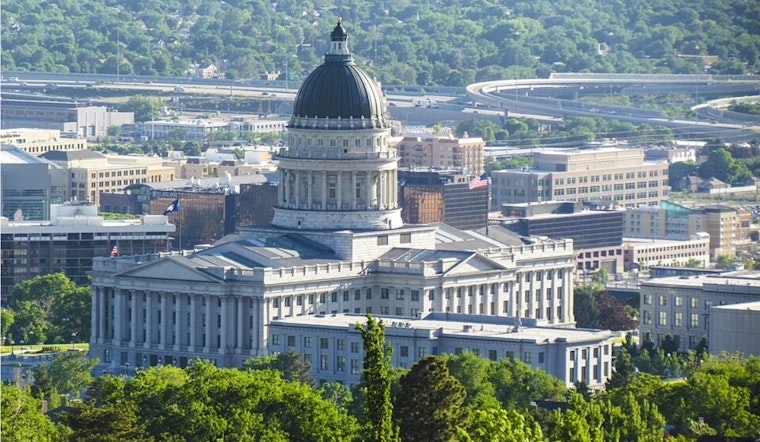
Utah lawmakers are advancing a proposal that would make landlords and rental platforms put the full monthly price front and center, instead of teasing a low base rent that balloons with extra charges. House Bill 29 would require any rental offer or advertisement to show the total amount a tenant has to pay each month, including mandatory fees. Backers say it is aimed at ending the sticker shock that hits renters after they have already dropped a nonrefundable application fee and then learn about parking, amenity, or insurance add-ons.
What HB 29 would do
HB 29 would create a new Unfair and Deceptive Pricing Act and define a rental’s “total price” as the advertised rent plus any mandatory ancillary charge, while excluding third-party utilities, according to the Utah Legislature. The bill requires that the total price be displayed clearly and conspicuously whenever a supplier offers, displays, or advertises a product, which would directly cover rental listings and online ads. It would also give the Division of Consumer Protection authority to issue administrative fines, seek relief in court, and pursue disgorgement when landlords or platforms do not comply.
A Salt Lake renter's surprise
Renters in Salt Lake City say this is not a hypothetical problem. Rachel Ortiz told KSL that her unit was advertised at $869 a month, but her actual bill runs almost $100 higher once recurring add-ons kick in. She listed a $25 parking fee, a $10 pest control charge, a $14 liability-waiver program fee, a $16 “real estate tax”, and a $32 common-area charge, all on top of the base rent. Ortiz said her complex was recently acquired by Greystar, and her experience has become a talking point for tenants who want the true out-the-door price shown up front.
Part of a wider push
Supporters of HB 29 frame it as part of a broader national push for “all-in” pricing rules that crack down on so-called junk fees. In recent years, states including Massachusetts, California, Minnesota, and Colorado have adopted similar transparency requirements. Federal regulators have also stepped in. The Federal Trade Commission and the State of Colorado settled with Greystar in December 2025 that requires advertisers to clearly display the total monthly leasing price, the Federal Trade Commission said. Backers of HB 29 argue that matching state rules will help renters comparison-shop and avoid finding out about extra costs only at checkout.
Industry response and enforcement questions
Utah already has a “truth in renting” law that requires landlords to disclose fixed non-rent charges before they collect application fees, a statute that took effect in 2021, according to the Salt Lake Tribune. Industry representatives also told KSL that some trade groups maintain limited reimbursement programs for applicants who can prove they were hit with undisclosed fees. Tenant advocates counter that weak enforcement and low public awareness mean too many renters still learn the true monthly cost only after they have signed a lease or submitted an application.
Enforcement and timeline
If the Legislature passes HB 29, it would take effect on a special date of July 1 and authorize the Division of Consumer Protection to levy administrative fines of up to $2,500 per violation, as well as seek civil penalties and court-ordered remedies, according to the Utah Legislature. Supporters say that pairing clear advertising rules with real enforcement tools could cut down on disputes and make the number in a rental ad actually mean something to households already stretching their budgets.
HB 29 is currently moving through the 2026 session and has been sent to the Senate Business and Labor Committee, according to LegiScan. Lawmakers are expected to hear testimony in the committee over the coming weeks as the session continues.





