

























































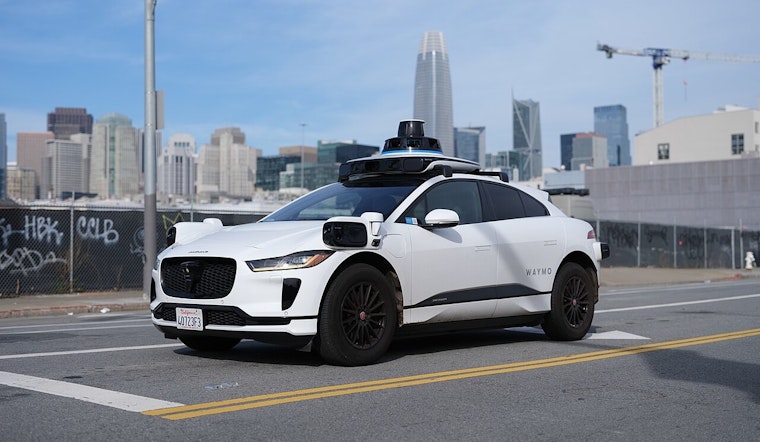
Illinois could find itself on the fast track to driverless streets, as a Waymo-backed bill in Springfield aims to launch autonomous vehicle pilot programs in key counties and potentially clear the road for statewide robotaxi service within three years. Supporters are talking up investment and mobility. Trial lawyers, unions and safety advocates are talking about what happens when something goes very wrong.
What the bill would do
Rep. Kam Buckner’s proposal would create an Autonomous Vehicle Pilot Project Act that tightly defines where self-driving tests can roll and who calls the shots. The measure limits pilot operations to Illinois counties with populations of 1,000,000 or more, plus Sangamon County and the Metro-East counties of Madison, St. Clair and Monroe. After a three-year pilot period, the Illinois Department of Transportation could authorize broader deployment across the state if the projects show they are safe and operationally ready, as laid out on LegiScan.
Companies that want in would have to spell out their operational design domain, submit a first-responder interaction plan and provide proof of financial responsibility that includes at least $1,000,000 in coverage per incident. The bill gives IDOT power to approve, suspend or revoke pilot authorizations, names the department as the exclusive state agency in charge of implementing the law, and trims home-rule powers so local governments cannot easily override it, according to LegiScan.
Backed by Waymo
The bill has a powerful cheerleader in Waymo, which told local reporters it "strongly supports" the measure and that it is "excited to one day offer our service to its residents and visitors," according to the Chicago Tribune. The company argues its driverless tech is already safer than human drivers, pointing to internal safety data that it says shows lower rates of crashes that injure pedestrians and fewer serious-injury collisions compared with human drivers, a claim highlighted on CNN.
Pushback from lawyers and unions
Not everyone is thrilled about swapping human drivers for code. Trial lawyers and labor groups have lined up in opposition, warning that the bill could weaken accountability while threatening jobs.
Illinois Trial Lawyers Association President Timothy Cavanagh called the proposal "dangerous," arguing that the legal and safety framework is not ready for a wave of robotaxis, according to the Chicago Tribune. Unions have also raised alarms that large-scale autonomous-vehicle operations could undercut driving jobs and complicate emergency response planning if police and firefighters are suddenly dealing with fleets of driverless cars in crises.
Safety incidents have fueled the debate
Waymo’s safety pitch is colliding with a growing list of headline-grabbing incidents in other cities.
On Dec. 20 in San Francisco, a power outage left Waymo vehicles stalled and at times blocking intersections. The company temporarily paused service while it sorted out the mess, according to AP News. Federal investigators later opened a probe after a Waymo taxi struck a child near a Santa Monica elementary school in late January, the Los Angeles Times reported.
In San Francisco, frustration boiled over in a more intimate way when a neighborhood bodega cat was reportedly killed after an interaction with a Waymo vehicle, an October episode that helped crystallize local anger over being turned into a living lab for autonomous tech. That story was detailed by KTVU.
Legal questions and liability
The Illinois bill does more than decide where robotaxis can drive. It also rewrites some of the rules around data and responsibility when things go sideways.
The measure authorizes manufacturers to process "evaluation data" from their vehicles for testing and development and limits certain kinds of civil liability tied specifically to that data processing. It assigns enforcement of data protections to the Attorney General and formalizes crash reporting requirements and minimum insurance levels. All of those details appear in the bill text on LegiScan.
Those provisions have raised pointed questions about how injured people would seek compensation and how aggressively state regulators could crack down on bad actors if key liability paths are narrowed.
What’s next
HB4663 was introduced in late January and still has to survive committee hearings and likely amendments in Springfield before lawmakers take a full vote. Legislators are effectively choosing whether to cast Illinois as an early adopter that courts industry investment or as a cautious skeptic that moves slowly in the face of safety, labor and legal concerns.
If the bill moves ahead, the real battle will shift from the Capitol to the rulemaking process, where IDOT will write the technical playbook that decides where, when and how driverless cars are actually allowed to operate on Illinois roads.





