

























































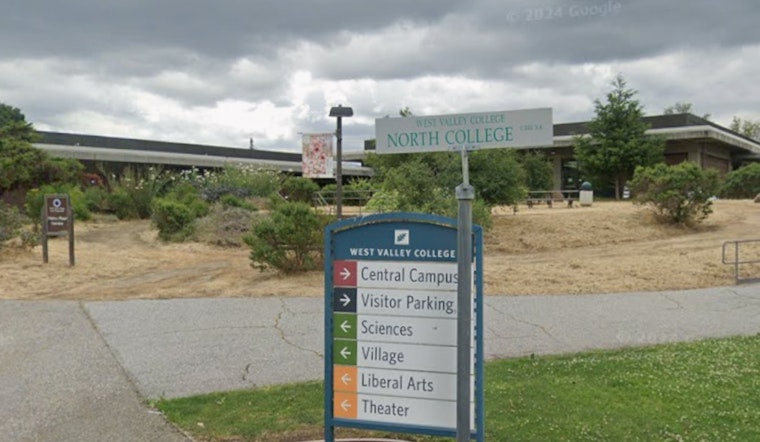
West Valley-Mission Community College District is stepping directly into Sacramento’s budget crossfire, backing a new state bill that aims to keep key student support programs alive even as federal dollars dry up. The proposal, AB 2121, would let community colleges plug holes left by disappearing federal grants for minority-serving programs without getting punished under California’s decades-old 50 percent spending rule.
In plain English, the bill would temporarily let districts keep local backfill money for tutoring, advising and transfer support from counting against the formula that dictates how much must go to classroom instructors. Supporters say that tweak is crucial if California wants to preserve services for low-income, first-generation and underrepresented students, and it puts a Silicon Valley district at the center of a statewide fight over how to shore up those programs.
According to a press release from West Valley College, Assemblymember Marc Berman introduced the Defending Student Equity and Access Act on Feb. 18, with the West Valley-Mission district officially listed as the bill’s sponsor. The district’s statement quotes Chancellor Bradley J. Davis arguing that the bill would stop California law from compounding recent federal cuts and notes that AB 2121 builds in transparency requirements, annual certifications and safeguards for faculty. Students who depend on TRIO and AANHPI programs spoke at the rollout, describing those services as nothing short of essential to staying enrolled.
What AB 2121 Would Do
Per the bill text on the state site, AB 2121 would add Section 84363 to the Education Code and allow a district, for five fiscal years following 2025–26 or until specified federal funding is restored, to exclude certain local unrestricted expenditures that maintain student support functions previously paid for with federal discretionary grants. Districts that choose to use that exclusion would have to certify each year to the California Community Colleges Chancellor’s Office that they qualify, and the Chancellor’s Office would be required to keep documentation and fold those certifications into its regular reports to lawmakers.
The bill also declares itself an urgency statute so the changes would take effect immediately, not at the usual start of the next fiscal year. The California Legislature lays out the full sunset dates, reporting provisions and guardrails.
Federal Cuts That Prompted The Bill
Supporters frame AB 2121 as damage control after a federal pullback that left long-standing minority-serving and TRIO programs suddenly exposed. On Sept. 10, 2025, the U.S. Department of Education announced that it would end discretionary funding for several Minority Serving Institutions grant programs and reprogram about 350 million dollars. On top of that, the administration’s FY 2026 budget proposals target TRIO programs for elimination.
Advocates warn that combination could gut tutoring, Upward Bound, Student Support Services and other wraparound efforts that help disadvantaged students stay in school and eventually transfer. The U.S. Department of Education announced the grant changes last fall.
California’s community colleges are particularly exposed. Research and reporting show that the vast majority of the state’s community colleges now carry Hispanic-Serving Institution designations and that the system enrolls a large share of the nation’s Latino students. Inside Higher Ed has noted that roughly nine in ten California community colleges meet HSI thresholds.
The West Valley release adds that MSI and TRIO programs touch more than 1.6 million California community college students and asserts that the state receives roughly 70 percent of federal HSI funds. Backers say those numbers are exactly why state lawmakers need to move quickly. West Valley College provided those estimates.
How The Fix Would Work And Safeguards
AB 2121’s mechanism is intentionally narrow and fairly wonky. By excluding local backfill spending for affected student support programs from the current expense of education calculation, district leaders say they can keep services running without breaking California’s Fifty Percent Law, which requires at least half of certain operating costs to go to classroom instructors.
According to the bill text, AB 2121 explicitly forbids districts from using the exclusion to increase administrative pay or to cut full-time faculty positions, and it keeps decisions about instructional assignments in the realm of labor negotiations. Backers also emphasize that the proposal does not request new state dollars or a statewide backfill. It would simply allow local districts to redirect their own existing funds, with required reporting. The California Legislature lists the full set of protections and restrictions.
AB 2121 was introduced on Feb. 18 and has received its first reading. It now heads into the usual slog of committee referrals and legislative hearings, where its details and timing could both be reshaped. LegiScan tracks the bill's early actions and history. Supporters are banking on the urgency clause to speed protections to campus programs, while critics are expected to continue raising concerns about long-term budget tradeoffs and state priorities.
"Without AANHPI or TRIO, I wouldn't be here," student Miya Torres said at the bill announcement, underscoring the personal stakes for students who rely on campus advising and tutoring, according to the district release. Mission College and West Valley spokespeople say they plan to keep pressing lawmakers to move quickly so services are not interrupted as the federal fights play out. Lawmakers and district officials will weigh the measure in Sacramento in the coming weeks while community colleges across California scramble to stabilize what many see as essential student support systems.





