

























































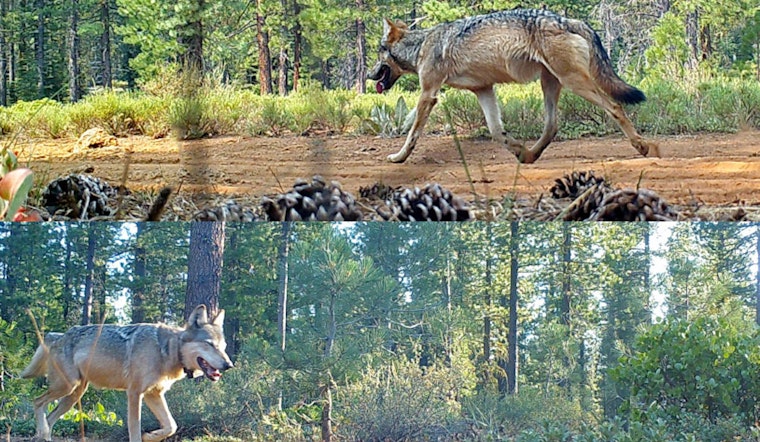
With gray wolves officially nosing into Tehama County, local leaders say they are lining up new tools before trouble starts, including possibly bringing back a USDA trapper shared with neighboring Shasta County and creating a county “wolf liaison.” Two wolf packs have been confirmed in the broader area, but officials stress that, so far, no livestock losses have been documented. Supervisors plan more meetings in the coming months to sort through options and coordinate with state wildlife officials and ranchers.
At a recent board session, supervisors talked through hiring a USDA trapper and reviewing candidates for the job, according to Action News Now. The county also floated the idea of a dedicated wolf liaison, a single point of contact who could run interference between ranchers and state agencies. Officials framed the moves as a way to get ahead of potential conflicts rather than scramble after the fact.
Board Chair Tom Walker told Action News Now that “people of Tehama County want to limit the existence of wolves in Tehama County” and that the board wants to “stay ahead of the problem” by building a working relationship with the California Department of Fish and Wildlife. Supervisors emphasized that there have been no confirmed depredations in the county to date and said the current discussion is about preparation, not reaction.
Gray wolves are listed as endangered under both the California Endangered Species Act and the federal Endangered Species Act, and the California Department of Fish and Wildlife, or CDFW, tracks known packs and wolf activity statewide. According to CDFW, state biologists in 2025 upgraded several areas of repeated wolf use to full pack status, including groups whose ranges overlap with Tehama County. Because wolves are protected, CDFW handles depredation determinations, compensation eligibility, and many key management actions at the state level.
Statewide comeback and local strain
Wildlife officials and conservation groups describe the gray wolf’s return to California as a slow, long-haul recovery story, but it has also tightened the screws on ranching communities in the north of the state, as reported by the Los Angeles Times. The paper detailed efforts to collar wolves and share location maps with landowners and noted that compensation and deterrent programs have been strained as more packs and more claims come online. Several northern counties have already taken emergency steps to push the state for faster relief.
The state operates a Wolf-Livestock Compensation program that has paid for direct-loss claims and nonlethal deterrent projects, but the pot of money is limited. CDFW outlines current rules and funding status on its Wolf-Livestock Compensation Grants page. Per CDFW, the department is prioritizing direct-loss payments and currently has very constrained resources for deterrent grants. That shortfall is one reason Tehama County leaders say they are exploring additional local tools and quicker on-the-ground coordination.
What Tehama officials are weighing
On the table are quicker reporting lines to the state, a county liaison to funnel updates to ranchers, targeted hazing and coordinated work with USDA Wildlife Services on trapping where the law allows it. State reports and recent media coverage have highlighted collaring, trail cameras and round-the-clock hazing as tools that other areas have used to cut livestock losses, and Tehama officials say they want the ability to roll out those tactics fast if wolf activity ramps up. Supervisors told reporters they expect to narrow their list of preferred actions and continue reviewing candidates for a USDA contract in the weeks ahead.
What the law allows
The federal Endangered Species Act and California’s own endangered-species protections set strict limits on harming or killing wolves, and federal guidance spells out the regulatory hoops agencies must clear before any lethal steps can be taken. The U.S. Fish & Wildlife Service’s species information describes the federal protections and overall framework that govern actions involving listed wolves. That legal backdrop is a big reason counties publicly stress working with state and federal agencies instead of attempting unilateral lethal control.
Conservation advocates say the growing packs mark a major ecological success, even as they call for more funding and concrete tools to reduce conflicts. The Center for Biological Diversity, for example, has welcomed new pack confirmations while pushing for coexistence measures. Ranchers and rural residents, meanwhile, continue to press for faster responses when livestock are threatened. Tehama supervisors say their proposed liaison role and tighter coordination are aimed at walking that line, addressing both sets of concerns while staying inside state and federal rules.
Next, supervisors are expected to keep the talks going and to formally review trapper candidates and a job description for a wolf liaison at upcoming meetings, county officials said. Residents who spot large-canine tracks or possible wolf sightings are urged to document what they can and report it to CDFW so biologists can follow up and advise on next steps.





