

























































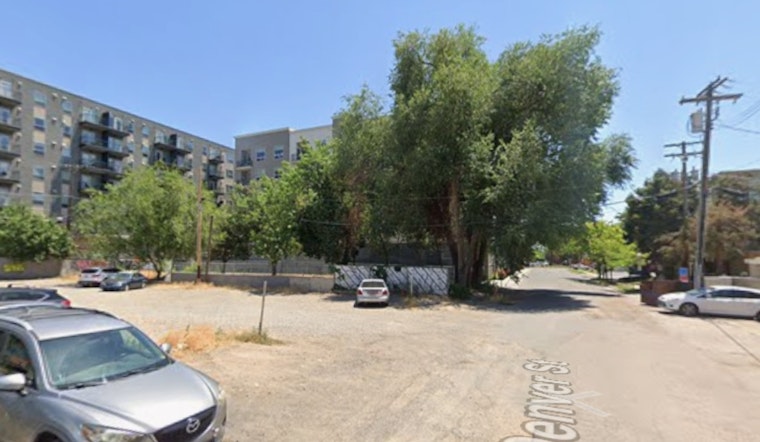
A 1.14-acre block near 300 South in Salt Lake City's Central City could trade low-rise buildings for an 11-story mixed-use tower, if a new proposal at 343 S. Denver Street clears city review. Plans call for roughly 240 apartments stacked above a lively ground floor with three retail bays and eight small restaurant spaces, plus resident perks like a pool, fitness areas and a rooftop deck.
Developers say they intend to include a limited number of family-sized affordable units. That move is designed to qualify the project for Salt Lake City's Affordable Housing Incentives, which would let the building rise higher than the base height limits on the site. At this point, the filing is in an early stage, and the proposal will need city scrutiny and approvals before any demolition or construction can begin.
What the Plans Would Build
The application for 343 S. Denver Street outlines about 240 apartments in a mix of studios, junior one-bedrooms, one-bedrooms, two-bedrooms and a dozen three-bedroom units. The street-facing ground floor would bring three retail bays to 300 South.
According to Building Salt Lake, one larger 1,882-square-foot restaurant space would sit near 300 South, while eight micro-restaurants would line Denver Street, ranging from roughly 345 to 606 square feet. The plans also show the removal of the existing two-story restaurant at 454 E. 300 South and the demolition of a single-family home on Denver Street to clear the full development site.
Affordable Housing Incentives and the Height Ask
To get above the standard height cap, the development team is looking to Salt Lake City's Affordable Housing Incentives program. The site is zoned MU-8, and the incentives are the tool the applicants point to as their path to build beyond the base envelope.
Per Salt Lake City's Affordable Housing Incentives guide, the program allows additional height or density in exchange for providing long-term affordable units and requires ongoing compliance and reporting. Under the current filing, the affordable units would be targeted to households at or below 80% of the area median income, and that affordability commitment is what the team cites as the justification for an extra one or two stories beyond the MU-8 baseline.
Retail, Parking and Site Details
The project would front 300 South, with vehicle access and parking egress located on Denver Street. To squeeze more parking into a tighter footprint, the design calls for a mechanical “puzzle” parking system that shuffles cars in stacked stalls.
Building Salt Lake reports that the overall plan would provide about 220 parking stalls, or roughly 0.85 spaces per unit. About 106 of those would be in the mechanical system, and all but 15 spaces would be reserved for residents.
The ground floor is heavily geared toward small food businesses. Most of the micro-restaurants would share access to a common commercial kitchen that includes a cooler and freezer space, a setup that could lower the barrier to entry for smaller operators while concentrating back-of-house functions.
Approval Path and What to Watch For
The MU-8 zoning on the site is defined by city planning staff as an eight-story, mid-rise district with a nominal maximum height of about 90 feet. The Affordable Housing Incentives program is the official mechanism that can allow an extra story or two when a project includes qualified affordable housing.
The Salt Lake City Planning Commission, and ultimately the Salt Lake City Council, would both play roles in any decision to allow additional height or to sign off on a final design. The council has the final say when a proposal asks to exceed base zoning standards. Neighbors and nearby business owners will have opportunities to weigh in as the project moves through public review.
For now, the proposal is a set of plans in the city’s docket rather than a construction schedule. If it moves ahead, it would join several recent Central City proposals that aim to boost ground-floor activity and add housing near downtown, while putting the Affordable Housing Incentives program to the test on a new mid-rise development.





