

























































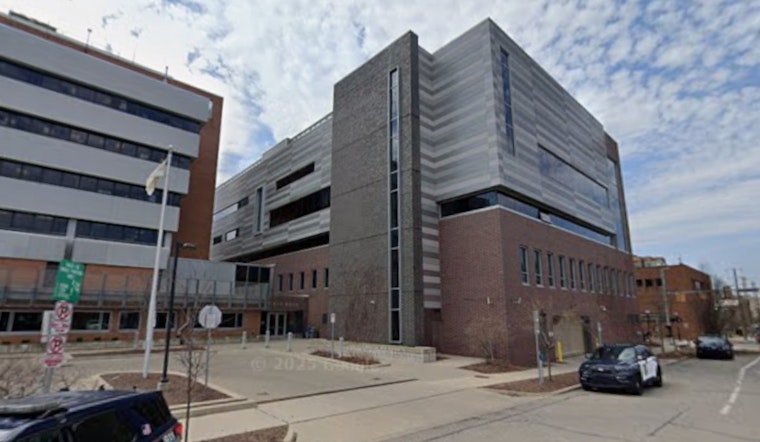
Ann Arbor is inching its long-discussed Y Lot project closer to reality, signing off on a key financial move that could help send a 20-story affordable housing tower soaring over downtown.
Today, city leaders approved publication of a notice of intent to issue up to $35 million in city-backed bonds to support a 330-unit affordable housing high-rise at 350 S. Fifth Avenue. The project, a partnership between the Ann Arbor Housing Commission and Related Midwest, is pitched as an all-electric, net-zero-ready building with ground-floor retail and an expanded transit hub next to the Blake Transit Center. City officials say a portion of the debt service is expected to be paid using proceeds from the 20-year affordable housing millage that voters approved in 2020.
City paperwork shows the council adopted a resolution authorizing publication of a "Notice of Intent" for limited-tax general obligation capital improvement bonds not to exceed $35 million. That move opens a 45-day window for a possible referendum, according to the City of Ann Arbor Legistar. The file describes the project as a 20-story, mixed-use tower with roughly 330 apartments targeted to households earning up to 80% of Area Median Income. It also notes the development is expected to cost more than $200 million and has secured support from the Michigan State Housing Development Authority.
Related Midwest was selected as co-developer after a competitive RFP. City planning documents outline a design that includes a two-story podium, resident support spaces and about 6,500 square feet of ground-floor commercial space, according to the City of Ann Arbor project page. The Ann Arbor Housing Commission has indicated that the greater of 100 units or 40% of the building will be reserved for households at 60% AMI or less, and the project page highlights connections to planned Fourth Avenue streetscape and transit improvements.
The financing plan calls for a layered capital stack that includes Michigan State Housing Development Authority tax-exempt bonds, low-income housing tax credit equity, HOME funds, Act 381 brownfield support and millage gap financing, with the city expecting to make bond payments from the 2020 housing millage, as reported by MLive. Local reporting also noted that the millage has helped roughly 450 affordable units get built or underway and that nearly 1,000 additional units are in the millage pipeline, figures city leaders have cited in defending the strategy of backing bonds with millage revenue.
How the financing will work
The resolution authorizes limited-tax general obligation bonds that would be secured by the city's pledge of its limited tax full faith and credit and sold through a competitive public offering. Under the notice, the specific sale terms, including the interest rate and schedule, would be set later by a Bond Authorizing Resolution. The city will not issue the bonds until all required waiting periods and approvals have been completed.
What happens next
Once the notice is published, residents will have 45 days to submit a petition requesting a referendum on the bond issue. Even if no valid petition is filed, the City Council would still need to adopt a bond-authorizing resolution before any notes can be sold.
The development team is aiming to break ground in spring 2026, with construction and associated streetscape work coordinated with planned Fourth Avenue and Blake Transit Center upgrades.
Mayor Christopher Taylor told MLive that the project will provide affordable housing to Ann Arbor residents who need it. Housing officials have described the bond move as a way to speed up construction, and staff at the Ann Arbor Housing Commission have indicated the city is becoming more comfortable using millage proceeds as a bond repayment source.





