

























































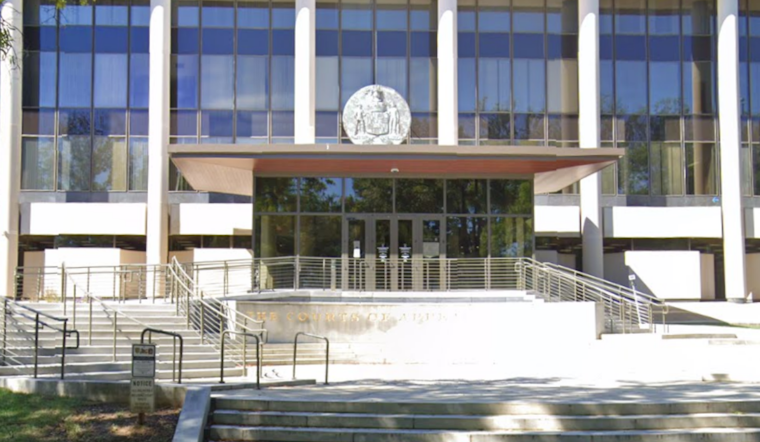
Maryland’s Supreme Court spent an hour on Monday grilling lawyers over a deceptively simple question that could shake up a local ballot: When does a candidate actually have to live in the district they want to represent, at filing time or six months before the general election? The fight centers on first-term Del. Gary Simmons and his primary challenger, John Dove Jr., in House District 12B in northern Anne Arundel County, and the outcome could alter who voters see on the June primary ballot and how election officials deal with eleventh-hour challenges.
Simmons argues that Dove switched his voter registration into the district right before filing his certificate of candidacy, and he is asking the courts to boot Dove from the ballot. As reported by The Baltimore Banner, Simmons’ attorney told the justices that the March statutory deadline for contesting candidacies exists so the State Board of Elections can make sure “we have the right candidates.” That pitch set up a practical clash between paperwork deadlines and the state constitution’s residency requirement.
Court records show Simmons filed the case on March 11 in Anne Arundel Circuit Court (C-02-CV-26-000603), naming Dove along with both the local and state election boards, according to Maryland Courts filings. The lower court tossed the challenge as premature, and Simmons took his case straight to the state’s high court. Those filings now form the backbone of the appeal being argued in Annapolis.
How The Timing Rules Clash
At the center of the dispute is Article III, §9 of the Maryland Constitution, which says a candidate must have lived in the district for six months before the general election, a provision that routinely surfaces in residency fights. That constitutional language and related case law appear in past state rulings and summaries of Maryland opinions. The justices must now decide whether that six-month rule controls, or whether statutes and administrative deadlines that help election officials get ballots printed and mailed on time take priority in practice.
What Lawyers Told The Court
In Annapolis, Simmons’ attorney pushed for an early resolution so election officials know who belongs on the ballot in time for printing, while Dove’s lawyer, Jill P. Carter, countered that the constitution rules the day and that Dove has until May 3 to meet the residency requirement. The back-and-forth over whether the March contest window or the six-month constitutional residency rule controls has animated the briefs and oral arguments for both sides, as detailed by Maryland Matters.
Why It Matters For The June Primary
Maryland Solicitor General Julia Doyle, representing the State Board of Elections, told the court that the state cannot wait until May 3rd to determine who is an eligible candidate and pointed to an April 20 legal deadline to lock in ballots that are mailed to voters, The Baltimore Banner reported. Chief Justice Matthew Fader did not say when the court would rule after roughly an hour of questioning. If the court sides with Simmons, some ballots could be changed before printing. If it sides with Dove, challenges to a candidate’s residency could be pushed off until the constitutional six-month mark.
For now, the high court has taken the case under advisement and given no timetable for a decision. Whatever the ruling, it is likely to shape how residency battles are fought and how fast election officials and campaigns must react in future election cycles.





