

























































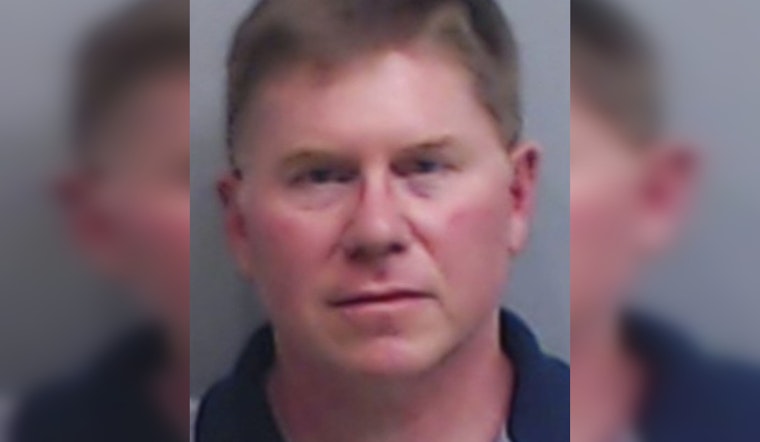
An Atlanta attorney whose murder conviction was tossed by the Georgia Supreme Court is now asking for a different kind of relief: permission to leave the county while he waits for a second trial. On Friday, Bryan Schmitt urged a Fulton County judge to loosen his bond so he can travel, while relatives of the man who died, Hamid Jahangard, filled the courtroom and pressed for tight restrictions to remain.
Schmitt, who has been out on bond, told the court he never meant to hit Jahangard and again described the crash as a “tragic accident.” Prosecutors pushed back and argued the travel limits should stay in place. The judge said she will issue a written decision on Schmitt’s bond request next week.
According to WSB-TV, prosecutors told the court they believe Schmitt intentionally steered his Mercedes into Jahangard during a heated roadside confrontation after a golf ball struck Schmitt’s car on River Valley Road. Schmitt’s attorneys countered that the current travel restriction is blocking him from doing his job and from visiting his elderly parents, and they asked that he be allowed to leave Cobb County for short, preapproved trips.
The clash that now drives the case dates back to July 30, 2019. Prosecutors say Jahangard, a 60-year-old real estate investor, was standing near the driveway of a River Valley Road property when a golf ball hit Schmitt’s Mercedes. Surveillance video and footage from a van traveling behind Schmitt later became key evidence, and police said some of Schmitt’s statements did not match what the video showed, according to The Atlanta Journal-Constitution. In April 2024, the Supreme Court of Georgia reversed Schmitt’s 2022 conviction, ruling that the trial judge erred by refusing to instruct jurors on the legal definition of “accident.”
What’s Next in Court
Schmitt is now headed for a retrial, and prosecutors have signaled they intend to put the case back in front of a jury. Before that happens, the same judge who will preside over his new trial must decide whether Schmitt will stay largely confined to Cobb County or get some room to move while the case grinds on.
Schmitt has said he wants to travel for work and to see his parents, while prosecutors are urging the court to hold the line on his current restrictions. For now, everyone is waiting on the judge’s written ruling next week to see just how far he will be allowed to go.
Legal Context
The Supreme Court’s decision did not clear Schmitt of the allegations. Instead, the justices focused on a jury-instruction error, concluding that Schmitt’s own testimony provided at least “slight evidence” that could have supported an accident instruction. Because jurors never heard that legal definition, the convictions were vacated, according to the high court’s opinion.
That sends the case back to square one, with a new jury eventually tasked with sorting out what Schmitt intended in the seconds before impact. The disputed video footage and questions about his statements to police are expected to be central again. For Jahangard’s family, the loss remains; for Schmitt, the fight over whether he can travel while waiting for trial is just the first of many legal battles still ahead.



