

























































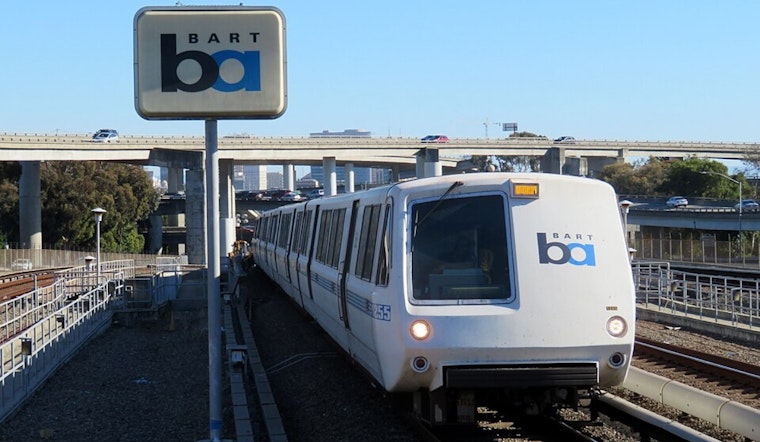
Today, BART resurfaced a short explainer that doubles down on a policy it first rolled out in 2023: running shorter trains. The agency says the compact consists of making service safer, cleaner, and cheaper. According to BART, fewer cars allows police and safety staff to move through trains more quickly, keep the newer Fleet of the Future cars in regular service, cut delays, and save roughly $12 million a year.
What BART Is Saying
BART’s archived announcement lays out five specific benefits as the rationale for what it calls sizing trains for safety: increased police and safety staff presence, cleaner cars, running mostly new trains, fewer delays and about $12 million in annual savings. In an archived press release via BART, the agency highlighted the reliability of its newer cars and the operational flexibility they provide as central reasons to shorten some consists.
The same talking points resurfaced on social media in the current push. BART shared the explainer on X, and the agency directed riders to the post on X for a recap of the policy.
It was pitched as both safety and efficiency.
— BART (@SFBART) March 18, 2026
The announcement stated (linked below for receipts):
"Shorter trains mean:
• More police and safety staff presence
• Cleaner trains
• Only new trains will be in service unless there is a need to run an old train
•…
Why BART Says This Will Help
BART frames the move as part of its anti‑harassment work, particularly for people who feel most exposed when cars are almost empty. The agency says eliminating near‑empty cars is meant to address spaces where women and gender‑expansive youth told BART they felt vulnerable.
Reporting on the initiative notes that the policy emerged from youth‑led focus groups and surveys. BART tied the train‑sizing strategy to the second phase of its Not One More Girl campaign, which aimed to reduce isolation on trains and improve bystander intervention. For background on that outreach, see coverage by TransitCenter.
Reliability and Capacity Trade‑Offs
To calm nerves about reliability, BART points to its newer Fleet of the Future cars. Trade press reporting on the agency’s Quarterly Performance Review notes that newer cars experienced more than twice as many service-free miles between service delays as legacy equipment. That reliability is the agency’s stated reason why running fewer cars could still translate into fewer delays, according to Mass Transit.
Transit capacity research, however, indicates that shortening trains reduces per‑train passenger capacity. Unless the frequency is increased to compensate, that can lead to more crowding at peak times. The Transit Capacity and Quality of Service Manual, available via the National Academies Press, describes that trade‑off in detail.
Budget Context
Shorter trains are also part of BART’s ongoing effort to trim costs while it navigates tight budgets and hunts for long‑term revenue. Local reporting has linked train‑sizing to fiscal strategies the agency used to close recent projected deficits.
For an overview of how efficiency measures, including shorter trains, fit into BART’s broader budget work, see reporting on balancing its FY26 budget deficit, per Hoodline.
Bottom Line
BART says it will remain very nimble, monitor crowded data hourly, and that it will add cars when crowding is persistent, according to the agency’s announcement and social posts. Riders are encouraged to watch for crowding during peak hours and report any issues. BART says it will continue to tweak train lengths and schedules as ridership and conditions change.




