

























































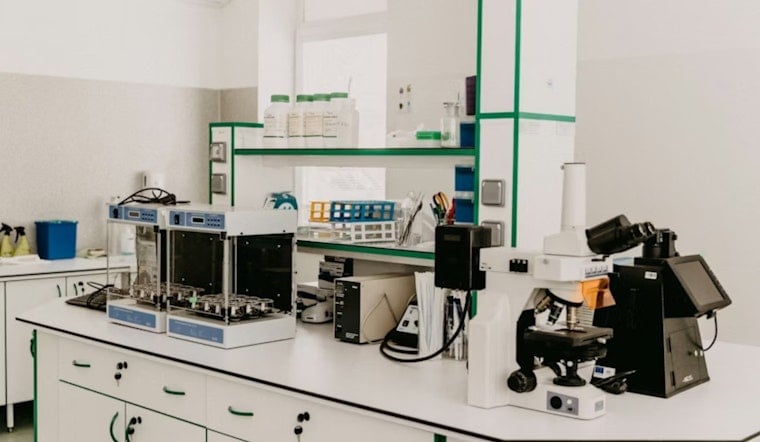
Dallas-Fort Worth is quietly muscling into the national life sciences rebound, as a wave of new corporate campuses, manufacturing projects and university labs promises jobs and lab-ready real estate across the metro. Developers and economic leaders point to open land, central logistics and a growing STEM talent pipeline as reasons national and international firms are taking a fresh look at North Texas. The region still trails Boston and the Bay Area in lab inventory, so the real test will be turning all that interest into fully operating facilities that can keep DFW’s momentum from stalling out.
Local reporting and market data suggest the shift is already in motion. As reported by Bisnow, the region has seen steady, if measured, growth, while Cushman & Wakefield puts DFW’s 2025 R&D sales activity near $243 million and notes that the metro’s top 10 venture and IPO deals totaled roughly $771 million. Those kinds of numbers help explain why cities and developers are scrambling to deliver space that life sciences companies can actually plug into.
Big Pharma Is Building Here
National and global pharmaceutical heavyweights are starting to plant real roots in North Texas. In July 2025 AstraZeneca announced a multibillion-dollar U.S. investment that includes specialty manufacturing expansion in Coppell, according to a company press release. Novartis confirmed plans in February 2026 to build a 46,000-square-foot radioligand-therapy manufacturing site in Denton, and Denton city records show the company has identified the former U.S. Radiopharmaceuticals property at 2101 Shady Oaks Drive as the likely location.
Developers Race To Add Lab Space
Local developers are hustling to keep up with that corporate interest by delivering institutional-grade lab product. Pegasus Park’s Biotech+ campus and the new Bridge Labs offer prebuilt lab suites and shared infrastructure, according to the campus website. South of Dallas, Mansfield’s LinQ master plan includes a 17-acre Innovation Community with plans for hundreds of thousands of square feet of office and lab space, and the city has approved incentives for projects such as India-based Stallion Labs’ proposed roughly 200,000-square-foot U.S. campus, per local reporting.
Universities Build The Pipeline
DFW’s universities are working the other side of the equation by supplying technical talent and training space. The University of North Texas at Dallas opened a $100 million STEM building late in 2025 to expand lab classrooms and workforce training, according to coverage of the project. Texas Woman’s University cut the ribbon on a new $107 million Health Sciences Center in Denton earlier this year, and CBRE data highlights the region’s sizable and growing pool of life science graduates that firms find especially appealing.
Capital, But Not Without Realities
Money is following those fundamentals, even as investors and developers tread carefully. Cushman & Wakefield notes that DFW has largely sidestepped overbuilding by adding product on an as-needed basis, which has kept vacancy pressure in check. Local funders and philanthropy-backed investors say venture interest has picked up speed; as Matt Crommett of Lyda Hill Philanthropies told Bisnow, "We've never seen so much interest from life sciences venture capital funds." That mix of capital plus cautious development may keep growth on a steady climb rather than a boom-and-bust roller coaster.
What To Watch Next
The next chapter hinges on how big corporate moves and infrastructure decisions redraw the regional map. AT&T’s decision to consolidate a new global campus in Plano has already shifted development dynamics in the northern suburbs, according to reporting by CoStar, and cities are competing with incentives and utility upgrades to court manufacturing and manufacturing-adjacent jobs. Analysts say DFW will need to pair its open land with reliable power, water and streamlined permitting if it wants to meet the operational demands of advanced manufacturing and radiopharmaceutical firms, a point underlined in CBRE’s market work on the region.
Local officials argue that the basic pieces already exist, including land, incentives and a deepening talent pipeline, but turning high-profile announcements into long-term hiring and production will require coordinated effort from governments, universities and developers. Denton city documents tied to the Novartis project describe the tax abatements and grant packages municipalities are using to secure major life sciences investments, underscoring how public-private alignment will determine whether DFW’s recent momentum hardens into durable industry growth.


