

























































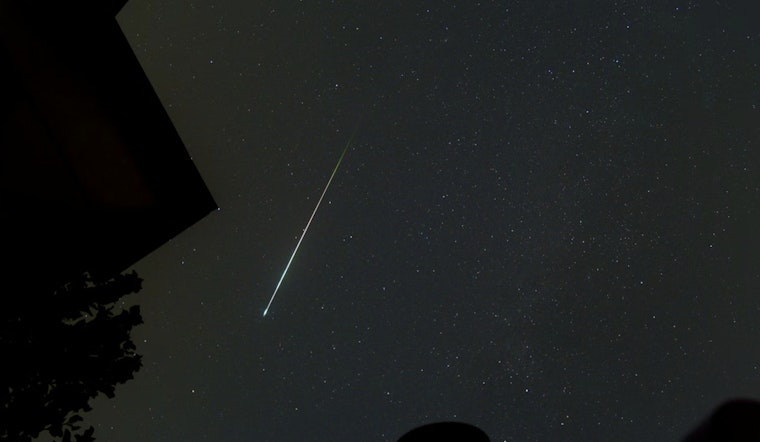
The Georgia night sky put on a quick but dramatic light show Monday night when a bright streak tore across the atmosphere, briefly lighting up metro Atlanta neighborhoods. Short doorbell and dash-cam clips of the flash are now bouncing around online, with viewers around the region uploading videos that show a fast, downward streak flaring and fading in seconds. Local newsrooms pulled together some of those clips Tuesday morning as space and weather groups started gathering reports.
What the station captured
FOX 5 Atlanta reports it has received multiple security-camera videos of the object that appeared over Georgia on Monday night and has posted a short compilation for viewers. The station’s reel is one of several viewer-submitted clips local outlets typically share when something odd streaks across the sky, and it gives investigators and hobbyists a handy way to compare angles, brightness and timestamps. The station has made its raw clip and a brief note available alongside the compilation.
Why experts call it a fireball or bolide
Extremely bright meteors that break apart or explode in the atmosphere are known as fireballs or, when they detonate, bolides. Agencies that keep tabs on near-Earth meteoroids use both ground-based and space-based sensors to estimate a meteor’s energy, altitude and any possible fall zone on the ground. NASA’s Meteoroid Environment Office runs camera networks and databases that track these brilliant entries so scientists can reconstruct a meteor’s path and assess whether any fragments might have survived to reach the surface. For more on how those camera networks operate, and why getting the same event from multiple viewpoints matters so much, see NASA's All-Sky Fireball Network.
How to report footage and sightings
Researchers say fast, well-documented reports are crucial when something this bright shows up. Timely, geolocated video or eyewitness accounts help scientists triangulate a meteor’s trajectory, since they can line up where different observers were, which way they were facing and what they saw. The American Meteor Society collects public reports through an online fireball form so multiple sightings of the same object can be grouped into a single event. Details such as precise timestamps, the direction the streak moved across your field of view and any notes about sound or visible fragmentation make it much easier for experts to narrow a potential search area for meteorites.
What to do if you think you found a piece
If you suspect a fragment landed on your property, experts say resist the urge to grab it as a souvenir. Photograph the object where it sits and avoid handling it with bare hands. Specialists recommend documenting the surrounding context, keeping the find as undisturbed as possible and then contacting local university geologists or museum curators who can evaluate and preserve potential samples. Institutions that receive and study meteorite material emphasize that recording the location and condition first, then calling in experts, helps keep a rock’s scientific value from being lost to contamination or casual cleaning. For guidance on handling potential meteorites and next steps from museum and research perspectives, see resources from the Smithsonian and partner programs.
In the coming days, agencies and amateur skywatchers will be lining up timestamps and camera angles to see exactly how this object moved through the atmosphere. If your doorbell or dash camera caught the flash, consider sending the clip to local news outlets and filing a report with the American Meteor Society so researchers can refine the path and, if warranted, organize a recovery effort. This story will be updated as scientists and official monitoring networks release their analysis.





