

























































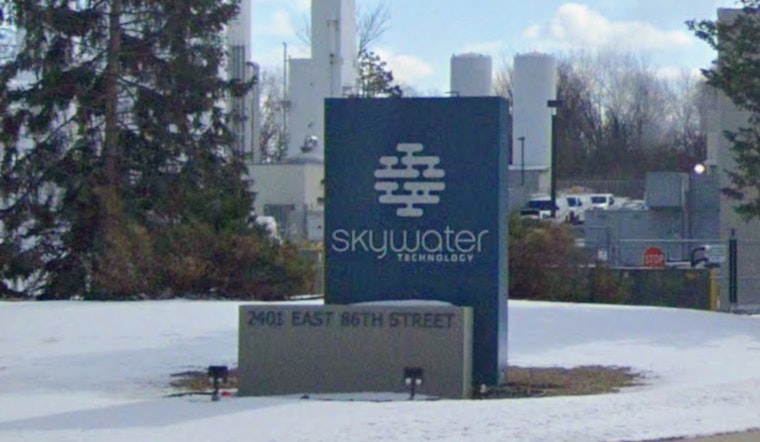
SkyWater Technology is betting that the next leg of the U.S. semiconductor boom is about to speed up, and its Bloomington fab is lining up to ride that wave. Coming off a major factory purchase and a growing Advanced Technology Services pipeline, the company is talking about more output, more hiring, and a tighter link into the quantum computing supply chain as it moves through a pending sale to IonQ.
Chief executive Tom Sonderman laid out the case in an open letter and told reporters that SkyWater is negotiating a roughly $1.8 billion acquisition by IonQ that would keep the Bloomington-based foundry operating as an independent unit within the combined company. As reported by the Star Tribune, Sonderman wrote the mid-March letter to calm nerves among employees and stakeholders while the company pushes ahead with its growth plans.
SkyWater's Numbers And The Fab 25 Boost
In filings with the U.S. Securities and Exchange Commission, SkyWater said fiscal 2025 revenue reached $442.1 million. Roughly $175.3 million of that came from Fab 25, the Austin operation the company closed on in June 2025. Headcount climbed to 1,551 U.S. employees as of Dec. 28, 2025, up from 702 a year earlier as SkyWater folded the new plant into its network, according to the U.S. Securities and Exchange Commission.
Fab 25: Cheap Purchase, Big Output
SkyWater completed the Fab 25 acquisition after reaching terms with Infineon that shifted roughly 1,000 workers and a 200 mm fab into SkyWater's U.S. foundry lineup. The company said the transaction included a payment of about $73 million at closing plus roughly $20 million in working capital, which put the near-term acquisition cost at close to $93 million while adding capacity for approximately 400,000 wafer starts a year, according to SkyWater. Executives have cast the deal as a fast way to scale domestic production for defense, automotive, and industrial chips.
Why IonQ Wants An Onshore Foundry
IonQ has said buying SkyWater would create a vertically integrated quantum platform by pairing its trapped ion technology with U.S. chip manufacturing, a mix the company argues will resonate with government and other mission-sensitive customers. In the joint announcement, IonQ described a cash and stock package that includes $15 in cash and $20 in IonQ shares per SkyWater share, subject to a collar, implying an equity value of about $1.8 billion. The transaction is expected to close in the second or third fiscal quarter of 2026, subject to stockholder and regulatory approvals. IonQ chief executive Niccolo de Masi said the combined business would be “the best capitalized and largest quantum merchant supplier in the world,” according to IonQ.
More Uplift For Minnesota Manufacturing
Minnesota’s semiconductor sector has already been on the upswing. The state counts about 150 semiconductor operations, and the industry grew 11.4% from 2021 to 2025, with around 10,100 workers earning an average of about $97,000 a year, according to the Star Tribune, citing state DEED data. Local expansion plans, including Polar Semiconductor’s $525 million project in 2024, backed by roughly $195 million in state and federal support, show how public funding and the CHIPS Act are reshaping regional manufacturing. For Bloomington, SkyWater’s ramp-up points to more high-wage manufacturing jobs and a deeper local supply chain for specialty chips.
Why This Matters Nationally
The broader push to bring chipmaking back onshore is national in scope. The Semiconductor Industry Association has noted that the U.S. share of global chip manufacturing capacity dropped to about 10% by 2022 after decades of erosion, which helps explain why policymakers and companies are pouring money into domestic fabs. McKinsey estimates the global semiconductor market could grow from roughly $775 billion in 2024 to as much as $1.6 trillion by 2030 as AI and data center demand accelerates. Those kinds of projections help clarify why a quantum hardware company would pay up for guaranteed access to U.S. manufacturing.
What To Watch Next
The deal still needs stockholder approval and regulatory clearance before it closes, and industry watchers will be looking to see whether SkyWater can keep its third-party customer base healthy while it shifts under new ownership. Local economic development officials will also be tracking how quickly new capital shows up in the form of tool installations, hiring, and upgrades at the Bloomington and Austin sites. For now, both companies say SkyWater will largely keep operating as it does today, with leadership and day-to-day operations compartmentalized under the new structure, according to IonQ.
“Semiconductors are the new steel,” Sonderman wrote in his letter, and in Bloomington, that line is being treated as an economic blueprint rather than a marketing slogan. Whether the IonQ tie-up turns into a long-term quantum anchor or simply bulks up the domestic foundry network, the deal has already shifted the business math around onshore chipmaking and raised the local stakes. SkyWater’s letter to stakeholders lays out Sonderman’s full case.





