

























































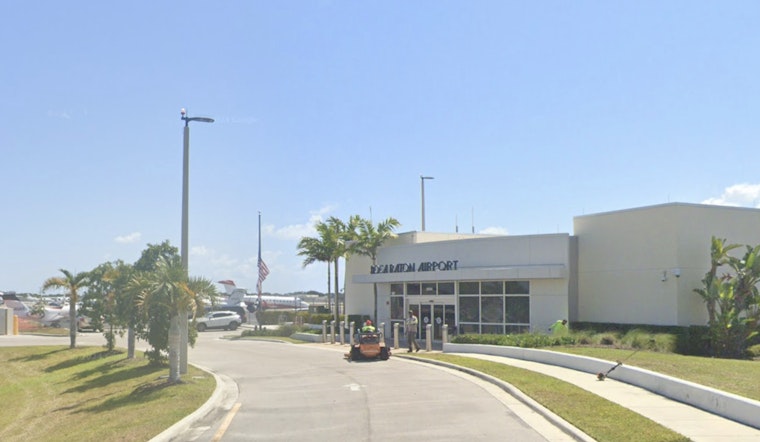
Surveillance video from Boca Raton Airport captures the moment two small planes clipped each other in a run‑up area on Oct. 28, 2025, narrowly sidestepping what could have been a head‑on hit. The footage, released by federal investigators, appears to show a flight‑school aircraft set up for a mock solo when another plane rolls in and makes contact. No one was hurt. A student pilot later told investigators he believed he had been cleared for takeoff, and that his instructor grabbed the controls and yanked the airplane out of the other aircraft’s path just in time.
What the video shows
The National Transportation Safety Board has posted the surveillance clip and supporting material in its public investigation docket, which pins the contact point to a runway run‑up area and includes a brief summary of the radio traffic. According to the NTSB, the docket release dated Jan. 9, 2026, contains the video, photos and other collected evidence, and classifies the event as a ground collision at Boca Raton Airport.
Student, instructor and the other pilot
News accounts based on the release report that the student in the training aircraft said he was cleared for takeoff when he spotted the other airplane coming toward him. His instructor, according to those reports, took control and swung the Cessna out of the way, preventing a direct, nose‑to‑nose impact. The second pilot later told investigators he thought he held the right of way for departure, according to WBAL NewsRadio.
Investigators' findings
Federal records identify the airplanes as an experimental Giles G‑202 (N202RD) and a Cessna 172R (N825KS). The NTSB’s factual report lists substantial damage to both aircraft but confirms there were no injuries. Both planes were preparing to depart runway 05 when they made contact in the run‑up area, according to the report and docket. The file notes that investigators retained photos and audio excerpts for the case and that the agency did not send personnel to the accident site.
Why it matters
Run‑up and movement areas sit at the crossroads of airport traffic, where aircraft are turning, testing engines and waiting their turn, and where one bad assumption can ruin everyone’s day. The FAA’s Aeronautical Information Manual stresses that pilots must “see and avoid” and comply with air traffic control instructions, even at slow taxi speeds. Misunderstandings about clearances or who goes first can still create high‑risk conflicts, especially around busy flight‑training operations working out of shared run‑up pockets. According to the FAA, controllers establish arrival and departure sequences in controlled airspace, and pilots are expected to cooperate to avoid crossing paths.
What’s next
The NTSB docket remains the central public record for the investigation, listing the investigator in charge, the evidence collected and other factual details. The agency will decide whether any safety recommendations are warranted once its review is complete. For now, the incident stands as a high‑stakes reminder that even on the ground, small‑plane operations can get dangerous fast when two aircraft try to occupy the same slice of pavement. We will continue to track the docket and any additional NTSB statements for further developments.





