

























































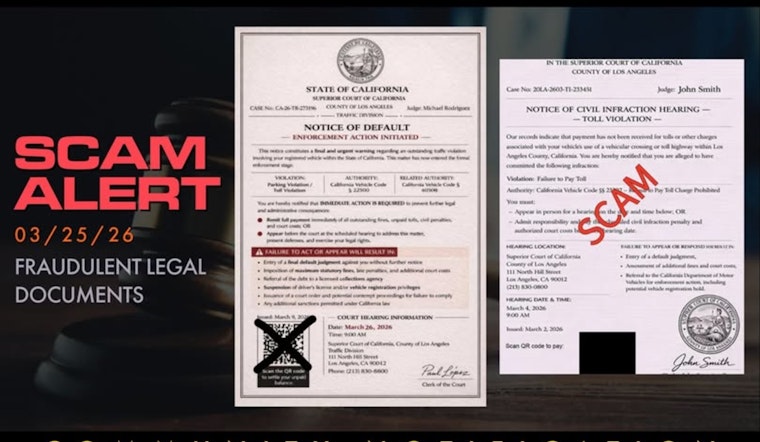
Scammers are sliding into Oxnard residents’ phones dressed up as the court system, and police say the whole thing is a pressure-cooker fake meant to scare people into paying up.
The text-message scam circulates what looks like an official court summons, complete with an apparent case number, a judge’s name, and an urgent hearing date. The messages then push recipients to scan a QR code or call a phone number to “resolve” the supposed case. Oxnard police stressed that these documents are bogus and not tied to any legitimate court proceeding.
The department shared sample images and safety tips in a Facebook post that show the fake notices dressed up with seals, signatures, and QR codes that lead straight to payment pages. According to the Oxnard Police Department, some versions even list the telephone number (213) 830-0800 and court dates just days away, while recycling generic stand-in names like “John Smith” or “Michael Rodriguez.” The post tells residents not to scan the QR code, not to dial the number given, and to look up court contact information independently through official channels.
How the scam works
Fraudsters typically text a photo of a forged summons, then tack on a QR code or a link that leads to a spoofed payment site. They often set the hearing date in the very near future to crank up the panic and push people into paying before they stop to verify anything.
The Judicial Branch of California notes that courts do not collect payment by text, phone, or email, and urges people to avoid clicking links or sharing banking information in unsolicited messages of any kind. For step-by-step guidance on spotting fake court notices and checking tickets safely, see the California Courts Self-Help Guide.
Why it looks real
The con works in large part because it looks convincing on the surface. The forged documents mimic court formatting and, in some cases, even list phone numbers tied to real courthouses to help sell the illusion.
The sample paperwork flagged by Oxnard police includes (213) 830-0800, a number associated with the Stanley Mosk Courthouse, according to Los Angeles Superior Court documents. Similar “toll violation” and traffic-ticket smishing campaigns have popped up in other regions as part of a broader fraud wave highlighted by coverage in fake turnpike toll texts and other outlets.
What to do if you get the message
If one of these texts hits your phone, do not scan the QR code, click any links, or call the number listed. Instead, go directly to your local court’s official website or use a verified court phone line to check whether you actually have a case or citation. You can take a screenshot for your records, then delete the message.
If you already sent money or entered financial information, contact your bank or card issuer right away and file a report with the FBI’s Internet Crime Complaint Center. For local guidance and reporting, see the Ventura Superior Court and the Oxnard Police Department’s contact page.





