

























































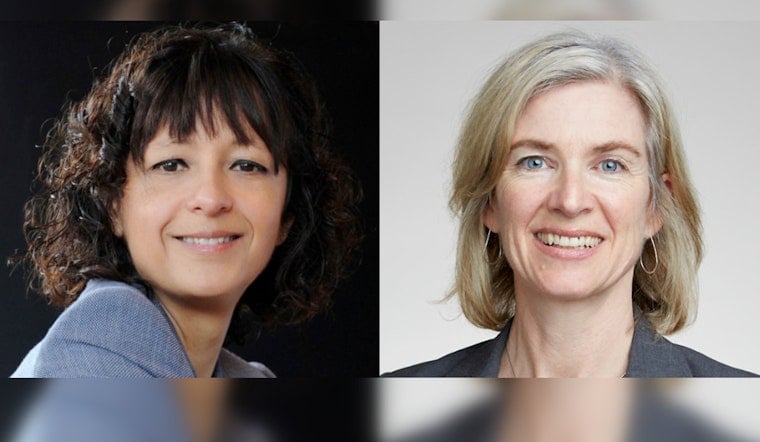
The U.S. patent showdown over CRISPR shifted again on Friday, March 27, 2026, when a federal patent board ruled in favor of the Broad Institute, dealing another setback to Nobel laureates Jennifer Doudna and Emmanuelle Charpentier. The board's finding keeps key U.S. patents covering CRISPR use in eukaryotic cells intact and complicates who will control licensing for therapies, crops and diagnostics. The ruling extends a legal saga that has shaped the commercial side of gene editing for more than a decade.
As reported by Reuters, the Patent Trial and Appeal Board found that Broad scientists had conceived the practical eukaryotic application of CRISPR before the UC/Vienna team. Reuters also noted that the case was sent back to the PTAB after a U.S. appeals court remanded it in 2025 and that lead counsel for Broad included attorneys from Quinn Emanuel. The decision preserves Broad patents that were applied for in 2013 and issued in 2014.
Board's reasoning and the earlier record
The board revisited its earlier 2022 analysis of conception versus reduction to practice, a distinction that drove its prior finding in favor of Broad. Legal summaries of the PTAB's February 2022 decision and the evidence reviewed are outlined by Patent Docs. That record of lab notes, emails and contemporaneous publications remains central to whether the CVC group's 2012 disclosure counts as a full conception for U.S. patent purposes.
Where the case stands now
In May 2025 the U.S. Court of Appeals for the Federal Circuit vacated part of the board's earlier ruling and remanded the dispute for reconsideration, and the court's opinion lays out the legal errors it found in the PTAB's conception analysis. You can read the opinion on the U.S. Court of Appeals for the Federal Circuit site. With the PTAB again siding with Broad, the case now faces potential new rounds of appeals while the parties consider their next steps.
Industry stakes
Broad's U.S. patents are licensed to companies developing CRISPR-based therapies, so a ruling in its favor has direct commercial fallout for firms and investors. As reported by GEN, the decision could reshape licensing talks even as clinical trials proceed. For many biotech developers, the ruling underscores why diverse IP strategies, including alternative gene-editing platforms, remain a hedge against legal uncertainty.
Parties respond
The University of California said it was “disappointed” by the board's decision and said the ruling does not affect the school's more than 60 other CRISPR-related U.S. patents, per Reuters. Broad issued a statement saying the ruling “once again confirmed Broad's patents were properly issued,” and filings list Quinn Emanuel litigation partners as lead counsel. CVC's representatives said they are reviewing options while Broad's licensees welcomed the clarity on eukaryotic claims.
Legal options and timeline
The PTAB's judgment can be appealed back to the Federal Circuit and, in theory, to the U.S. Supreme Court, though those paths are costly and unpredictable. The Federal Circuit's 2025 remand shows courts are willing to scrutinize the legal standard the PTAB applies to conception and reduction to practice, not just the laboratory evidence. Meanwhile, researchers say the ruling will not immediately stop trials but will keep lawyers and licensing teams busy for years to come.




