

























































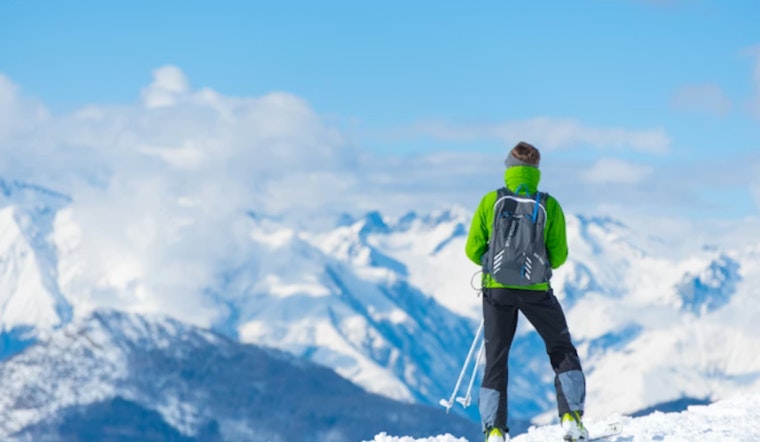
A Bothell man is alive after what sounds like every skier's worst nightmare: roughly four hours buried in an avalanche at Stevens Pass. Michael Harris said he was swept into a hidden snow pocket in Big Chief Bowl and felt like he was "being encased in cement" as the snow locked him in. Ski patrol eventually dug him out several feet below the surface, rushed him off the mountain, and he was treated for hypothermia and a broken leg. His family later set up an online fundraiser to help with mounting medical bills.
Wife's intuition and an iPhone lead rescuers to the spot
Penny Harris told reporters she had a gut feeling something was wrong and opened the Find My iPhone app, where she saw her husband’s location suddenly stop moving. She drove straight to Stevens Pass and met with ski patrol. According to FOX 13 Seattle, patrol used those app coordinates along with signals from his iPhone and Apple Watch to pinpoint his position, then dug him out and brought him down the mountain on a sled.
Buried in Big Chief Bowl
Harris said he had been skiing Big Chief Bowl on a powder day when he was caught between two moving slabs of snow and carried into a buried hole. Trapped under the slide, he recalled hearing his phone vibrate somewhere nearby but being completely unable to move his arms to reach it. He described the experience as "the sensation was being encased in cement" as he relived the ordeal for reporters. Hospital staff, according to FOX 13 Seattle, started calling him the "miracle avalanche man" after hearing how long he had been under.
Long hospital stay and a push to cover costs
The family's GoFundMe, posted Feb. 28, says Harris arrived at the hospital severely hypothermic, with a body temperature in the high 70s to low 80s, and suffered a lung contusion, kidney injuries, and a right tibial plateau fracture. Surgery was scheduled to repair the damaged leg. The page lists more than $25,000 raised toward a $28,000 goal and includes a public thank-you to Stevens Pass ski patrol and hospital staff for their work. You can read the full update on GoFundMe.
Shock in the ski community and hard lessons on avalanche safety
The story has ricocheted through local ski circles and the Teton Gravity Research community, where riders expressed equal parts relief and disbelief that a full burial inside a resort boundary could go unnoticed for hours. Posters praised ski patrol for the recovery and questioned how the slide developed inbounds, while the original thread author noted that NWAC had requested a formal debrief. For Harris's firsthand account and community reaction, see the discussion on the Teton Gravity forums.
Avalanche safety guides point out that the fastest rescues usually come from companions using a transceiver, probe, and shovel, and that survival odds drop sharply after about 15 minutes of burial. Harris’s survival after roughly four hours underscores how unusual this outcome is and why backcountry-style precautions matter even on deep powder days at the resort. For more context on avalanche risk and preparation, see Snow-Forecast.





