

























































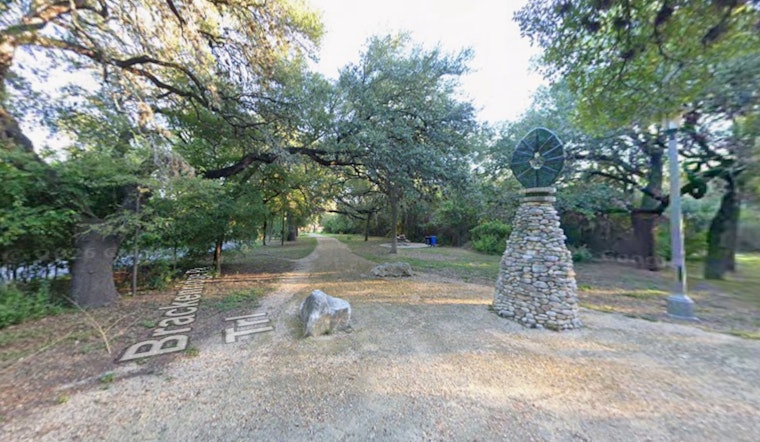
After years of arguing over trees, history and money, San Antonio’s long-stalled Brackenridge Park makeover finally nudged forward on Wednesday, when the city’s Historic and Design Review Commission signed off on design plans for the project’s second phase. The move pushes a chunk of 2017 bond work off the shelf and closer to construction, even as tree-removal fights tied to earlier phases remain in court. Neighbors, preservationists and tribal advocates who helped stall previous designs are still locked in, watching whether the city can shore up failing river walls without stripping away the park’s soul.
Panel Clears Designs for Pump House, Trails and Plaza
The commission voted unanimously to let city staff advance Phase 2, a package that focuses on restoring the 1877 waterworks pump house, replacing its roof, building a new cultural trail and plaza, and carrying out underground utility work and landscape upgrades. By design, this approval sidesteps Phase 1’s structural stabilization and river-wall work, the pieces most caught up in tree-removal controversy and Army Corps of Engineers reviews. City staff told commissioners that foundation work around the pumphouse has to move ahead before the full renovation can happen, and the Brackenridge Park Conservancy has been pushing private fundraising to stretch limited bond dollars, according to San Antonio Report.
Court Rulings Keep Phase 1 on Hold
Phase 1, which includes underpinning the pumphouse foundation and repairing historic river walls, is still stuck in litigation. Indigenous advocates Gary Perez and Matilde Torres sued in 2023 to stop tree removals and bird-deterrence measures tied to that work. On Feb. 27, 2026, the Fifth Circuit Court of Appeals denied a petition for rehearing en banc, according to Justia, leaving the appeal’s next steps murky while the underlying suit continues.
Earlier in the case, the federal court had asked the Texas Supreme Court to interpret the state’s 2021 Religious Services clause. The Texas high court later ruled that the clause does not categorically block government efforts to preserve and manage public lands, per the Texas Supreme Court.
Funding and Bond Math
The broader Brackenridge effort leans heavily on the city’s 2017 bond program. That bond totaled $850 million citywide and set aside about $116 million for parks, with roughly $7.75 million carved out specifically for Brackenridge Park. The Brackenridge Park Conservancy has also raised private money for projects such as a planned nature playscape, meant to supplement the public funds. That blend of bond cash and philanthropy now sits at the center of arguments over how fast to move, how big to build and how aggressively to protect trees in the park, according to Brackenridge Park Conservancy.
What Phase 2 Will Change on the Ground
On paper, Phase 2 is where visitors will really start to see change. The plans call for interior and exterior renovations to the pumphouse, a new roof, a fresh cultural trail and plaza, improvements to the upper labor dam and acequia, replacement of aging sewer and water lines, and landscape restoration with interpretive signage. Designers are also planning selective tree relocations and new plantings, with the goal of rebuilding canopy while telling more of the site’s layered history. The commission’s approval lets the design team push into final drawings and permitting, with technical tweaks expected as the details are vetted, according to San Antonio Report.
Permits, Archaeology and Federal Checks
Even with HDRC signoff in hand, city staff still have to steer the project through standard permitting and design-review channels, and some Phase 1 pieces will stay under the eye of the U.S. Army Corps of Engineers. City project pages describe a familiar but slow-moving sequence: community meetings, archaeological review and permit coordination that together dictate how quickly shovels can actually hit the ground. Officials say the construction schedule will depend on how long permits take, what archaeology turns up and how closely timelines can be aligned with conservancy partners, per the City of San Antonio.
Why Neighbors and Tribes Remain Engaged
Residents and tribal advocates argue that Brackenridge’s trees and riverbend are not just scenery but part of a living cultural landscape, and they fear that historic preservation could be sacrificed in favor of hard engineering fixes. The planned nature playscape and other conservancy-backed projects have re-ignited the long-running tree debate and layered a private-fundraising twist on what began as a straightforward bond program. Local coverage has showcased both critics’ worries and the conservancy’s push for more family amenities that still honor the park’s past, according to Brackenridge Park's $9.7M playscape.
For now, the commission’s vote tightens the focus to design refinements and permit hurdles, while the bigger ethical and legal questions hang overhead. Watch for permit filings and potential council-level actions this spring and summer, which will reveal whether Brackenridge’s next chapter can really juggle historic fabric, public safety and the leafy canopy that gives the park its character.



