

























































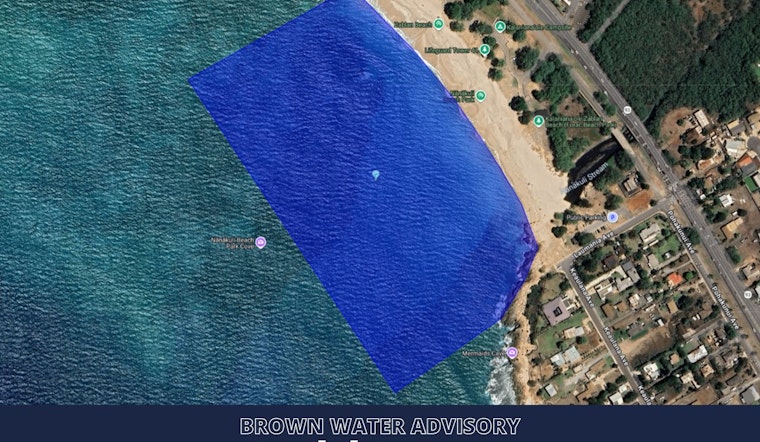
Storm-soaked runoff has turned parts of Nānākuli Beach Park into a murky mess, prompting the Hawaiʻi Department of Health to issue a brown water advisory for the popular West Oʻahu shoreline. Officials warn that water in the cove and along nearby stretches of coast may appear brown, turbid or cloudy and could carry pollutants that pose a health risk. Lifeguards and county crews may put up warning signs while the state collects samples and tracks how conditions change.
The alert went public Thursday on X, where the Hawaiʻi State Department of Health flagged the Nānākuli Beach Park cove, Mermaid Caves, Nānākuli Stream, the lifeguard tower and the area by St. Rita Catholic Church as all falling inside the advisory zone. The post pointed people to the Clean Water Branch’s online notification system for updates on timing and water quality testing.
What The Brown Water Warning Really Means
The state’s Clean Water Branch notes that “usually coastal waters are safe to enter due to tidal flushing after 48 hours,” and it urges residents and visitors to steer clear of surface waters after heavy rain. The Hawaiʻi Department of Health Clean Water Branch cautions that stormwater can sweep sewage, animal waste, pesticides, chemicals and other debris straight into the ocean, which increases the risk of gastrointestinal illness along with skin, eye and ear infections.
Why West Oʻahu Keeps Getting Hit
Communities on the leeward side such as Nānākuli are especially vulnerable to this kind of runoff. Lower-lying, unsewered areas can overwhelm aging wastewater systems during intense rain, which in turn sends more polluted flows into streams and nearshore waters, as reporting and analysis have highlighted. Ka Wai Ola has documented that thousands of high-risk cesspools sit along Oʻahu’s coasts and can feed into post-storm contamination. The latest advisory comes on the heels of an islandwide round of closures and precautions tied to a fast-moving storm earlier in the week, coverage that Hawaii News Now detailed in its storm reports.
For now, beachgoers are urged to obey posted signs, skip swimming or wading in water that looks brown or murky and keep keiki and pets out of affected spots until officials give the all clear. Anyone who develops vomiting, diarrhea, fever, lingering ear or eye irritation or a skin infection after ocean contact should tell their clinician about the water exposure and seek care as needed. The Clean Water Branch continues to post advisories and updates online, and the health department’s social feeds remain the quickest place to see any change in the advisory status.





