

























































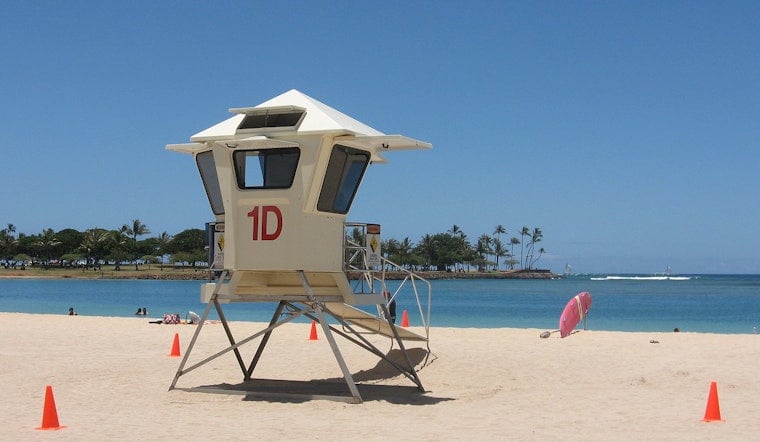
A powerful south swell pushed Oahu's ocean safety crews into overdrive, with Honolulu Ocean Safety performing more than 100 rescues across the island in a single day as surf built along south- and east-facing shores. In the Waikiki and Ala Moana area alone, lifeguards conducted 144 rescues and took 2,850 preventive actions on August 12, a workload that pushed crews to extend their shifts into the evening until 7:30 p.m. to cover late beachgoers.
The surge in ocean rescues came as the National Weather Service issued a High Surf Advisory for all south-facing Hawaiian shores, forecasting wave heights of 8 to 12 feet driven by a long-period south swell, according to Big Island Now. Complicating matters, that swell arrived alongside incoming energy from Potential Tropical Cyclone One-C, a combination that produced elevated surf and hazardous conditions at exposed south shore reef breaks, as reported by KITV.
Honolulu Ocean Safety warned that people should not underestimate the changing conditions tied to an approaching tropical system, per the same report. The department's advice was blunt: when in doubt, don't go out.
Why This Swell Behaves So Unpredictably
An approaching tropical storm can create rapidly changing and unpredictable ocean conditions, and this event is no exception. The National Weather Service explains that weather systems forming southeast of Hawaii, including potential tropical cyclones, can generate conflicting east-to-southeast swells and erratic wind patterns that combine with south swells to create unusually unpredictable shorebreak and currents, according to the National Weather Service.
South swells like this one typically form far outside Hawaii's own weather system. They occur predominantly during the Southern Hemisphere's winter months from May through September, generated by powerful Antarctic and South Pacific storm systems near New Zealand and Tahiti that push waves across thousands of miles of ocean, as detailed by SFGATE. Under the National Weather Service's own threshold criteria, a High Surf Advisory is issued for south-facing shores once full-face surf reaches 10 feet, while a High Surf Warning requires wave heights of 15 feet or greater.
Lifeguards Recommend Caution Along Exposed Reefs
Ocean Safety recommended that beachgoers swim only at beaches with lifeguards on duty and speak with a lifeguard before entering unfamiliar waters. The department also urged people to stay away from exposed reef breaks and areas with strong currents or elevated surf, and to check current ocean and weather conditions before entering the water, per KITV's report.
Officials said beachgoers should exercise heightened vigilance along southern and eastern shores as the swell continues to build. Honolulu Ocean Safety personnel said they will continue monitoring shoreline conditions and responding as necessary to protect residents and visitors.
A Familiar Strain on South Shore Lifeguards
Waikiki Beach typically sees about three rescues per day under normal conditions, but incoming south swells generate strong rip currents and heavy backwash across shallow reef breaks like Populars and China Walls, according to Honolulu Civil Beat. Over a ten-year tracking period, Honolulu Ocean Safety lifeguards conducted 30,591 ocean rescues on Oahu, averaging roughly eight rescues per day, with summer south swells and winter north swells driving the heaviest workloads.
When major south swells hit Oahu, Honolulu Ocean Safety routinely expands its south shore operational footprint from 25 to 65 lifeguards and deploys extra jet-ski watercraft teams, treating the response much like preparation for a tropical storm or hurricane, per Outside. That kind of scaling echoes a historic July 2022 south swell, when wave faces exceeded 20 feet along south-facing coastlines and lifeguards performed 1,960 rescues on Oahu over a single weekend.
Standard lifeguard tower coverage on Oahu runs during daylight hours, and when ocean emergencies occur before roughly 6:30 a.m. or after 6:30 p.m., the Honolulu Fire Department serves as the primary water rescue responder. That handoff is part of why Ocean Safety extended tower hours into the evening during this swell, aiming to keep guarded coverage in place as late beach crowds lingered through high tide.
Hoodline has tracked south shore surf danger through much of the summer, including a July high surf advisory tied to Hurricane Fausto. This latest swell adds a tropical cyclone threat to the mix, and Ocean Safety's message to residents and visitors remains the same as conditions evolve through the week: when in doubt, don't go out.





