

























































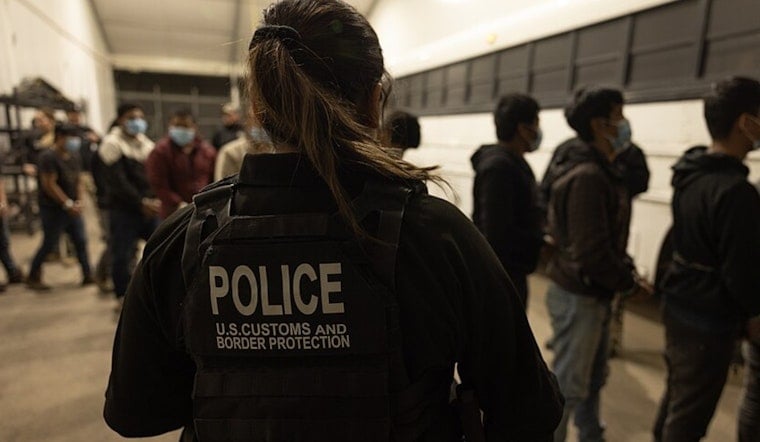
A Canadian man with prior felony convictions managed to do something that everyday drivers still cannot: get onto the Gordie Howe International Bridge before it is open to traffic. His unsanctioned March 6 walk ended on the U.S. side in the hands of U.S. Customs and Border Protection, and it has residents and officials wondering how anyone slipped onto a high-profile international crossing that is not yet open to the public.
According to The Detroit News, CBP officers encountered the 28-year-old Canadian citizen walking on the bridge last Friday and took him into custody. The outlet reports that he has multiple felony convictions. Officials had not immediately said whether he would face charges in the United States or be returned to Canada to address any outstanding issues there.
How Could He Have Crossed An Unfinished International Span?
The Gordie Howe crossing is largely built out but is still in its commissioning and testing phase. The United States formally designated the crossing a Class A port of entry effective last Monday, while noting that it would separately announce when the bridge opens to travelers. As outlined in the Federal Register, that port of entry label is an administrative move and does not by itself mean the structure is ready for public use.
Years of construction, shifting project timelines and ongoing work have meant crews, heavy equipment and changing access points on and around the span. Those conditions can create controlled ways onto the bridge deck for workers and, in rare cases, opportunities for outsiders to get closer than they should, according to reporting by Engineering News-Record.
Security And Past Slip Ups
Project officials stress that the worksite is secured, though recent history shows it is not perfect. In October 2025, a truck driver who said he was lost ended up on the project site and was stopped by Canadian authorities. The Windsor-Detroit Bridge Authority has said there are "multiple security barriers including extensive fencing to prevent people from erroneously crossing," as reported by FOX 2 Detroit.
Episodes like these highlight that while security teams, fencing and other barriers are in place, the sheer complexity of an active international construction zone can leave limited gaps. Navigating heavy equipment, temporary roadways and evolving work areas sometimes creates just enough confusion for an unauthorized driver or, in this case, a pedestrian to end up where they are not supposed to be.
What The Law Allows
Crossing an international border without going through proper processing can trigger immigration enforcement or criminal charges under federal law. Improper entry and related offenses are covered in Title 8 of the U.S. Code. See the U.S. Code for the statutory framework that governs such cases.
The Detroit News reports that officials had not yet outlined what will happen next in this particular incident. Typically, CBP screens detained individuals to determine whether they are admissible to the United States, whether any criminal violations apply and whether removal, prosecution or some other outcome is warranted.
Where This Leaves The Crossing
The Gordie Howe International Bridge is still working through final testing and operational approvals before it can open to traffic. Federal rules indicate that CBP will publicly announce when the crossing becomes fully operational.
While authorities sort out how the March 6 encounter unfolded, the incident has thrown a spotlight back on how secure the site really is and what it will take to shift the bridge from an active construction project into a tightly controlled international gateway. For now, it remains a work zone where a lone pedestrian on the deck is supposed to be a red flag, not the main story.





_on_January_23,_2025_-_31.jpg)