

























































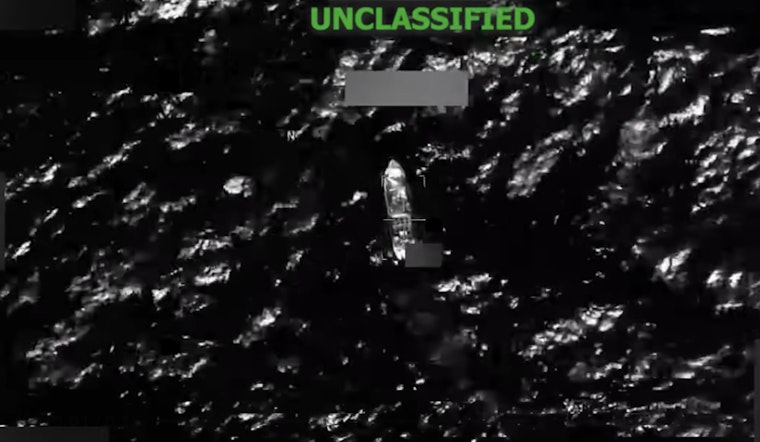
The U.S. military detonated a small boat in the Caribbean Sea on Wednesday, killing four people, Pentagon officials said. The Defense Department framed the strike as part of an ongoing effort against suspected drug traffickers and said no U.S. service members were injured.
Military account and video
U.S. Southern Command, headquartered in Miami, announced the strike on social media and shared a short video clip that shows a small vessel suddenly erupting in a bright explosion, according to AP News. The command said intelligence had tracked the boat along known smuggling routes and that the operation was carried out by Joint Task Force Southern Spear. Officials repeatedly stressed that no U.S. forces were harmed.
Where this strike fits in the campaign
The strike is part of a broader series of maritime operations that began in early September. The New York Times reported this was the 47th announced strike in that campaign and that the publicly reported death toll has climbed to at least 163 people. Supporters argue the strikes disrupt smuggling networks. Independent trackers and regional officials, however, have questioned both how effective the raids really are and the public evidence used to label those killed as “narco‑terrorists.”
Legal and diplomatic questions
Human‑rights advocates and legal experts have warned that deliberate attacks on small boats, especially any follow‑on fire that hits people clinging to debris or wreckage, could amount to unlawful, extrajudicial killings under international law. A detailed timeline and legal analysis from Just Security lays out questions under the Geneva Conventions and U.S. domestic law. Investigative reporting in The Washington Post raised additional alarms after lawmakers were shown footage of earlier strikes and pushed for unredacted video and copies of written orders.
What commanders say
U.S. military leaders have defended the campaign as a way to squeeze known maritime smuggling routes, while acknowledging it cannot fix the larger drug problem by itself. Gen. Francis L. Donovan told lawmakers that the strikes had forced narco‑terrorist groups to change their operational patterns, but he also cautioned that the kinetic campaign is not a long‑term solution, according to The New York Times.
What happens next
Members of Congress and human‑rights groups say they plan to keep pressing for more transparency and legal scrutiny. They are seeking both classified and unclassified briefings, along with copies of strike footage and the authorizations that underpin the campaign. Regional governments and international legal experts have also voiced concern about the diplomatic and legal fallout from the operations, as reported by AP News.
Legal implications
Legal specialists say that intentionally striking shipwrecked or otherwise incapacitated people could expose those involved to criminal liability under international law and potentially under U.S. statutes as well. They also note the possibility of civil wrongful‑death claims. These legal risks, summarized in analyses collected by Just Security, have helped spur additional oversight efforts on Capitol Hill.





