

























































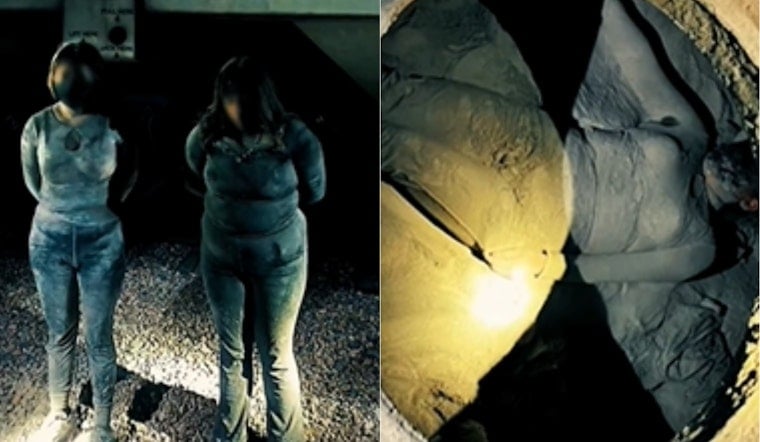
Late on a weekday night in El Paso, what looked like an ordinary rail hopper packed with cement powder turned into a life-or-death rescue. U.S. Customs and Border Protection officers at the Port of El Paso Rail Operations found four people buried inside the industrial cargo last Wednesday, hidden in a compartment filled with cement powder.
Officers pulled the individuals out of the hopper car, conducted on-site medical checks, and provided showers to clear cement residue from their bodies. The discovery underscores both the extreme risks people will take to cross the border and the dangerous methods smugglers use to move them.
CBP officers first spotted something off during an X-ray scan of the hopper car at about 10 p.m. They noticed irregularities in the image, then saw that a seal on the car appeared to have been tampered with. When they opened the compartment, officers saw what looked like feet protruding from the cement powder. The four people were removed safely, evaluated by medical personnel, and the case remains under investigation. According to KFOX14, CBP has not released additional identifying details about the individuals.
Health Dangers Of Concealment In Cement
Getting buried in or heavily coated with cement powder is not just uncomfortable; it can be genuinely dangerous. Fine cement dust can irritate and damage the lungs, especially in an enclosed space. Once cement gets wet or mixes with sweat, it can trigger chemical burns on the skin and cause serious eye injuries.
Inside a confined compartment, the powder and any shifting or settling material can also create an engulfment or suffocation hazard, turning a hiding place into a potential trap. Federal safety guidance warns that enclosed spaces with cement or concrete products should be treated as potentially lethal for anyone without proper protection, and even for rescuers if they are not careful. As outlined by OSHA, cement and concrete dust carry acute and long-term risks for respiratory health and skin.
Trains Remain A Recurring Focus For CBP
CBP officials have repeatedly cautioned that migrants sometimes attempt to ride inside or on top of freight trains to avoid detection, and El Paso’s rail crossings remain a regular target for inspections. The agency says every inbound rail car is screened with non-intrusive X-ray technology, and officers also carry out visual inspections and use canines to search for hidden people or contraband.
According to U.S. Customs and Border Protection, roughly 6,500 rail cars enter El Paso from Mexico each month. That steady flow creates a constant stream of inspections where attempts at human concealment, like the cement-filled hopper, can be discovered.
Legal Exposure For Smugglers
Federal law comes down hard on anyone caught bringing in, transporting, or hiding people who are not authorized to enter the United States. Those offenses fall under 8 U.S.C. § 1324 and related statutes, which prosecutors frequently use along the Southwest border.
Cases highlighted in Department of Justice releases show smugglers receiving multi-year prison sentences when their actions put lives at risk. The statute can be read at 8 U.S.C. § 1324, and a recent enforcement example is detailed in a Department of Justice release.
In this El Paso case, CBP has said inspectors noticed signs that the seal on the cement hopper had been disturbed before they opened it, and the agency has stressed that hiding in cement powder carries serious health and safety risks. The incident remains under investigation. Local rail operators and federal investigators typically coordinate on follow-up inspections and evidence collection while authorities decide whether criminal charges will be filed. According to KFOX14, CBP has not released further details as the probe continues.


