

























































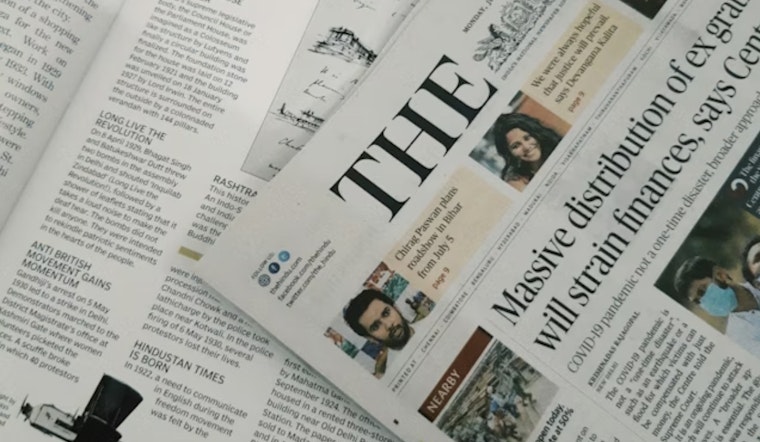
The Cincinnati Herald, the city’s longest-running African American newspaper, has temporarily stopped publishing while its leadership retools how the paper runs. Publisher Jan-Michele Lemon Kearney had a blunt message for readers and advertisers: "We’re not going anywhere."
According to WKRC Local 12, Kearney said in a text message that the paper is "working on a new business model - hybrid of print and electronic" and that "lots of ideas have come in and it’s all very exciting." She has not said when new content will start appearing again.
On The Cincinnati Herald website, the most recent story is dated Dec. 27, 2025, and the homepage currently highlights lifestyle and feature content instead of fresh weekly editions, per the paper’s own pages. The contact section still lists Jan-Michele Lemon Kearney as president and CEO, according to The Cincinnati Herald.
Deep Roots And Local Ownership
Founded in 1955, the Herald has been a steady voice on civil rights, education, and business for Cincinnati’s Black community for more than 70 years. The paper was purchased in 1996 by Sesh Communications, a company led by Jan-Michele Lemon Kearney and her husband, Eric Kearney, according to CityBeat.
What The Pause Signals
The Herald’s reset comes as community newspapers across the country face intense financial pressure, with many weeklies cutting staff or going digital first as print circulation and ad dollars slide, according to Northwestern Local News Initiative research.
Industry analysis has also found that while Americans say they value local journalism, they are often hesitant to pay for it, a pattern that is nudging publishers toward mixed print and digital strategies, per Nieman Lab.
Kearney has not given a timetable for relaunching full coverage. As WKRC Local 12 reported, she says Herald leadership is collecting ideas and weighing that hybrid print and electronic model. In the meantime, neighbors and civic leaders who rely on the Herald’s reporting are left to wonder who will chronicle neighborhood politics and community events while the presses are quiet.
The Herald’s pause underscores that even long-standing, locally owned outlets have to keep evolving if they want to survive. Community watchers in Cincinnati say they will be looking for a clear roadmap to restore regular coverage for the paper’s readers and advertisers.





