

























































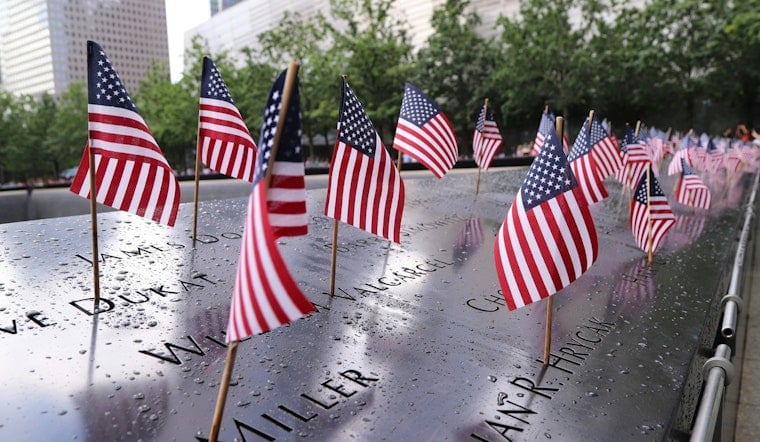
New York City has once again refused to release records tied to toxic dust and smoke that lingered over Ground Zero after the September 11 attacks, and families along with sickened first responders are taking the fight back to court. On March 29, 2026, their lawyers filed a new lawsuit asking a judge to force the city to produce long-sought documents and testimony, following recent discoveries that advocates say raise serious questions about what officials knew about air dangers in Lower Manhattan.
The new filing comes on the heels of two key revelations: dozens of boxes of previously undisclosed city records and an internal "Harding memo" that only recently surfaced. Advocates say both may shed light on what city officials understood about post-9/11 air hazards in the days and months after the towers fell. Survivors, unions and health advocates argue that years of shifting responses from the city have blocked research and delayed care for thousands of people who link their illnesses to Ground Zero exposure.
Attorney Andrew Carboy, representing 9/11 Health Watch and family members of victims, filed the petition in state Supreme Court seeking an order that the city turn over records and put key officials under oath, as reported by the New York Daily News. Advocates say their latest administrative appeal under the Freedom of Information Law was rejected on March 20, and court papers quote an appeals officer saying searches turned up no responsive files. The lawsuit asks the judge to compel a more thorough search and to produce any assessments, test results and internal legal advice about reopening Lower Manhattan.
What’s in the boxes
According to lawyers and union leaders, the Department of Environmental Protection has handed over 68 boxes of material that include early asbestos testing and records of chemical and metal contamination. Until recently, they say, the city maintained that such files did not exist. The discovery of those boxes, along with the long-sought Harding memo - an October 2001 assessment that reportedly warned of thousands of potential liability claims - has turned up the heat on City Hall.
Advocates say early review of these materials could be crucial for scientific studies and medical claims tied to 9/11 exposure, according to ABC7. If the documents confirm that officials had stronger warnings than the public ever heard, they could reshape both health research and the legal landscape for survivors.
Allegations of stonewalling
In court filings, Carboy accuses the city of constantly changing its story about what records exist and where they are. He wrote that "with its ever-changing replies, the city plays three-card monte with Sept. 11 records." City lawyers and a Freedom of Information Law appeals officer have said that searches of Law Department files turned up no responsive records and that some older records are not maintained in a searchable format.
Advocates say those sworn statements are hard to square with the later discovery of 68 boxes of documents. That contradiction is a central plank of the petition, which asks for a court-supervised search of records and sworn testimony from officials about how the files were handled and preserved, as detailed by the New York Daily News.
City Council presses for release
The legal fight is unfolding alongside growing political pressure inside City Hall. At a March 16 preliminary budget hearing, City Council Speaker Julie Menin pressed Corporation Counsel Steve Banks and secured a public pledge that the Law Department will create an online portal where post-9/11 air-quality and health-risk documents will be published.
The move tracks with Council Member Gale Brewer’s 2025 legislation that directed the Department of Investigation to examine what the city knew about 9/11 toxins and when it knew it. Council leaders say a robust DOI probe, paired with a fully built-out public portal, is essential if survivors, researchers and families are ever going to get a clear view of the archival record. The commitments were outlined by the New York City Council.
Who would be affected
The stakes are high for a large and still-growing community. Nearly 140,000 people are enrolled in the federal World Trade Center Health Program, and roughly 81,000 of them have at least one certified 9/11-related health condition, according to the program’s data published by CDC/NIOSH.
The human toll within the Fire Department alone has been severe. The city lost 343 FDNY members on September 11, 2001, and union and public-health tallies put subsequent deaths tied to 9/11-related illnesses at around four hundred, according to Firehouse. Advocates say that combination of ongoing illness, mounting deaths and still-unreleased documents is exactly why they are back in court, two and a half decades after the attacks.
Legal implications
The petition arrives as an Article 78 proceeding under New York’s Freedom of Information Law, a mechanism that lets members of the public ask courts to order agencies to produce records. FOIL also gives agencies room to argue for exemptions or to lean on procedural defenses, so these cases often turn on whether the agency can show it conducted a "diligent search" for what was requested.
That standard is squarely at issue here. The city previously submitted sworn statements saying that no responsive Law Department records could be found, only to have boxes of relevant files surface later. The petitioners are asking the court not only to order production of records, but also to require sworn testimony from officials who oversaw post-9/11 environmental testing and from those who handled the Law Department’s preservation orders. For background on the legal framework, the state provides public New York State FOIL guidance, and 9/11 Health Watch has summarized its filing and the Harding memo on its site at 9/11 Health Watch.
In a public statement, 9/11 Health Watch said, "Mayor-elect Mamdani can be the elected official who finally reveals exactly what the City knew," casting the case as a test of the incoming administration’s willingness to break with decades of secrecy. Advocates say they will press the court for an aggressive schedule, expedited relief and sworn testimony from current and former officials.
City Hall has told reporters that it has begun turning over documents to the plaintiffs’ lawyers while the legal questions are argued. The next court date has not yet been set, and advocates say they are pushing to get the materials into researchers’ hands as soon as possible so that treatment, monitoring and prevention efforts can move forward. The latest developments and filings have been detailed by 9/11 Health Watch.


