

























































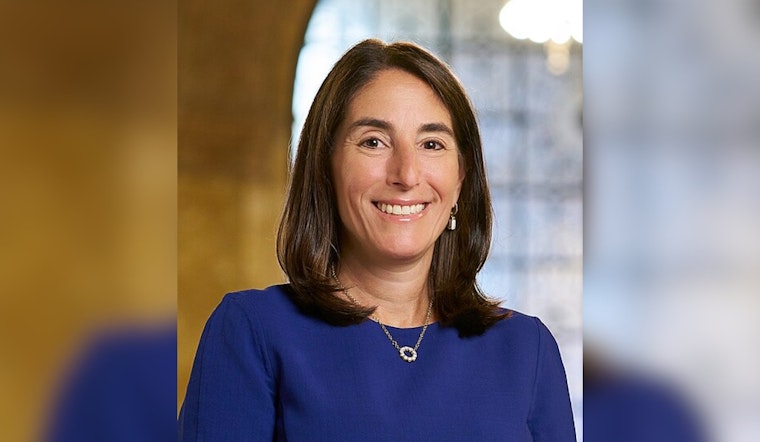
In a Feb. 10 speech in Columbus, Ohio, Cleveland Federal Reserve President Beth M. Hammack urged the central bank to keep interest rates on hold for an extended stretch while officials sort out the economic fallout from recent policy moves and global shocks. Her call for patience lands squarely in the middle of the fight over whether the Fed should rush to cut or sit tight until inflation is clearly on track back to target.
"Rather than trying to fine tune the funds rate, I'd prefer to err on the side of patience," Hammack told the Ohio Bankers League. According to the Federal Reserve Bank of Cleveland, she added, "Based on my forecast, we could be on hold for quite some time."
The Fed's preferred inflation gauge, the personal consumption expenditures (PCE) price index, ran at 2.9 percent year over year in December 2025, according to the Bureau of Economic Analysis. The unemployment rate is hovering near 4.3 percent, per the Bureau of Labor Statistics. The Fed’s balance sheet is also still far larger than it was before the pandemic, Federal Reserve research puts it at roughly $6.5 trillion.
Why Hammack Is Pushing for Patience
The New York Times reported that Hammack warned that higher energy prices and geopolitical tensions tied to the Iran war could keep inflation more stubborn than markets might like, and that it is still too early to know how those shocks will feed through to the broader economy. The same outlet also quoted her caution that longer-term borrowing costs could jump if investors begin to question the Fed's motives.
Local Impact
Hammack's go-slow stance carries particular weight across the Cleveland Fed's Fourth District, which covers Ohio, western Pennsylvania, and nearby markets, because the regional bank both supervises local lenders and regularly gathers business leaders to gauge conditions on the ground. Her years on Wall Street have shaped how she reads those signals; Bloomberg has detailed her move from Goldman Sachs to the central bank.
Meanwhile, the White House has nominated Kevin M. Warsh to succeed Jerome Powell as Fed chair, a pick that markets and lawmakers are still digesting, according to AP via PBS.
What To Watch Ahead
The Federal Open Market Committee's next regular meeting is scheduled for March 17–18, 2026, the next formal chance to shift policy. The Federal Reserve lists those dates on its public calendar, and market trackers show investors leaning toward a hold at least into the spring.
Hammack's insistence on patience, combined with sticky PCE inflation readings and fresh geopolitical risk, gives the Fed's more cautious members cover to argue for staying put. With new data arriving and the March meeting approaching, her voice will be one to watch as policymakers try to thread the needle between taming inflation and protecting growth.




