

























































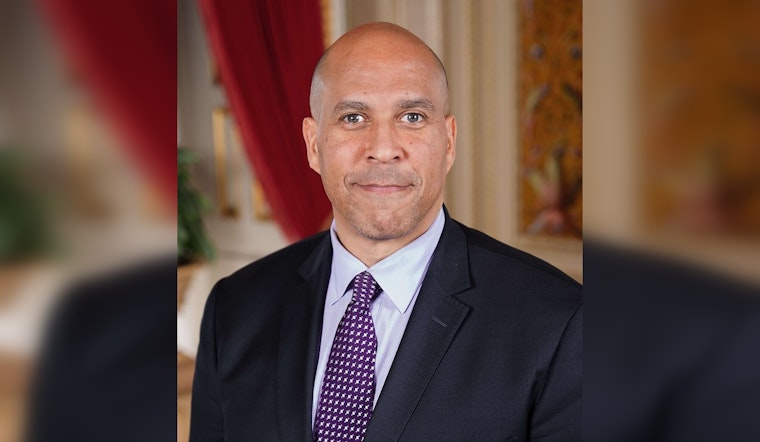
Sen. Cory Booker turned a St. Louis County book event into something much bigger on Saturday, blending passages from his new memoir Stand with a sweeping tax pitch that would effectively wipe out federal income taxes on the first $75,000 of household earnings. The result felt less like a quiet author talk and more like a trial run for a national economic message, as locals listened for whether this was just about selling books or also about testing the political waters.
The appearance was hosted by the St. Louis County Library Foundation's Westfall Politics & History Series and held at Shalom Church (City of Peace) in Florissant, with tickets priced at $42, which included a pre-signed copy of Stand, according to the St. Louis County Library Foundation. Left Bank Books supplied the books, and organizers made it clear there would be no signing or photo line because of time constraints. The foundation also told attendees to expect a quick security screening before they got through the doors.
Onstage, Booker moved back and forth between memoir and message, telling the crowd that “anger is a neutral force” and arguing that a boost of about $6,000 a year for a single mother could be the difference in covering rent, comments that local outlets noted in their coverage. As reported by KSDK, he wrapped those themes into a call for Democrats to embrace bigger economic ideas if they want to connect with Gen X and millennial voters. The station described the night as part book talk, part policy rollout, and, judging by its headline, not far off from a campaign-style stop.
What Booker’s Plan Would Do
Booker introduced the Keep Your Pay Act in March, pitching it as a simple way to let workers keep far more of what they earn. The proposal would more than double the standard deduction so that married couples filing jointly would owe no federal income tax on their first $75,000 of income, with single filers getting a proportional benefit. According to Booker’s office, the package would also expand the Child Tax Credit and widen the Earned Income Tax Credit. To help cover the cost, it calls for closing loopholes, raising the corporate tax rate, and taxing stock buybacks. Booker cast the plan as targeted, practical relief that he said would “put more money in your pocket” to handle everyday bills.
How the Math Adds Up
Independent budget analysts say the price tag is enormous. The Penn Wharton Budget Model estimates that the Keep Your Pay Act would cut federal revenues by about $6.4 trillion over ten years. The Associated Press, citing a Yale Budget Lab analysis, reports an estimate that the deficit hit could be closer to $7 trillion. Experts have also noted that, in absolute dollars, higher income households would see large gains unless the offsets are both substantial and very specific. Those warnings help explain why the proposal is drawing scrutiny from policy experts across the spectrum, including some inside Booker’s own party.
A Campaign Stop?
The mix of personal storytelling, moral language, and a multitrillion dollar tax idea left some in the room and in the press wondering if the tour is doubling as a test drive for something larger. Booker, a former Newark mayor and one-time 2020 presidential contender who ended that campaign early, has tried to position himself as a national voice on economic fairness and moral leadership, a role outlined by Britannica. Local reporting suggested that Saturday’s stop gave voters a clear look at that two-lane strategy, with readings from Stand and a headline-grabbing tax plan sharing the same stage and the same hour.
Whether the Keep Your Pay Act ever gets close to becoming law, the Florissant event signaled that Booker wants to fuse the civic virtue rhetoric of his memoir with a populist economic argument that could shape future Democratic debates. For St. Louis-area residents staring down higher rents and tight monthly budgets, the verdict on his proposal, and on the giant price tag attached to it, will likely come down to a very practical question: does it actually put more money into their paychecks?



.jpg)