

























































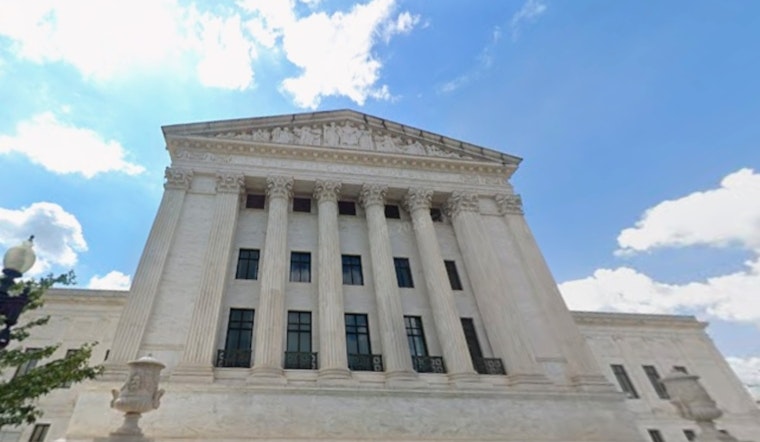
Next Monday, the U.S. Supreme Court is set to hear a deceptively technical case with very real consequences for voters nationwide. At issue is whether states can keep counting mail ballots that arrive after Election Day, so long as they were mailed on time, or whether federal "Election Day" statutes require every mail ballot to be physically in by the close of the polls.
If the challengers win in Watson v. Republican National Committee, dozens of states could be forced to shut down post–Election Day counting windows, triggering a scramble to rewrite laws and retrain voters before the 2026 midterms.
How Many States Would Be Affected
As reported by The Associated Press, 14 states currently accept and count regular mail ballots that show up after Election Day, with grace periods that range from a single day to several weeks.
Broader tallies from the National Conference of State Legislatures and the Voting Rights Lab indicate that about 29 states give extra time for at least some voters, including military and overseas citizens. That patchwork of deadlines means a single nationwide ruling could land very differently from state to state.
The Lawsuit Before The Court
The case, Watson v. Republican National Committee, started in Mississippi, where the Republican National Committee and allied challengers argue that federal Election Day statutes were written to ensure a single, uniform day for casting and counting federal ballots.
The Brennan Center for Justice and other legal observers note that the justices are being asked whether those century‑old federal laws override long‑standing state rules that allow ballots postmarked by Election Day to be counted when they arrive later.
Supporters of these grace periods warn that wiping them out could throw off ballot verification, slow the processing of provisional ballots, and squeeze timelines for military and overseas voters who already rely heavily on the mail.
Numbers That Make The Stakes Real
Election officials have no trouble putting concrete numbers on what is at risk. In Washington state, election staff told reporters that roughly 127,000 ballots arrived after Election Day in 2024, and officials say that entire batch could be disqualified if the Supreme Court effectively bans post–Election Day receipt windows.
The Associated Press quoted the state’s elections director warning that if ballots postmarked by Election Day no longer count when they show up late, "it might as well have never been received."
What Research Shows About Fraud And Access
Into this legal fight comes a pile of data. A November 2025 analysis from the Brookings Institution found that mail‑voting fraud is exceedingly rare, estimating roughly four fraud cases per 10 million mail ballots.
The same research noted that mail voting accounted for about 30 percent of all ballots cast in the 2024 presidential election. Voting‑rights groups and many local officials cite those findings to argue that grace periods function as a practical buffer against postal delays, not as a gateway to widespread fraud.
How States Are Responding Already
Some legislatures are not waiting for the justices to weigh in. According to trackers from the Voting Rights Lab and state data, Ohio, Kansas, North Dakota, and Utah eliminated their mail‑ballot grace periods in 2025, while Minnesota shortened its receive‑by deadline.
Election officials say changes like these demand rapid and clear public education so voters are not blindsided when a long‑standing postmark‑by rule suddenly becomes a stricter receive‑by requirement. In other statehouses, lawmakers are still arguing over whether to tighten existing timelines or lock current grace periods into law.
Legal Stakes And What To Watch
Civil‑rights and disability‑rights organizations have filed amicus briefs urging the court to reject a narrow reading of the federal Election Day statutes. They warn that such an approach would disenfranchise eligible voters through no fault of their own, particularly those who are military, overseas, or living in rural areas with slower mail service.
The ACLU and other amici argue that Congress historically left room for states to set receipt rules that match postal realities on the ground.
Whatever the Supreme Court decides, officials expect state legislatures and election offices will have to move quickly to clarify ballot deadlines and return options for voters.
For individual voters, the practical guidance is unchanged: send mail ballots early, use an official drop box when that is an option, or vote in person if timing looks tight. The court’s ruling will shape how states handle mailed ballots for years and will determine whether the short post–Election Day windows that many jurisdictions rely on remain part of American elections.


