

























































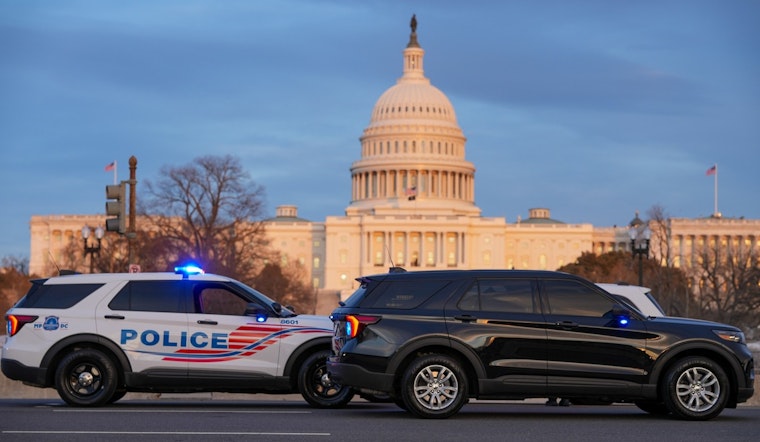
D.C. police are rolling out temporary juvenile curfew zones in Navy Yard and the U Street Corridor for the weekend of March 6 to 8, tightening rules on where and how large groups of teens can gather during peak nightlife hours.
The limited zones bar people under 18 from joining groups of nine or more in public, including inside businesses, within those perimeters during evening hours. City officials say the move is aimed at heading off large, potentially disorderly gatherings in two of Washington’s busiest entertainment districts.
According to WJLA, the temporary curfew zones are scheduled to run from 8 p.m. to 11 p.m. on Friday, March 6; Saturday, March 7; and Sunday, March 8. WJLA also notes that a separate citywide juvenile curfew remains in effect nightly from 11 p.m. to 6 a.m. for anyone under 18. The outlet reports the order comes under emergency powers tied to last year’s curfew legislation.
Where the zones cover
Police maps and notices indicate the Navy Yard zone runs roughly from I-695 and Virginia Avenue SE on the north to the Anacostia River on the south, with 8th Street SE and South Capitol Street as the east and west boundaries.
The U Street Corridor zone covers the blocks roughly bounded by V Street and Vermont Avenue on the north, T Street on the south, Florida Avenue and 9th Street on the east, and 15th Street on the west.
For the official map and detailed perimeters, see the Metropolitan Police Department.
What the order prohibits
Inside the defined perimeters, anyone under 18 is prohibited from taking part in gatherings of nine or more in any public space or inside businesses during the curfew hours, unless they fall under listed exemptions. At 11 p.m. the District’s citywide curfew, separate from these temporary zones, still takes effect and remains in force until 6 a.m.
Local reporting notes the exemptions can include supervised activities, work or emergencies. As NBC4 Washington explains, the measure is aimed at large, unaccompanied groups rather than ordinary family or work activities.
Why the city is using the power
The move traces back to a series of high-profile gatherings, including a chaotic Halloween night at Navy Yard that drew heavy police response and public criticism. The Washington Post reported that those incidents pushed Mayor Muriel Bowser and the D.C. Council to expand the police chief’s authority to declare targeted juvenile curfew zones. Supporters say the tool helps prevent disorder, while opponents warn it risks criminalizing normal teenage socializing.
Enforcement approach and what to expect
When a juvenile curfew zone is established, the Metropolitan Police Department says officers post bright signage, engage with youth in the area and prioritize outreach and warnings before making any arrests.
“Our goal in establishing Juvenile Curfew Zones is never to make arrests or detain youth for curfew violations,” MPD has said in a previous release describing how these zones are enforced.
Residents who live, work or have plans near the perimeters are encouraged to check local updates and carry proof of any exempted activity, such as work schedules or event confirmations, when appropriate.
Legal implications
The Juvenile Curfew Second Emergency Amendment Act of 2025, passed under emergency procedures last fall, is the authority that allows the police chief to designate these temporary zones. The bill’s passage and emergency status are recorded on legislative trackers, and LegiScan shows the bill record.
Past reporting also notes that curfew violations have included fines and, in some cases, short jail terms for juveniles, and that parents may face penalties if they knowingly permit violations, a point detailed by The Washington Post when the city first used emergency curfew powers.



