

























































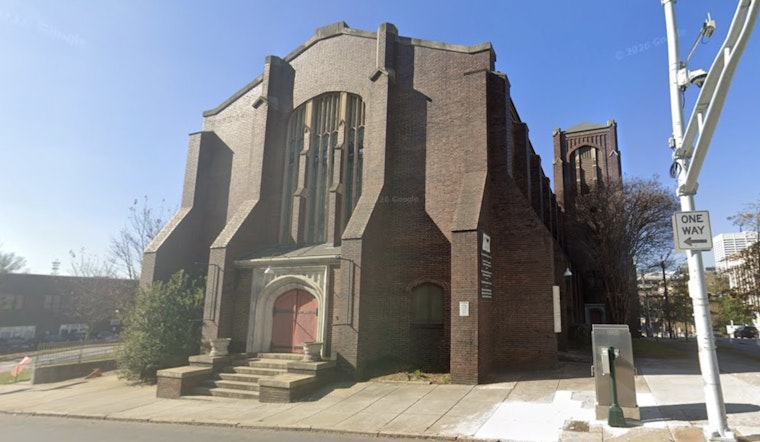
One of downtown Atlanta’s oldest church campuses is on track for a dramatic second act, as Gorman & Company advances plans to convert Trinity United Methodist Church into a mixed-income housing hub and event destination. The redevelopment keeps the neo-Gothic sanctuary at Trinity Avenue and Washington Street intact while demolishing the rear classroom and fellowship wing to make way for a new 15-story tower with roughly 83 apartments. The $41 million effort is being pitched as a way to boost affordable housing in South Downtown without pushing out the church’s ministry and social services.
Filings with Atlanta’s Department of City Planning show the design team has scaled back earlier concepts and now proposes a 15-story structure that preserves the church’s original facade, according to Urbanize Atlanta. The paperwork indicates that land-disturbance permits are already in the pipeline as the developer lines up a construction start. Fresh renderings filed with the city depict a more traditional tower shape than some of the earlier, flashier ideas.
A project listing from Central Atlanta Progress pegs the redevelopment cost at about $41.2 million and confirms 83 housing units, about 700 square feet of street-level retail, and roughly 7,000 square feet of institutional space. The listing describes the church overhaul as an adaptive reuse: half of the sanctuary would become a two-story event venue, while the new residential building rises behind it. That institutional space is meant to support community-focused programming, and the Trinity Women’s Center is expected to keep operating on the property, according to the documents.
Sanctuary Saved, Organ Fundraising Kicks Off
Church leaders stress that the sanctuary is not being sacrificed in the name of density. Instead, it is slated for restoration and conversion into an events space while the new housing tower goes up in the background. That plan comes with a very specific preservation challenge: Trinity’s 1912 Austin organ. The organ information page on Trinity United Methodist Church’s website identifies the instrument as the oldest remaining pipe organ in Atlanta and outlines a meticulous effort to dismantle and store it safely during construction. The congregation has put up seed money and is hosting benefit concerts to raise the funds needed to move or preserve the historic organ.
How It Fits Into A Downtown Housing Push
The project, known as the Sanctuary, is arriving just as Trinity Central Flats, a 10‑story, 218‑unit mixed-use building across from City Hall, moves through construction. Together, the two developments are poised to create a small cluster of new affordable housing options in the South Downtown corridor. Urbanize Atlanta reports that Trinity Central Flats will include about 7,500 square feet of retail and is expected to open in late 2027, putting it on a similar timeline to the church redevelopment. Local planners say the goal is to concentrate affordable units near transit and services so lower‑income residents can actually live close to jobs, downtown amenities, and social programs instead of being pushed to the fringe.
Timeline And Next Steps
City filings and project listings put the Sanctuary’s total price tag at roughly $41 million and estimate an 18‑month construction window, with completion targeted for late 2027, according to Central Atlanta Progress. With land‑disturbance permits filed, the development team suggests that early site work could kick off within a few months if approvals stay on track. Gorman representatives have not provided a firm construction start date, but the recent permitting activity points to an effort to get things moving this spring.
For Gorman & Company, the Trinity project is another step deeper into Atlanta’s affordable housing scene after earlier work in Westview and other neighborhoods. It also serves as a case study in how religious properties can be adaptively reused to deliver deeply affordable units while keeping historic landmarks standing, according to industry reporting. Construction Equipment Guide notes that local officials and developers have pieced together a mix of public and private financing to get these downtown deals off the ground. As the Trinity project moves from paper to reality, preservation advocates and neighborhood leaders will be watching closely to see whether the church can successfully balance its historic character with the city’s pressing demand for more housing.





