

























































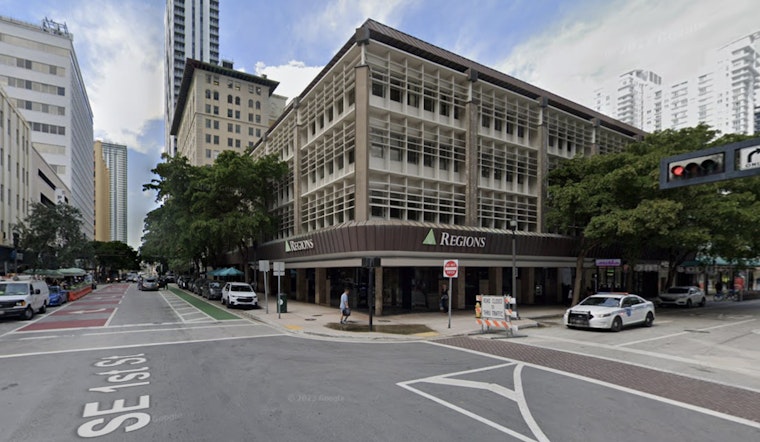
In a move that bucks downtown Miami’s tear-it-down-and-build-it-taller trend, a preservation-minded investor has quietly scooped up five historic buildings in the city’s core, pledging to keep their façades intact and their spaces active instead of flattening them for new towers. The group of properties includes the Plaza Building at 235 S.E. First Street, which was about half leased when it changed hands, and the deal marks the buyer’s first known foray into the South Florida market. Local preservation advocates say this kind of deal can help lock in older storefronts and small-office spaces that are getting harder to find as new construction keeps coming.
The transaction was first brought to light by the South Florida Business Journal, which identified GBX Group as the buyer and reported that the purchase covers five properties in Miami’s central business district. As reported by the South Florida Business Journal, reporter Mark Dovich noted that the Plaza Building at 235 S.E. First St. was roughly 50 percent occupied at the time of the transfer and that the acquisition represents GBX’s entry into the South Florida market.
Public Records Back Up The Sale
County records and commercial property databases show that the Plaza Building’s ownership shifted in mid-December 2025 as part of a broader portfolio transaction. Property data on PropertyShark list the building at about 83,909 square feet and confirm the recorded transfer, which lines up with an intra-portfolio conveyance. The listing describes the property as low-rise office space, suggesting it is a candidate for modest rehabilitation instead of a ground-up redevelopment.
GBX’s Preservation Playbook
GBX Group positions itself as a preservation-focused operator that targets historic urban buildings and leans on tools such as preservation easements, partnerships and tax-credit strategies to protect façades while updating interiors. The company’s own news pages highlight similar acquisitions and easement deals in other cities, where GBX has teamed up with local preservation groups to keep historic character intact. That track record points to a likely focus on rehabilitation and long-term protections for the Miami properties rather than demolition.
What It Signals For Downtown Miami
Downtown Miami’s office scene is currently juggling a mix of shiny new tower proposals and elevated vacancy in older mid-rise stock, making adaptive reuse and preservation look increasingly attractive on the numbers. Market data summarized by The Real Deal (drawing on JLL figures) point to softer fundamentals in parts of Miami-Dade County, a backdrop that can make rehabilitation projects and tax-credit-backed preservation pencil out financially. For neighborhood merchants and small professional tenants, having a preservation-minded landlord could translate into steadier occupancy and fewer dark storefronts at street level.
Local policy also helps make these kinds of preservation deals feasible. Miami-Dade guidance on historic properties notes that owners can use covenants, easements or local historic designations that qualify them for certain tax considerations while still allowing upgrades to building systems. As outlined by Miami-Dade County, these tools are often paired with rehabilitation incentives and long-term preservation agreements. That mix of incentives and covenants is a common backbone for how preservation-focused investors structure downtown acquisitions.
With this portfolio purchase, GBX Group joins the patchwork of owners shaping downtown Miami and offers a potential template for how mid-rise office buildings can be protected even as glassier towers keep rising nearby. The South Florida Business Journal report remains the most detailed public account of the deal so far; specifics on renovation timelines, preservation easement terms or nonprofit partners have not yet been disclosed. For now, the buildings, including the Plaza Building at 235 S.E. First St., continue to function as active pieces of downtown Miami’s architectural fabric.




