

























































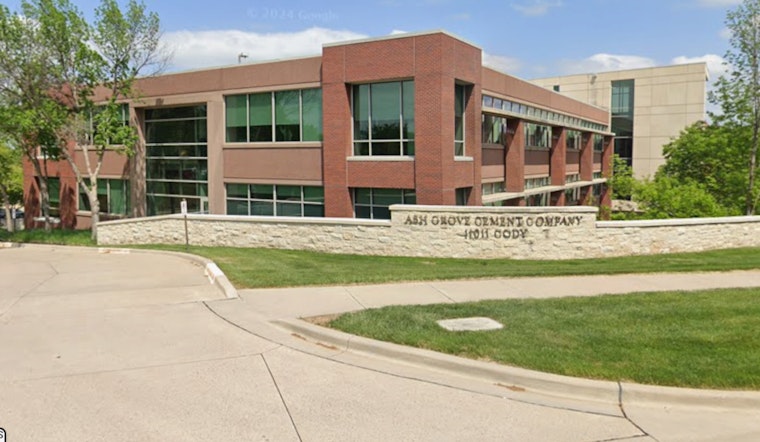
On the banks of the Duwamish River, a fight is brewing over what goes into the fire at a century-old cement plant. Community groups and neighborhood activists are asking a state hearings board to stop the Ash Grove facility from burning even more old tires as fuel. The plant already consumes roughly 1.2 million tires a year and sits next to neighborhoods with some of the region's worst air quality and high childhood asthma rates. Residents argue that the Puget Sound Clean Air Agency's recent decision to let the plant increase its tire share, while it still operates largely under a permit written about 20 years ago, risks piling more health impacts onto communities that are already stretched thin.
As reported by KUOW, Ash Grove operates a rotary kiln that reaches roughly 3,000°F and sought approval to bump tire-derived fuel up to about 37 percent of the kiln’s fuel mix. KUOW also notes the plant produces roughly one-third of Washington's cement and that the agency concluded burning tires at those kiln temperatures would not increase modeled emissions. The station further reported that the operation currently burns about 1.2 million tires each year.
What the agency approved
In its Statement of Basis for the permit modification, the Puget Sound Clean Air Agency described the tire change as a relatively small adjustment to the maximum the existing tire feed system can handle and said its modeling showed no increase in criteria pollutant emissions. The agency required Ash Grove to conduct periodic stack tests for particulates, dioxins and furans, and heavy metals, and it is drafting a renewed operating permit that reflects newer federal standards. Permit documents also state that the plant is equipped with multiple continuous monitors and that the company must submit monthly summaries detailing any monitor downtime or exceedances.
The legal challenge
Environmental and community groups, including the Duwamish River Community Coalition, Front and Centered, and Earthjustice, filed an appeal with the state's Pollution Control Hearings Board in early January. The plaintiffs say the agency leaned on outdated analysis, did not adequately assess cumulative impacts under Washington’s SEPA rules and failed to include strong enough emissions limits to safeguard nearby residents. The appeal and related legal filings are documented by Earthjustice.
Health and emissions data
According to the Washington Department of Ecology, a December 2025 community report found South Seattle, including the Duwamish Valley, to be “highly impacted by air pollution” and estimated about 57 deaths a year associated with elevated fine particulate (PM2.5) exposure. Ecology materials also identify Ash Grove as one of the largest greenhouse-gas sources in the local inventory, with multi-year CO2 totals that dwarf most nearby facilities. Those numbers have become a central part of activists’ argument that the plant’s operations warrant tougher scrutiny.
Industry context
Industry figures show that end-of-life tires are increasingly flowing into reuse and recycling markets, even as the overall volume of scrap tires grows. The U.S. Tire Manufacturers Association’s 2023 End-of-Life Tire report says about 79 percent of scrap tires went to beneficial end-use markets and that tire-derived fuel, or TDF, remains a major destination for some of that material. Permit documents and agency notes also record that Ash Grove has historically used tires at roughly twice the national average, on the order of 30 percent of its fuel mix, and that the recent modification would raise the permitted level toward the plant’s processing limit of about 37 percent.
Why neighbors are fighting back
Neighbors and community groups say the Duwamish Valley already absorbs pollution from ports, airports, rail yards, and multiple industrial operations, and that any increase in toxic emissions is simply a nonstarter. Local advocates told the South Seattle Emerald they were “outraged” when the permit was finalized, and they have continued to organize both legal efforts and public-awareness campaigns. Organizers frame the appeal as a test of whether the regional air agency will step in to protect communities that are already overburdened from additional pollution.
Legal timeline and what to expect
The appeal was formally filed in early January, and filings show notice was served on the agency and Ash Grove on Jan. 2, 2026. Media reporting indicates no one should expect a swift resolution, since scheduling in complex administrative dockets like this often stretches into the following year. If the Pollution Control Hearings Board accepts the appeal, it could send the matter back to the agency for a new environmental analysis or order changes to the existing permit conditions.
What regulators will test
The air agency has already required stack tests for particulates, dioxins and furans, and heavy metals, and Ash Grove operates continuous monitors for NOx, SO2, CO, mercury, and opacity that regulators review through monthly summaries. Those tests, along with the forthcoming operating-permit renewal, are the main tools regulators have to confirm that their modeling and predictions hold up in the real world. Community groups are pressing for clear public reporting of test results and for strict, enforceable limits, rather than a system that relies primarily on modeling assumptions.
The dispute connects a global industrial problem, cement’s large climate footprint and the sector’s appetite for alternative fuels, to a very local question: who pays the health price when an industrial plant changes how it burns waste for energy. With the appeal on file and an administrative hearing likely months away, Duwamish Valley residents and advocates say they plan to keep the heat on regulators and the company until they see solid evidence that public health will not be compromised.





