

























































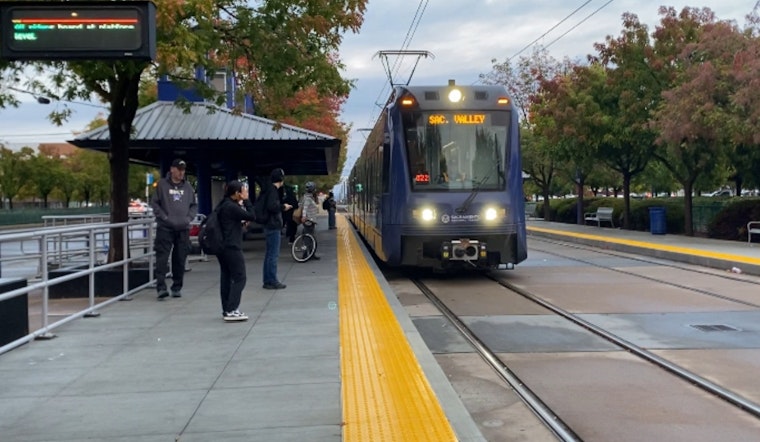
Elk Grove is kicking the tires on a major transit shakeup that could eventually bring light rail or bus rapid transit deeper into the city - and potentially pull a chunk of commuters out of their cars.
This week, Elk Grove and Sacramento Regional Transit rolled out a draft study that sketches where high-frequency transit could run beyond the current Blue Line terminus at Cosumnes River College. The document maps multiple route options, station-area concepts and rough cost ranges that will help determine whether Elk Grove backs trains, buses or a mix of both. For residents watching new hubs like District56 rise, the study offers an early peek at what transit-oriented growth could look like across the city.
According to SacRT, the Blue Line/Bus Rapid Transit Implementation Plan evaluates both light rail (LRT) and bus rapid transit (BRT) along Bruceville Road and Big Horn Boulevard between Cosumnes River College and the Kammerer Road/State Route 99 area. The work includes alignment design, station siting, ridership forecasts and a funding strategy that is supported in part by a Caltrans grant.
What’s on the table
The draft lays out four main options that range from a shorter light-rail extension to a full build-out into Elk Grove, with some rapid bus ideas in the mix.
As summarized in the city’s alternatives comparison matrix, the concepts include:
- A 3.6-mile LRT extension to District56 with a timed rapid-bus connection farther south
- A 6.4-mile LRT extension to Kammerer Road with seven new stations
- A 7.4-mile BRT line with 12 stations
- A hybrid LRT option that combines center-running rail with segments that operate alongside traffic
Planning staff also released station-area vision plans for three priority stops - Big Horn & Bruceville, Big Horn & Laguna and Big Horn & Whitelock. Those sketches highlight potential housing, retail and pedestrian upgrades that could arrive with new transit, according to the city’s planning documents.
Price tag and who pays
The more ambitious ideas are not cheap. As reported by The Sacramento Bee, the high-end hybrid option carries an estimated capital cost of roughly $1.06 billion and about $17.3 million in yearly operating costs. The other alternatives fall between about $312 million and $1.059 billion to build.
The draft projects only modest fare revenue at roughly $600,000 per year and lists potential outside funding from federal and state programs, including the Federal Transit Administration, the U.S. Department of Transportation, the California Air Resources Board and the Sacramento Area Council of Governments. According to the Bee’s reporting, the study notes that any federal dollars would almost certainly require a significant state or local match, and that a future local sales tax measure is one possible way to help close the gap.
What happens next
City officials say public engagement is still underway as the draft is refined. Elk Grove expects the plan to land on a City Council agenda this spring for a recommendation on how to proceed.
Per the City of Elk Grove’s project schedule, the planning phase is expected to wrap up in Spring 2026. Between now and then, the team will narrow down a preferred alternative and sharpen the funding strategy before asking the City Council to make any big decisions. Community input is being used to adjust station locations, improve pedestrian connections and shape the funding matrix that will guide next steps.
Local reaction and long view
Residents and riders have shown interest in the idea while raising familiar questions about safety, frequency and long-term costs. “We have seen a lot of growth recently,” Elk Grove senior transportation planner Kayley Lyons told KCRA, explaining that the study is meant to improve connections to jobs, health care and schools. SacRT and city staff say that safety features, station design and day-to-day operations will all factor into whichever alternative advances.
The public comment period runs through March 30, 2026. The draft is meant to guide choices rather than trigger immediate construction, and the reporting makes clear that funding and local matching dollars remain the biggest hurdles. Even once a preferred alignment is chosen, the most ambitious options would still require years of grant applications, local contributions and phased construction before Elk Grove sees frequent rail-based service rolling into town.





