

























































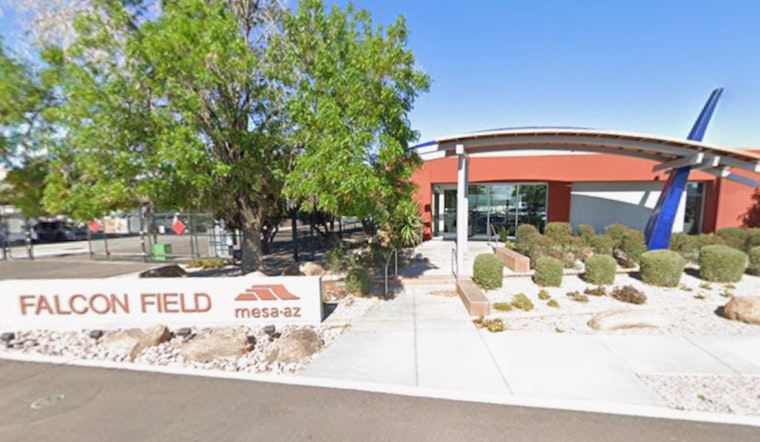
Mesa is getting ready to start charging aircraft every time they touch down at Falcon Field Airport, after the City Council voted unanimously on Monday to approve a new landing fee schedule. The move came after nearly two hours of pointed public comment and, under the city's current timeline, the fees are set to kick in on May 1, 2026. Nearby residents framed the change as a fairness issue about paying for airport upkeep, while pilots and flight-school operators warned it could drive training operations to other airports.
What the fees will look like
According to the City of Mesa fees report, the new schedule sets a $20.35 per landing charge for based fixed-wing aircraft at or below 6,000 pounds and $24.35 per landing for itinerant fixed-wing aircraft in that same weight class. The plan also creates separate per-landing rates for rotorcraft, drones and eVTOLs. City staff estimate the package will generate about $2,637,744 a year and it includes an exemption for the first 10 landings each month by a based aircraft.
Council meeting and the voices on both sides
The council vote followed nearly two hours of residents and aviation businesses trading sharply different views over the microphone. FOX 10 Phoenix quoted Legion Air owner Carl Storckman saying the fee "is really gonna harp on our ability to conduct business" and warning the added costs could raise a typical flight-training program's price by roughly $4,000. In the same report, resident Kaye Hunsacker said she believes the city did its homework on the proposal and argued the change is meant to balance the needs of flight training with the quality of life in surrounding neighborhoods.
Flight schools warn of fallout
Aviation advocates say the new fees will push touch-and-go practice to surrounding airfields and could tangle an already busy regional airspace. As ABC15 reported, Falcon Field recorded roughly 475,000 operations in 2025, up from about 424,000 in 2024. Experts told the station that shifting a chunk of that training traffic elsewhere could create safety and traffic-management headaches in other corners of the Valley's skies.
Why city leaders say the change was necessary
City documents say Falcon Field has been leaning on one-time land-sale proceeds and deferred maintenance to balance its books, and that those reserves are on track to run out. The March 23 council report shows the Airfield Cost Center facing a roughly $2,036,132 gap and notes a pavement condition index averaging about 58.





