

























































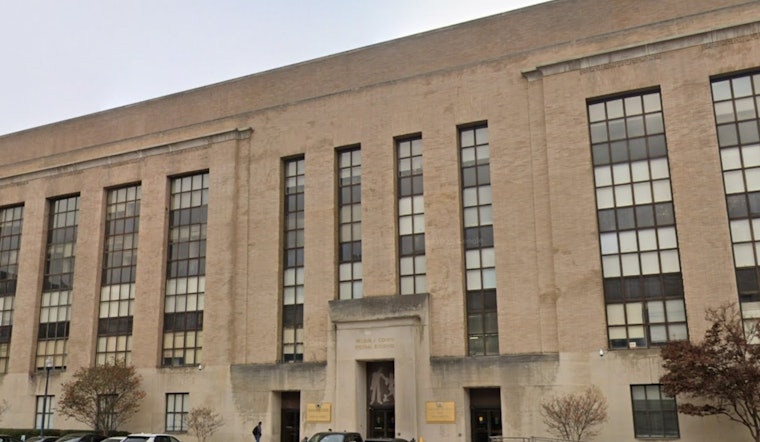
The Wilbur J. Cohen Federal Building, an imposing, more than 1 million square foot slab facing the National Mall, is now officially in the government’s for-sale pile. Federal officials have tagged the 1940-era complex for accelerated disposition, a move that could end in a sale and, if redevelopment follows, a date with the wrecking ball. Preservation advocates and members of Wilbur J. Cohen’s family say the potential loss stings twice: the building holds major New Deal murals and carries the name of a former University of Michigan dean.
Why It Is Headed To Market
According to GSA, the Cohen Building at 330 Independence Ave. SW landed on an "assets identified for accelerated disposition" list in May 2025 as part of a broader push to shrink the federal real estate footprint. Congress piled on with a specific sale directive in the Thomas R. Carper Water Resources Development Act of 2024, ordering the GSA to "sell for fair market value" the Cohen Building within two years after federal tenants clear out, per bill text on Congress.gov.
What Is Inside That Matters
Beyond the bureaucratic address, the building shelters a rare suite of New Deal murals and bas relief sculptures along a central corridor and in interior rooms, with work by artists including Ben Shahn, Philip Guston and Seymour Fogel. The Washington Post has detailed how several pieces are painted directly onto, or permanently affixed to, the masonry, which makes them notoriously hard to remove. That raises the specter that a private redevelopment could damage or destroy the art, a technical headache that has become a rallying cry for preservationists trying to keep the building, or at least the murals, intact.
Ann Arbor Ties And Family Reaction
The Cohen name on the facade links the Washington landmark back to Ann Arbor. Wilbur J. Cohen served as dean of the University of Michigan School of Education starting in 1969 and later joined the faculty, according to the Miller Center. Family members have stepped into the debate; Christopher Cohen told MLive that "it will be a real shame to remove a building which really has served the country well," and urged officials to find a way to shield the artwork from whatever comes next.
Preservation Law And What Comes Next
Preservation groups have asked to serve as consulting parties under Section 106 of the National Historic Preservation Act, a review that federal agencies must conduct when a project could affect a historic property. The Advisory Council on Historic Preservation notes that transfers out of federal ownership count as an "undertaking" that triggers consultation and potential mitigation, although the process is procedural rather than a guaranteed save, according to guidance from ACHP. A petition organized by the Living New Deal has pulled in thousands of supporters, with more than 8,400 verified signatures listed on Change.org, and advocates say they plan to press GSA and lawmakers to lock in protections for the murals before any deed changes hands.
By law, a sale cannot move forward until federal agencies vacate the block and GSA completes the required reviews, and the WRDA provision gives the agency a two year window after vacancy to market and sell the property. That timetable, combined with public petitions and Section 106 consultation, sets up a fast moving contest between federal cost cutting and historic art conservation, with the Cohen Building’s nationally significant murals squarely at the center of the fight.



