

























































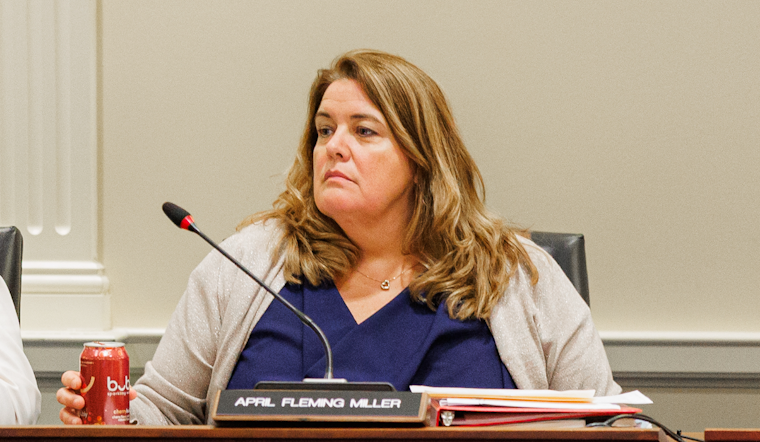
Maryland Delegate April Fleming Miller is taking a hard swing at the state’s booming data center industry, introducing HB1534, a far-reaching bill that would clamp down on where giant server farms can be built and how loudly and dirtily they can operate. The proposal targets environmental, noise, and siting rules for hyperscale data centers, with extra protections for schools and prime farmland. It would change how backup generators, air monitoring, and vibration are regulated and could narrow the types of land local governments may sign off on for data center development. All of this lands right as a massive data center campus north of Adamstown is under construction and under the microscope in Frederick County.
What The Bill Would Require
HB1534 spells out a long list of operating rules for large data centers, along with special conditions for any facility within 2,500 feet of a school. In those school zones, operators would have to pay for and install HEPA and MERV-13 filters on school HVAC systems and set up public-facing air quality monitors at school air intakes.
The bill directs the Maryland Department of the Environment to establish specific sound and vibration limits, with firm caps on decibel levels and peak particle velocity. It calls for spring-isolated foundations for mechanical equipment so that low rumbling does not travel through the ground, and it would require Tier 4 emission standards for backup generators near schools. Any project that needs more than 50 megawatts of power would also have to include on-site battery energy storage.
HB1534 creates emergency stop-work authority and civil penalties for violations, with the details spelled out in the bill text, according to the Maryland General Assembly.
How The Law Would Steer Siting
On top of operational rules, HB1534 would significantly shape where local boards are allowed to approve hyperscale campuses. It would bar construction on USDA Class I or II soils unless there is no industrial land available, block siting on land covered by agricultural easements and in Rural Legacy areas, and force applicants to look first at decommissioned industrial or power plant sites.
Miller, a Republican from Frederick County, presents the bill as a way to protect schools, farmland, and existing neighborhoods while still leaving room to reuse old industrial properties as data center hubs. Those policy details and the bill’s timeline were reported by the Frederick News-Post.
Why Frederick Is The Focal Point
The timing is not accidental. The Quantum Frederick campus, a multibuilding redevelopment of the former Eastalco site north of Adamstown, is already moving dirt. That makes questions about local permits, generator rules, and long-term impacts more than just theoretical for nearby residents.
Operators such as Aligned have publicly announced groundbreaking activity and sizable backup generator plans for buildings at Quantum Frederick. That kind of scale helps explain why lawmakers are suddenly interested in statewide standards for noise, emissions, and siting. Industry coverage has outlined the scope and buildout schedule for the campus, including early work by Aligned at Quantum Frederick. DataCenterDynamics reported the operator announcements and overall project context.
Local Pushback And County Moves
Frederick County officials have been wrestling with how much land to open up to data centers at all. Public comments, planning commission recommendations, and advocacy campaigns have pushed to keep most growth tied to the Eastalco area rather than scattering server farms across rural landscapes.
County submissions and public comment files show residents and landowners asking for stronger protection of agricultural land and tougher rules on noise and generators. In response, county leaders have already requested stricter generator standards for certain projects and, in some cases, offered free well testing to nearby neighbors. Those records help explain why lawmakers are now going deep on technical standards at the state level, according to Frederick County public comments.
Legal Implications
The enforcement teeth in HB1534 are explicit. The bill sets a civil penalty of up to $10,000 for violations and gives local health departments or the Department of the Environment the power to issue emergency stop-work orders if noise or air quality limits are exceeded during school hours. Repeat violations could lead to permit suspension or even revocation.
In practice, that would give regulators real leverage to halt operations that go beyond the bill’s limits and would expose operators to fines along with the risk of costly business interruptions. The enforcement language and penalty structure appear in the bill text, according to the Maryland General Assembly.
What’s Next
HB1534 went before the House Environment and Transportation Committee on March 10 and now sits in the queue for potential amendments and a committee vote before it can reach the full House. If it advances, lawmakers are expected to hammer out technical details and funding questions in a conference process.
Trade groups for the data center industry, county officials and community advocates are all likely to push for tweaks to the technical standards and to the siting carve-outs as the bill moves. For information on the bill filing, sponsors, and hearing schedule, see LegiScan.





.jpg)