

























































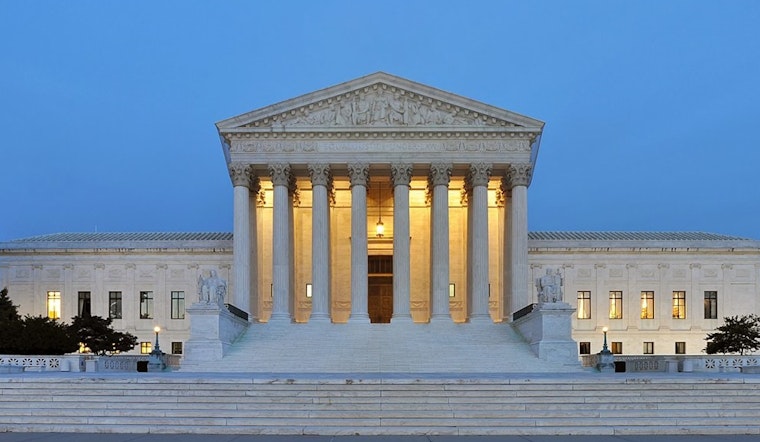
The U.S. Supreme Court on Monday rejected an appeal from Texas death-row inmate Rodney Reed, leaving intact lower-court rulings that have blocked new DNA testing on crime-scene evidence his lawyers say could clear him. Justice Sonia Sotomayor issued a written dissent warning that, without testing, the state could execute Reed before crucial evidence is ever examined.
High court leaves lower ruling in place
According to the U.S. Supreme Court order list dated March 23, the justices denied Reed's petition for a writ of certiorari in Reed v. Goertz (No. 24-1268). That denial leaves the Fifth Circuit's judgment in place and, for now, shuts down Reed's latest attempt to force DNA testing through federal courts. The order also notes that Sotomayor filed a dissent joined by Justices Elena Kagan and Ketanji Brown Jackson.
Sotomayor: Belt testing could resolve key doubts
In her dissent, Sotomayor wrote that "it is inexplicable why prosecutors wouldn't allow the belt to be tested," and warned that the Court's refusal means "the State will likely execute Reed without the world ever knowing whether Reed's or Fennell's DNA is on the murder weapon." She argued that the decision leaves a "pall of uncertainty" over Reed's conviction, according to the same U.S. Supreme Court document.
The belt at the center of the DNA fight
Reed's legal team has for years sought DNA testing on multiple items from the crime scene, especially the webbed belt used to strangle 19-year-old Stacey Stites. They have offered to cover the cost of testing, but prosecutors and Texas courts have said no, citing the state's chain-of-custody rules.
Prosecutors argue the belt and other evidence may have been contaminated, and Texas courts have relied on that potential contamination to deny testing, according to AP.
How the Bastrop case began
Reed was convicted and sentenced to death for Stites' 1996 killing in Bastrop County. Prosecutors said he raped and strangled her; Reed has long insisted the two were in a consensual relationship and has pointed instead to Stites' fiancé, former Bastrop police officer Jimmy Fennell, as the more likely killer.
The Texas Tribune reports that Fennell later served roughly a 10-year prison sentence for an unrelated sexual-assault conviction and was released in 2018, a history Reed's lawyers highlight to bolster their alternate-suspect theory.
What happens next
With the Supreme Court refusing to take the case, Reed's immediate federal path to force DNA testing narrows. Any next move now depends on state prosecutors and the lower federal courts, unless his attorneys can find a new legal angle.
News4JAX reports that Reed's lawyers and supporters say they will keep pushing in court for DNA testing and other forms of relief.
Legal stakes: DNA law and due process
The dispute turns on Texas' post-conviction DNA-testing statute, known as Article 64, and its requirement that evidence be shown not to have been contaminated before testing is allowed. Reed has argued that the way Texas applies that rule arbitrarily cuts prisoners off from potentially exculpatory DNA evidence in violation of the Due Process Clause, using a civil rights claim under 42 U.S.C. § 1983.
The Supreme Court previously ruled in 2023 that Reed had standing to pursue that § 1983 due-process challenge but left the core constitutional question to the lower courts. Justia summarizes that earlier decision and the procedural path that ultimately led to Monday's one-line cert denial.
Reed's case has drawn national attention and public pleas for mercy, yet the central forensic issue remains unresolved: whose DNA, if anyone's, is on the belt. Sotomayor zeroed in on that unanswered question in her dissent, and AP reports that Reed's attorneys have vowed to keep litigating and to pursue every possible route to get the evidence tested.




