

























































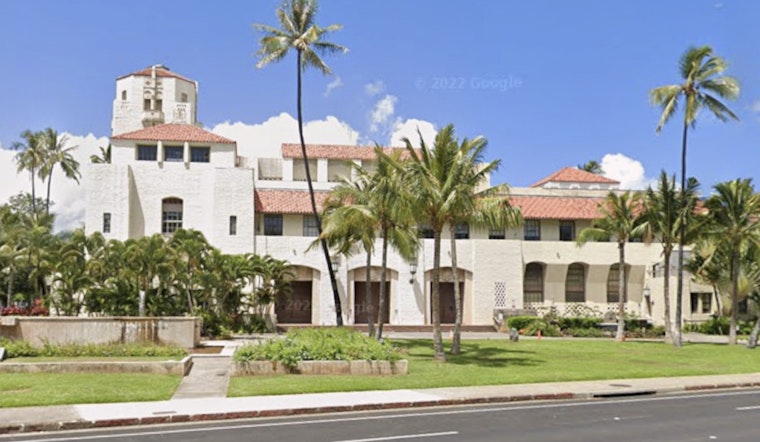
When federal agencies pull public datasets offline, the fallout lands far from Washington. In Honolulu, missing federal tables and web pages have left local health officials and budget analysts with fewer tools to spot outbreaks, measure hunger, and plan services. The squeeze shows how national decisions about what counts as public information can quickly ripple into neighborhood hospitals, schools, and nonprofit providers.
That hometown impact is the focus of a Sunshine Week commentary by Miranda S. Spivack, who details how years-long federal records on health, education, and criminal justice have been removed from public-facing sites, as reported by Honolulu Civil Beat. A policy analysis in the New England Journal of Medicine warns that such disappearances can “transfer power from public to private entities,” making it harder for cities to hold institutions accountable.
What was taken down and why it matters
Some of the most consequential cuts hit public health surveillance. Harvard T.H. Chan School of Public Health reported that the CDC’s Pregnancy Risk Assessment Monitoring System (PRAMS) was put in limbo after its national team was sidelined, leaving states without a centralized national dataset. That loss has direct local consequences because PRAMS and similar surveys are used to target maternal-health programs, hire staff, and apply for grants, according to Harvard T.H. Chan School of Public Health. News outlets documented that agency portals and codebooks were taken offline or reposted with redactions after an administration directive in January 2025, leaving researchers and city agencies scrambling to catalog what changed, as reported by The Associated Press.
Food, schools and budgets lose their compass
The U.S. Department of Agriculture announced the termination of a food-insecurity survey program in September 2025, a move the agency cast as eliminating a redundant survey but that critics say hampers local hunger tracking, per the U.S. Department of Agriculture. The Census Bureau stopped updating its Selected Monthly State Tax Collections after May 2025, removing an “early warning system” for state and city budgets, as explained by the Tax Policy Center. Health analysts also note that the removal or redaction of race, ethnicity, and gender-identity variables from federal health files makes it harder to spot disparities, according to KFF.
Who’s rescuing what’s left
Private platforms and research groups have scrambled to archive what they can. PolicyMap says it has preserved many of the purged federal datasets so local planners can still access them, according to PolicyMap. But those private caches do not carry the legal standing or standardized release schedules of federal sources, which makes long-term comparisons and grant applications harder for cities that depend on consistent, official numbers.
Legal and accountability questions
Legal challenges have followed some of the takedowns. A federal judge ordered the Department of Health and Human Services, the CDC, and the FDA to restore several web pages and datasets that had been removed, noting that the abrupt removals risked harming patient care and research, as reported by The Washington Post. Separately, the Justice Department decommissioned the National Law Enforcement Accountability Database, which agencies had used to check for officers’ past misconduct, a step critics say undercuts hiring safeguards and accountability, per CBS News.
What Honolulu and other cities can do
Local leaders can start treating federal data like critical infrastructure. That means downloading and archiving relevant tables, demanding restoration from agencies when data disappear, and pressing state and federal lawmakers to fund resilient local data systems. The American Statistical Association warned in a December 2025 report that losses to federal statistics pose “extensive damage to democracy,” underscoring the stakes for city planning and democratic accountability, per the American Statistical Association. Sunshine Week’s spotlight offers an opening for communities to take stock of what they rely on and to pressure officials to repair the gaps.



